


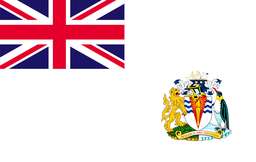
The British Antarctic Territory (BAT) is one of the most remote and least populated regions under British administration. Located in Antarctica, it covers a large wedge-shaped area stretching from the South Pole to the Antarctic Peninsula. Although it has no permanent civilian population, the territory holds significant historical, scientific, and geopolitical importance. The history of the British Antarctic Territory is closely linked to the age of exploration, imperial competition, scientific discovery, and international cooperation. Unlike traditional territories shaped by settlement and warfare, BAT’s history is defined by exploration, research, and diplomacy rather than colonization.
Early Exploration of Antarctica
Human interaction with Antarctica began much later than with other continents due to its extreme climate and isolation. For centuries, the southern polar region existed only in theory, often referred to as Terra Australis Incognita. European explorers believed a large southern landmass was necessary to balance the continents of the Northern Hemisphere.
During the late 18th and early 19th centuries, explorers began venturing farther south. British explorer James Cook was among the first to cross the Antarctic Circle in the 1770s, proving that if a southern continent existed, it was far colder and less hospitable than previously imagined. Although Cook never landed on Antarctica, his voyages paved the way for future exploration.
British Exploration and Scientific Interest
By the 19th century, Britain emerged as a leading force in Antarctic exploration. British naval expeditions focused on mapping coastlines, studying ice conditions, and advancing scientific knowledge. Explorers such as James Clark Ross made significant discoveries, including the Ross Sea and Ross Ice Shelf.
Scientific curiosity, rather than settlement, drove British involvement. Expeditions collected data on magnetism, geology, weather patterns, and marine life. These early scientific missions laid the foundation for Britain’s long-term presence in Antarctica.
Territorial Claims and Imperial Context
During the early 20th century, several nations began asserting territorial claims in Antarctica. Britain formalized its claim in 1908, declaring sovereignty over a large section of Antarctica. This claim was later defined more precisely and became known as the British Antarctic Territory.
The motivation behind the claim was not economic exploitation or colonization, but strategic and scientific presence. At the time, imperial powers sought to secure influence over unexplored regions, and Antarctica was no exception. Britain administered the territory initially through the Falkland Islands.
The Era of Antarctic Expeditions
The early 20th century is often called the Heroic Age of Antarctic Exploration. British expeditions played a major role during this period. Figures such as Robert Falcon Scott and Ernest Shackleton became central to Antarctic history.
Scott’s expeditions aimed to reach the South Pole and conduct scientific research. Although his final expedition ended tragically, it contributed valuable scientific data. Shackleton’s expeditions demonstrated extraordinary leadership and survival under extreme conditions, becoming legendary in exploration history.
These expeditions strengthened Britain’s scientific and symbolic presence in Antarctica, reinforcing its territorial claim.
World War II and Operation Tabarin
During World War II, Antarctica gained strategic significance. Britain launched Operation Tabarin in 1943 to establish permanent bases in Antarctica. The operation aimed to secure British claims and prevent rival powers from expanding their influence in the region.
Permanent research stations were established, marking the beginning of a continuous British presence in Antarctica. These bases later evolved into scientific research stations, shifting focus from military strategy to peaceful scientific study.
Creation of the British Antarctic Territory
In 1962, the British Antarctic Territory was formally separated from the Falkland Islands Dependencies and became a distinct overseas territory. Administration was placed under the authority of the United Kingdom, with governance managed through appointed officials.
Despite its territorial status, BAT has no permanent residents. Scientists and support staff rotate through research stations, staying for limited periods. The territory operates under strict environmental and scientific regulations.
The Antarctic Treaty System
One of the most important developments in the history of the British Antarctic Territory was the signing of the Antarctic Treaty in 1959, which came into force in 1961. The treaty transformed Antarctica into a zone dedicated to peace and science.
Under the treaty:
- Military activity is prohibited
- Nuclear testing is banned
- Territorial claims are neither recognized nor denied
- Scientific cooperation is encouraged
The United Kingdom is a founding signatory of the treaty, and the British Antarctic Territory operates fully within its framework. This agreement ensures that Antarctica remains free from conflict and exploitation.
Scientific Research and Environmental Protection
Today, the British Antarctic Territory is primarily a center for scientific research. British research stations focus on climate science, glaciology, marine biology, and atmospheric studies. Data collected in BAT plays a critical role in understanding global climate change.
Environmental protection is a core priority. Strict rules govern waste disposal, wildlife interaction, and human activity. The territory is considered one of the most pristine environments on Earth.
Modern Status and Global Importance
In the modern era, the British Antarctic Territory represents international cooperation rather than territorial control. While Britain maintains its claim, the emphasis is on shared scientific responsibility and environmental stewardship.
The territory’s importance has increased as climate change has become a global concern. Research conducted in BAT helps scientists understand melting ice sheets, rising sea levels, and long-term climate patterns.
Key Historical Timeline of the British Antarctic Territory
- 18th Century: Early exploration of southern polar regions
- 1770s: James Cook crosses the Antarctic Circle
- 1908: Britain formally claims Antarctic territory
- Early 1900s: Heroic Age of Antarctic Exploration
- 1943: Operation Tabarin establishes permanent British bases
- 1959: Antarctic Treaty signed
- 1962: British Antarctic Territory officially created
- Late 20th Century: Expansion of scientific research programs
- 21st Century: Focus on climate science and environmental protection
Frequently Asked Questions (FAQ)
Does anyone live permanently in the British Antarctic Territory?
No, there is no permanent population. Only scientists and support staff live temporarily at research stations.
Why did Britain claim part of Antarctica?
Britain claimed territory to support scientific research and maintain strategic presence during the era of imperial expansion.
Is the British Antarctic Territory governed like other territories?
No, it is administered under special regulations and international treaties, with no local government or elections.
Can the territory be exploited for resources?
No. Mining and resource extraction are prohibited under international agreements.
Is the British Antarctic Territory internationally recognized?
Territorial claims are held in abeyance under the Antarctic Treaty, meaning they are neither accepted nor rejected.
Sources and Historical Accuracy
This article is based on:
- British polar exploration records
- Official UK government publications
- Antarctic Treaty documentation
- Scientific research institutions involved in Antarctic studies
The information is presented for educational purposes with careful attention to historical accuracy and neutrality.
Conclusion
The history of the British Antarctic Territory is unique among world territories. Shaped by exploration, science, and diplomacy rather than settlement, it reflects humanity’s effort to understand and protect one of the planet’s most extreme environments. From early exploration to modern climate research, the territory stands as a symbol of international cooperation and peaceful scientific endeavor.
Featured History








All Rights Reserved © 2025