


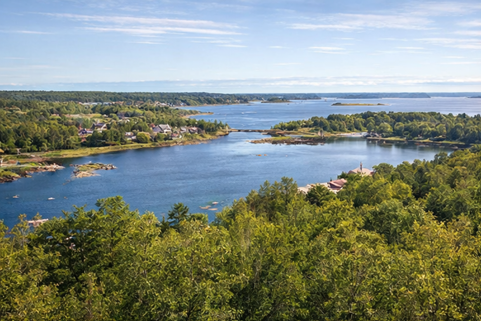
The Åland Islands are a group of islands in the Baltic Sea, located between Sweden and Finland. Although small in size and population, the Åland Islands have followed a unique historical path shaped by geography, maritime trade, changing empires, and international diplomacy. Their position at the entrance to the Gulf of Bothnia made them strategically important for centuries, even though the islands themselves remained mostly peaceful and rural.
Today, the Åland Islands are an autonomous and demilitarized region of Finland with strong cultural and linguistic ties to Sweden. Their history shows how a small island society gained international recognition and special legal protection while preserving its identity.
Geography and Historical Importance
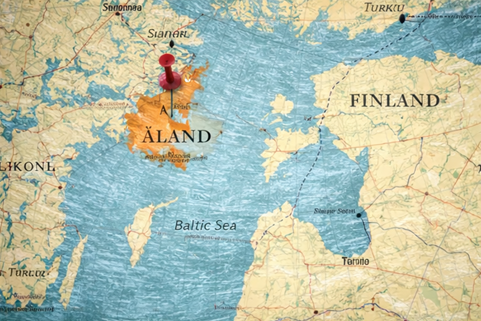
The Åland Islands consist of more than 6,000 islands and skerries, although only a small number are permanently inhabited. The landscape is flat, rocky, and strongly shaped by the sea.
Because of this geography:
- Sea travel was essential from early times
- Fishing and shipping dominated daily life
- The islands became a natural military checkpoint
Their location made Åland important not for natural resources, but for control of important sea routes.
Early Settlement and Prehistoric Life
Human presence on the Åland Islands dates back thousands of years. Archaeological discoveries show that early settlers arrived after the last Ice Age, when the land slowly rose from the sea.
Early inhabitants:
- Lived mainly by fishing and hunting
- Practiced small-scale farming
- Built settlements near the coast
The sea provided food, transport, and contact with other Baltic regions.
Åland in the Bronze and Iron Ages
During the Bronze and Iron Ages, the Åland Islands became part of a wider Baltic cultural world. Trade and movement across the sea increased.
Evidence from this period includes:
- Burial mounds
- Metal tools
- Signs of long-distance trade
These findings show that Åland was never truly isolated, even in ancient times.
Viking Age Connections
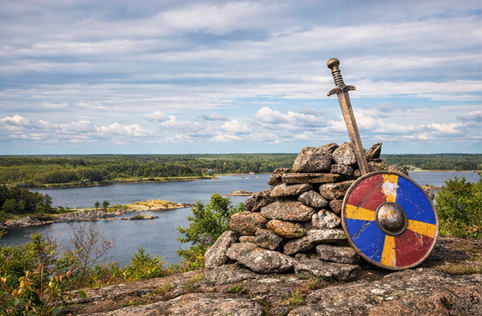
In the Viking Age (around 800–1050), the Åland Islands were connected to Scandinavian maritime networks. Although Åland was not a major Viking power center, it played a supporting role in regional movement.
Viking-era influence included:
- Trade routes
- Seafaring knowledge
- Cultural exchange
The islands likely served as resting points for ships traveling between Scandinavia and the eastern Baltic.
Medieval Period and Swedish Rule
During the Middle Ages, the Åland Islands became firmly integrated into the Kingdom of Sweden. Swedish law, administration, and culture strongly shaped island life.
Under Swedish rule:
- Christianity spread fully
- Parishes and churches were established
- Swedish became the dominant language
This period laid the foundation of Åland’s Swedish-speaking identity.
Christianity and Local Society
Medieval churches became central to community life. Religion influenced:
- Education
- Social organization
- Moral values
Church records also provide some of the earliest written historical sources about the islands.
Åland as a Border Region
Because of its location, Åland often stood between competing powers. Control of the islands was important during conflicts between Sweden and eastern rivals.
Despite this:
- Local life remained mostly agricultural
- Communities avoided large-scale destruction
- The people adapted to changing rulers while keeping daily life stable
Transition to Russian Rule (1809)
In 1809, Sweden lost Finland to the Russian Empire, and the Åland Islands became part of the Russian-controlled Grand Duchy of Finland.
This change shifted political control but did not immediately transform everyday life.
Under Russian rule:
- Local traditions were largely maintained
- Existing laws were respected
- There was no forced cultural change
Strategic Importance in the 19th Century
During the 19th century, Åland’s military importance increased. Fortifications were built, especially around the town of Bomarsund.
The islands became a strategic concern for:
- Russia
- Sweden
- Other European powers
This military role would later influence important international agreements.
Crimean War and Demilitarization
During the Crimean War (1853–1856), British and French forces destroyed Russian fortifications on Åland.
After the war:
- Åland was declared demilitarized
- Military installations were banned
- This decision was confirmed by international agreement
This special status remains in effect today.
Åland and Finnish Independence (1917)
When Finland declared independence from Russia in 1917, the Åland Islands became part of the new Finnish state.
However, many islanders:
- Wanted to reunite with Sweden
- Feared the loss of their cultural rights
This disagreement led to an international dispute.
The Åland Question
The future of Åland was discussed at the international level. Both Finland and Sweden presented their claims.
The issue was finally resolved by the League of Nations in 1921.
Autonomy Agreement (1921)
The League of Nations decided that:
- Åland would remain part of Finland
- The islands would receive wide autonomy
- The Swedish language and culture would be protected
This agreement became a famous example of peaceful conflict resolution.
Demilitarization and Neutrality
As part of the agreement:
- Åland remained demilitarized
- Military forces were not allowed
- A neutral status was guaranteed
This has helped keep the islands peaceful during times of conflict in Europe.
Development of Self-Government
Over time, Åland’s autonomy expanded. The islands gained:
- Their own parliament
- Control over education and culture
- Their own local administration
Finland kept responsibility for foreign policy and defense.
Åland During the World War Periods
Despite major wars in Europe, Åland avoided direct fighting because of its demilitarized status.
Life during wartime included:
- Economic hardship
- Disruptions in trade
- Greater importance of neutrality
The islands were largely spared from physical destruction.
Economic Life and Maritime Tradition
Shipping became central to Åland’s economy in the 19th and early 20th centuries.
Many islanders worked as:
- Sailors
- Ship owners
- Traders
Åland gained an international reputation for skilled seafarers.
Decline of Sailing Ships and Adaptation
As modern shipping replaced traditional sailing ships:
- Old maritime jobs declined
- The economy began to diversify
- Tourism, services, and transport became more important
Language and Cultural Identity
Swedish remains the only official language of Åland.
Cultural identity is protected through:
- Education
- Media
- Local laws
Language protection remains a central part of Åland’s autonomy.
Åland and European Integration
Although part of Finland, Åland has a special status within the European Union (EU).
This includes:
- Certain tax exemptions
- Special economic protections
- Wider international connections through the EU
Society and Daily Life
Modern Åland is known for:
- High living standards
- Strong community ties
- Environmental awareness
The islands successfully balance tradition with modern governance.
Åland in the Modern World
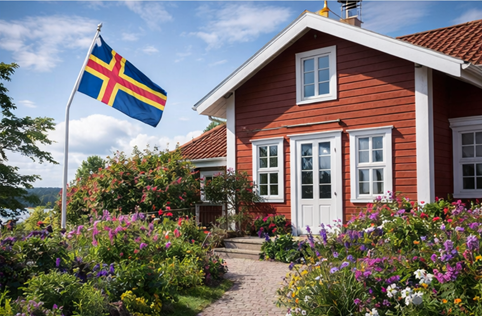
Today, the Åland Islands are often seen as a successful model of:
- Autonomy
- Minority protection
- Peaceful diplomacy
Their example is studied by international organizations such as the United Nations (UN).
Key Historical Timeline of the Åland Islands
- Prehistoric era: Early settlement
- Viking Age: Strong maritime connections
- Medieval period: Swedish rule
- 1809: Russian control
- 1856: Demilitarization
- 1917: Finland’s independence
- 1921: Autonomy decision
- Modern era: Self-government within Finland
Frequently Asked Questions (FAQ)
Where are the Åland Islands located?
They are in the Baltic Sea between Sweden and Finland.
Are the Åland Islands independent?
No, they are an autonomous region of Finland.
Why are the Åland Islands demilitarized?
To ensure long-term regional stability and peace.
Sources and Historical Accuracy
This article is written for educational and informational purposes only. It is based on widely accepted Nordic and Baltic historical research, international agreements, and academic studies. The content is original and written in a neutral and objective tone.
Conclusion
The history of the Åland Islands shows how geography, diplomacy, and cultural protection can shape a peaceful society. From ancient seafaring communities and Swedish rule to international agreements and modern autonomy, Åland has developed a unique political and cultural model. Understanding its past explains why the islands remain stable, self-governed, and culturally confident in modern Europe.
Featured History










All Rights Reserved © 2025