


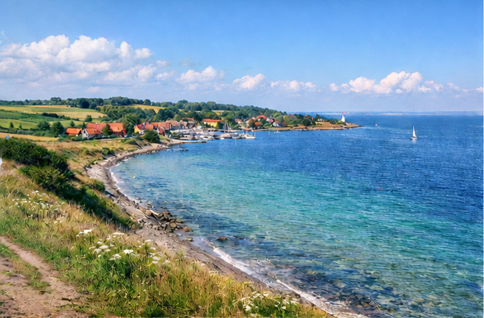
Ærø is a small island in the Baltic Sea, south of mainland Denmark, and part of the Danish archipelago. Although small in size, Ærø has a rich and unique history shaped by seafaring traditions, medieval politics, changing rulers, and a strong local identity. For centuries, the island developed at its own pace, influenced by trade routes, maritime culture, and its position between Scandinavia and continental Europe.
Unlike many larger regions, Ærø’s history is not defined by great wars or empires, but by everyday life, local governance, and a close relationship with the sea. This quiet historical path makes Ærø a good example of how small European islands preserved stability and culture over long periods of time.
Geography and Historical Importance
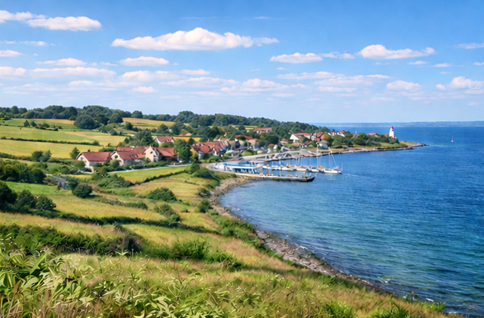
Ærø lies between the islands of Funen and Langeland, near Denmark’s southern border. Its coastline, natural harbors, and fertile land played an important role in shaping its history.
Because of its location:
- Ærø became part of regional sea trade
- Fishing and shipping developed early
- The island stayed connected to nearby regions, including what is now Germany
The sea was not a barrier, but a bridge that linked Ærø to the wider Baltic world.
Early Settlement and Prehistoric Life
Archaeological evidence shows that people lived on Ærø as early as the Stone Age. Early settlers depended on fishing, hunting, and small-scale farming.
These early communities:
- Built simple settlements
- Used stone tools
- Learned to live in a coastal environment
Bronze Age burial mounds found on the island show that organized societies and long-term settlement already existed.
Ærø in the Iron Age
During the Iron Age, Ærø became part of the wider Scandinavian cultural world. Farming improved, villages grew, and trade across the Baltic Sea increased.
Iron tools made possible:
- Better agriculture
- Improved boat building
- Stronger social organization
By this time, the people of Ærø were already deeply connected to maritime life.
Viking Age Influence
Although Ærø was not a major Viking power center, it was influenced by the Viking Age (around 800–1050).
Viking-era connections included:
- Trade routes across the Baltic Sea
- Cultural exchange
- Strong seafaring traditions
Ærø’s sheltered harbors likely served as stopping points for ships traveling between Denmark and other parts of northern Europe.
Christianity and the Medieval Period
Christianity reached Ærø during the early Middle Ages, following the wider Christianization of Denmark.
This led to:
- The building of stone churches
- Integration into the Christian world
- Changes in social and legal systems
Several medieval churches on Ærø still stand today as living reminders of this period.
Ærø Under Danish Rule
For most of its history, Ærø was closely connected to the Danish crown. However, its political status changed several times because of inheritance and regional politics.
The island was often:
- Divided into different administrative areas
- Ruled by noble families
- Influenced by royal decisions
Despite these changes, everyday life for most islanders remained stable.
Division of the Island
One unique part of Ærø’s history is that the island was divided between different rulers during the Middle Ages.
This meant:
- Different laws applied in different parts of the island
- More than one local authority existed
- Administration became more complex
Such divisions were common in medieval Europe, but unusual for such a small island.
Trade, Shipping, and Maritime Life
From the late medieval period onward, shipping became central to Ærø’s economy.
Many islanders worked as:
- Sailors
- Shipbuilders
- Traders
Over time, Ærø developed a strong maritime culture similar to other coastal areas of Scandinavia.
Town Development: Ærøskøbing and Marstal
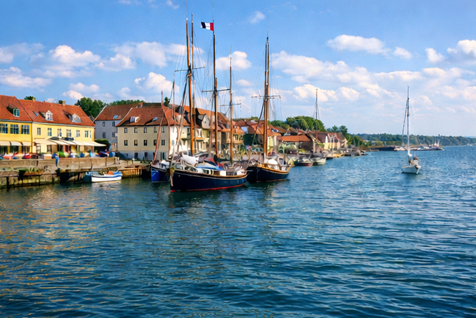
Two towns became especially important on the island:
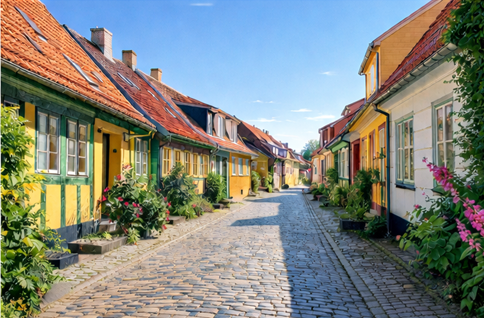
- Ærøskøbing developed as a market town and center of trade and administration
- Marstal grew into a major shipping and maritime town
Marstal, in particular, became one of Denmark’s most important sailing towns.
Ærø in the Early Modern Period
During the 16th and 17th centuries, Ærø experienced economic growth because of increased sea trade. The island avoided major destruction during European wars, which allowed daily life to continue more peacefully.
The population:
- Remained mostly rural
- Kept strong community ties
- Preserved local customs
This period strengthened Ærø’s identity as a self-reliant island society.
Reunification Under Denmark (1750)
In 1750, Ærø was fully united under Danish rule, ending centuries of divided administration.
Reunification brought:
- Unified laws
- More stable governance
- Better integration with the Danish state
This moment is often seen as a turning point in the island’s history.
19th Century Changes
The 19th century brought social and economic change. Sailing expanded, and Marstal became an important shipping center.
However:
- Industrialization arrived slowly
- Life remained mostly traditional
- Many islanders still depended on the sea for their livelihoods
Ærø and Danish National Identity
As Denmark developed a stronger national identity, Ærø became more closely integrated into the Danish state. Education, administration, and culture followed national standards, while local traditions continued to survive.
World War Periods
Ærø was affected indirectly by both World War I and World War II.
During World War II:
- Denmark was occupied by Nazi Germany
- Ærø experienced shortages and restrictions
- The island avoided heavy fighting and major destruction
Post-War Development
After 1945, modernization reached Ærø more clearly.
Changes included:
- Better transport connections
- The decline of traditional sailing ships
- Changes in population and work patterns
Slowly, the maritime economy began to shrink, changing the island’s social structure.
Transition to a Modern Economy
As shipping declined, Ærø adapted by focusing more on:
- Tourism
- Agriculture
- Small local businesses
The island’s well-preserved towns and landscapes became valuable cultural and economic assets.
Ærø in Modern Denmark
Today, Ærø is fully part of Denmark and follows Danish law and governance. It is known for its historic towns, peaceful lifestyle, and strong sense of community.
Ærø also benefits from Denmark’s membership in the European Union (EU), which supports regional development and infrastructure.
Culture, Society, and Identity
Ærø’s culture places strong importance on:
- Maritime heritage
- Community cooperation
- Preservation of history
Festivals, museums, and traditional architecture continue to play an important role in everyday life.
Key Historical Timeline of Ærø
- Stone Age: Early settlement
- Iron Age: Farming and trade expand
- Viking Age: Strong maritime connections
- Medieval era: Christianity and political division
- 1750: Reunification under Denmark
- 19th century: Shipping and sailing grow
- 20th century: Modernization
- Today: Cultural and tourist island
Frequently Asked Questions (FAQ)
Where is Ærø located?
Ærø is a Danish island in the Baltic Sea.
Is Ærø an independent country?
No, it is part of Denmark.
What is Ærø known for historically?
It is best known for its maritime culture and well-preserved historic towns.
Sources and Historical Accuracy
This article is written for educational and informational purposes only. It is based on widely accepted Danish and Scandinavian historical research, archaeological findings, and regional studies. The content is original, neutral and objective tone.
Conclusion
The history of Ærø shows how a small island can develop a strong identity without great wars or empires. Through seafaring, trade, and stable local life, Ærø preserved its culture while slowly adapting to change. Its past explains why the island remains a symbol of continuity, tradition, and community in modern Denmark.
Featured History







All Rights Reserved © 2025