Design of the Flag of Iran
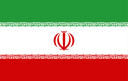
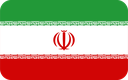
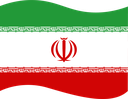
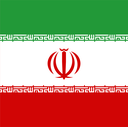
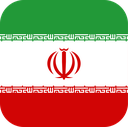
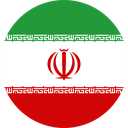
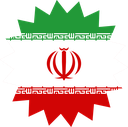
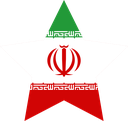
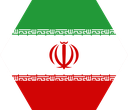
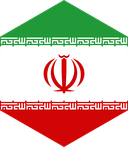
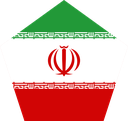
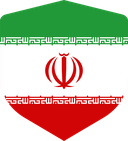
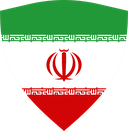
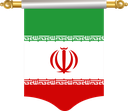
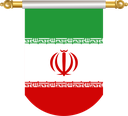
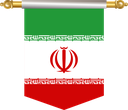
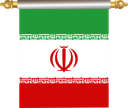
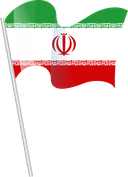
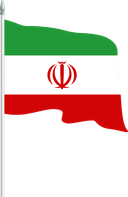
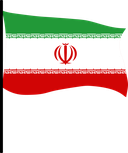
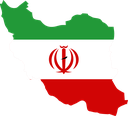
The Flag of Iran consists of three horizontal stripes of equal width. From top to bottom, the colors are green, white, and red.
At the center of the white stripe is the red national emblem of Iran, a stylized symbol representing the word “Allah.” Along the borders between the green and white stripes, and between the white and red stripes, appears a repeated Kufic script.
The design is balanced and symmetrical, with strong visual contrast and precise proportions.
Meaning of Colors and Symbols
Each element of the Flag of Iran carries strong symbolic meaning.
The green stripe represents Islam, growth, and prosperity. Green has long been associated with faith and renewal in Iranian and Islamic tradition.
The white stripe symbolizes peace, honesty, and freedom. It reflects the desire for justice and national harmony.
The red stripe represents courage, sacrifice, and martyrdom. It honors those who gave their lives in defense of the nation.
The central emblem combines four crescents and a sword, forming a symbolic representation of God and Islamic unity.
The repeated Kufic script reads “Allahu Akbar” (God is Great) and appears 22 times, symbolizing the date of the Iranian Revolution according to the Iranian calendar.
Historical Background of the Iran Flag
Iran’s tricolor design dates back to the 19th century, during the Qajar dynasty, though its meanings evolved over time. Earlier versions of the flag featured symbols such as the lion and sun.
The current design of the Flag of Iran was officially adopted on July 29, 1980, following the Islamic Revolution of 1979. The revolution marked a major political transformation, replacing the monarchy with an Islamic republic.
The updated flag removed royal imagery and introduced religious symbolism to reflect the new political and ideological direction. Readers interested in this transition can explore more context on the History of Iran page.
Cultural and National Significance
The Flag of Iran holds deep cultural, religious, and political significance. It represents independence, faith, and resistance to foreign influence.
The flag is prominently displayed during national holidays, religious events, and official ceremonies. For many citizens, it symbolizes sovereignty, sacrifice, and commitment to national values shaped by history and belief.
Respect for the flag is emphasized through laws and traditions governing its display and handling.
Relationship to Other Middle Eastern Flags
The Flag of Iran shares color similarities with several Middle Eastern and Islamic flags, particularly green, white, and red combinations.
What makes Iran’s flag unique is the integration of religious text and symbolic calligraphy into the design. This distinguishes it from neighboring flags that rely more heavily on stars or geometric shapes.
Modern Use of the Flag of Iran
Today, the Flag of Iran is flown on government buildings, schools, mosques, and public spaces across the country. It is also displayed at embassies, international organizations, and global events representing Iran abroad.
The flag plays an important role in education and national identity, helping citizens understand history, religion, and civic responsibility. Its continued use reinforces Iran’s presence and sovereignty on the world stage.
Interesting Facts About the Flag of Iran
- The script appears exactly 22 times.
- The emblem represents the word “Allah.”
- The design changed after the 1979 revolution.
- Green symbolizes Islam.
- The tricolor dates back over a century.
Frequently Asked Questions
What does the emblem on the Iran flag represent?
It represents the word “Allah” and Islamic unity.
When was the current Flag of Iran adopted?
It was adopted in 1980.
Why does the Iran flag include repeated text?
The text commemorates the Islamic Revolution.
What do the colors of the Iran flag mean?
Green represents Islam, white represents peace, and red represents sacrifice.
Where is the Iran flag commonly displayed?
It is flown on public buildings and during national events.