Design of the Flag of São Tomé and Príncipe
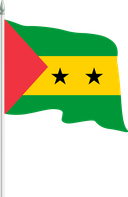
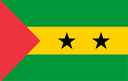
The flag of São Tomé and Príncipe features three horizontal stripes:
- Green stripe at the top
- Yellow stripe in the middle
- Green stripe at the bottom
On the hoist side, there is a red isosceles triangle pointing toward the center of the flag. Centered on the yellow stripe are two black five-pointed stars, placed side by side.
The layout is bold and balanced, combining horizontal and triangular elements to create a dynamic yet simple design.
Meaning of the Colors and Symbols
Each color and symbol on the flag carries clear national meaning.
The green color represents agriculture, lush vegetation, and natural resources. It reflects the fertile landscape of the islands and the importance of farming.
The yellow color symbolizes wealth, sunshine, and hope. It also represents cocoa production, which has played a major role in the country’s economy.
The red triangle represents struggle, sacrifice, and the fight for independence from colonial rule.
The two black stars symbolize the two main islands: São Tomé and Príncipe. The black color represents African heritage, dignity, and identity.
Together, these elements express unity, freedom, and African solidarity.
Historical Background and Adoption
São Tomé and Príncipe was uninhabited before Portuguese explorers arrived in the late 15th century. It later became a key center for sugar and cocoa production using enslaved labor.
The independence movement gained momentum in the mid-20th century, led by nationalist groups seeking self-rule.
The country gained full independence from Portugal on July 12, 1975. The national flag was adopted at independence and has remained unchanged since then.
The design reflects Pan-African ideals common among newly independent African states of the time. More historical background can be found on the history of São Tomé and Príncipe page.
Cultural and National Significance
The flag holds strong national importance and is widely displayed during Independence Day celebrations, public holidays, and official ceremonies.
It represents unity between the two islands and pride in African identity. The stars reinforce equality between São Tomé and Príncipe within a single nation.
Among African flags, the design is often compared with the Flag of Ghana and the Flag of Togo due to shared Pan-African colors, though São Tomé and Príncipe’s symbolism is unique.
The flag is also used in education and civic life to promote national values.
Official Use and Flag Etiquette
The flag of São Tomé and Príncipe is flown at government buildings, schools, embassies, and public institutions.
It is displayed during international meetings, sporting events, and diplomatic occasions.
Respectful handling of the flag is encouraged. It should be kept clean, displayed properly, and treated as a symbol of sovereignty and unity.
During national mourning, the flag may be flown at half-mast according to official protocol.
The Flag in Modern São Tomé and Príncipe
In modern times, the flag symbolizes peace, independence, and national cooperation. It appears in tourism promotion, national branding, and cultural representation.
The simple design and clear symbolism make the flag easily recognizable internationally.
The two stars remain a constant reminder of unity between the islands.
Design Strength and Recognition
The São Tomé and Príncipe flag is admired for its clear symbolism and balanced composition. The combination of stripes, triangle, and stars creates visual strength without complexity.
Its Pan-African colors link the nation to broader African identity while maintaining individuality.
The design’s simplicity ensures timeless relevance.
Questions About the Flag of São Tomé and Príncipe
When was the flag of São Tomé and Príncipe adopted?
It was adopted on July 12, 1975.
What do the two stars represent?
They represent the islands of São Tomé and Príncipe.
What does the red triangle symbolize?
It symbolizes struggle and independence.
Why are Pan-African colors used?
They represent African unity and heritage.
Is the flag the same on both sides?
Yes, the design appears on both sides of the flag.