Design of the Flag of Norway
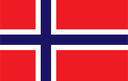
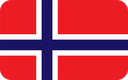
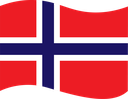
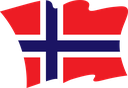
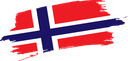
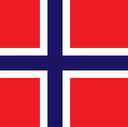
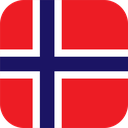
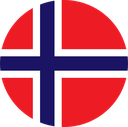
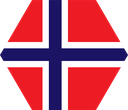
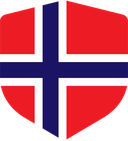
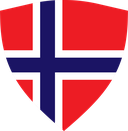
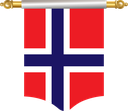
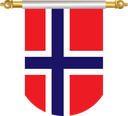
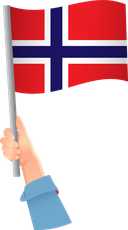
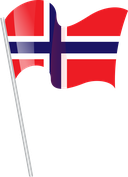
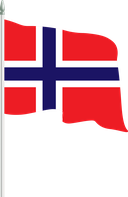
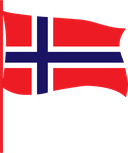
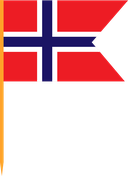
The flag of Norway features a red field with a blue Nordic cross outlined in white. The vertical arm of the cross is shifted toward the hoist side, following the traditional Nordic cross pattern used by Scandinavian countries.
The proportions of the flag are carefully defined to maintain balance and symmetry. The contrast between red, white, and blue ensures strong visibility and recognition, even at a distance.
This cross design places Norway firmly within the Nordic flag family while still allowing for a distinct national identity.
Meaning of the Colors and Symbols
Each color on the Norwegian flag carries symbolic meaning.
The red background represents strength, bravery, and the sacrifices made for independence. It also reflects historical ties to earlier Scandinavian and European traditions.
The blue cross symbolizes loyalty, justice, and Norway’s maritime heritage. Blue reflects the sea, which has played a vital role in Norwegian exploration, trade, and cultural development.
The white outline around the cross represents peace, honesty, and purity. White also balances the darker colors and improves visibility.
The Nordic cross itself represents Christianity and shared cultural heritage among the Nordic countries. It also symbolizes unity and historical connection within Scandinavia.
Historical Background and Adoption
For centuries, Norway was united with other kingdoms, including Denmark and later Sweden. During these periods, Norway did not have a fully independent national flag.
In 1821, a new flag design was proposed by Fredrik Meltzer, combining elements from other Nordic flags. The design was approved, but full independence came later.
Norway gained complete independence from Sweden in 1905, after which the flag became a powerful symbol of sovereignty and national pride. The design has remained unchanged since then.
More historical context can be found on the history of Norway page, which explains the country’s journey toward independence.
Cultural and National Significance
The Norwegian flag holds deep emotional significance and is widely displayed during national celebrations, especially Constitution Day (May 17). On this day, the flag is flown everywhere, from government buildings to private homes.
The flag represents democracy, equality, and national unity. It is commonly seen during cultural festivals, sporting events, and international gatherings.
Among Nordic flags, Norway’s design is often compared with the Flag of Sweden and the Flag of Denmark, though its color combination makes it clearly distinct.
Official Use and Flag Etiquette
The flag of Norway is flown at government institutions, schools, embassies, and public spaces. Citizens are encouraged to display the flag with respect and follow traditional guidelines.
There are established rules for raising and lowering the flag, particularly during national holidays and days of mourning. Respectful handling reflects the flag’s importance in Norwegian society.
The flag is also widely used by Norwegian ships, reflecting the country’s strong maritime tradition.
The Flag in Modern Norway
In modern Norway, the flag continues to symbolize freedom, social equality, and national identity. It appears in daily life more frequently than in many other countries, especially during celebrations.
The flag is embraced across political and cultural lines, making it a unifying symbol rather than a divisive one.
Its continued use reflects stability, continuity, and pride in Norwegian heritage.
Design Strength and Global Recognition
The Norwegian flag is praised for its clarity and timeless design. The Nordic cross layout ensures instant regional recognition, while the color scheme gives it a unique appearance.
The simplicity of the design makes it effective in both traditional and modern contexts, ensuring global recognition.
The flag’s influence can be seen across Scandinavia, reinforcing shared cultural values while maintaining national individuality.
Questions About the Flag of Norway
When was the flag of Norway adopted?
The design was adopted in 1821 and became the sole national flag after independence in 1905.
What does the Nordic cross represent?
It represents Christianity and shared Nordic heritage.
Why are red, white, and blue used?
They symbolize freedom, bravery, peace, and justice.
Is the Norwegian flag similar to other Nordic flags?
Yes, it follows the Nordic cross design used across Scandinavia.
Is the Norway flag the same on both sides?
Yes, the design appears on both sides of the flag.