Design of the Flag of the Northern Mariana Islands
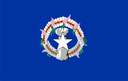
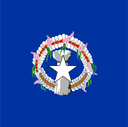
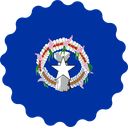
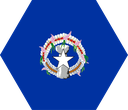
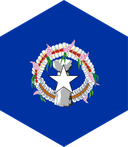
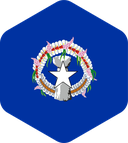
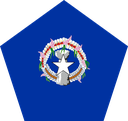
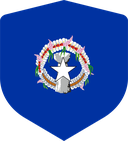
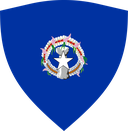
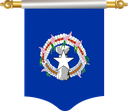
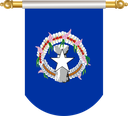
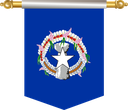
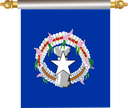
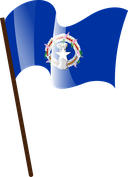
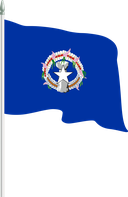
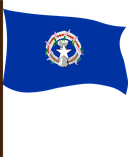
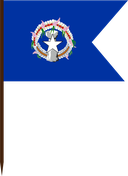
The flag of the Northern Mariana Islands features a deep blue field symbolizing the Pacific Ocean. At the center of the flag is a white five-pointed star, inside which appears a gray latte stone.
Behind the star is a green wreath made of local flowers. The design is symmetrical and centered, ensuring clarity and strong visual balance.
The elements are layered in a way that highlights cultural symbolism while maintaining a formal and recognizable appearance suitable for official use.
Meaning of the Colors and Symbols
Each color and symbol on the flag carries cultural and political meaning.
The blue background represents the Pacific Ocean that surrounds the islands and connects them to the wider world. It also symbolizes peace, loyalty, and stability.
The white star represents the Commonwealth status of the Northern Mariana Islands and their political union with the United States. The five points of the star reflect unity and shared values.
The latte stone is a traditional Chamorro architectural symbol. It represents strength, permanence, and ancestral heritage. Latte stones were historically used as foundations for houses and are a powerful symbol of Indigenous culture.
The green wreath represents natural beauty, growth, and the islands’ tropical environment. It also symbolizes honor and unity among the island communities.
Historical Background and Adoption
The Northern Mariana Islands have a long history shaped by Indigenous settlement and foreign administration, including Spanish, German, Japanese, and American rule.
After World War II, the islands became part of the Trust Territory of the Pacific Islands under U.S. administration. In 1976, the Northern Mariana Islands entered into a covenant to establish a commonwealth in political union with the United States.
The national flag was officially adopted on July 1, 1985, reflecting both local heritage and political status. More historical context can be found on the history of the Northern Mariana Islands page.
Cultural and National Significance
The flag holds deep cultural importance for the people of the Northern Mariana Islands. It represents respect for Indigenous traditions while acknowledging modern political reality.
The latte stone is especially significant, as it appears in many cultural representations beyond the flag, including monuments and public spaces.
Among Pacific territory flags, the Northern Mariana Islands flag is often compared with the Flag of Guam, though the symbolism and design elements are distinct.
Official Use and Flag Etiquette
The flag of the Northern Mariana Islands is flown at government buildings, schools, and public institutions throughout the territory. It is often displayed alongside the Flag of the United States during official events.
Respectful handling of the flag is encouraged. It should be displayed properly and treated as a symbol of cultural heritage and self-governance.
During national observances and ceremonies, the flag plays a central role in expressing identity and unity.
The Flag in Modern Northern Mariana Islands
In modern times, the flag continues to represent continuity and pride. It is displayed during cultural festivals, public celebrations, and international events involving the territory.
The flag helps reinforce a shared identity among residents while honoring Indigenous roots and community values.
Despite changes in governance and global influence, the flag remains a stable symbol of the Northern Mariana Islands’ unique place in the Pacific.
Design Strength and Recognition
The Northern Mariana Islands flag is praised for combining cultural depth with clear design. The centered layout and limited color palette ensure readability and strong recognition.
The inclusion of the latte stone distinguishes the flag from others and educates viewers about local heritage.
Its balanced symbolism makes it effective both as a civic emblem and a cultural representation.
Questions About the Flag of the Northern Mariana Islands
When was the flag of the Northern Mariana Islands adopted?
The flag was adopted on July 1, 1985.
What does the latte stone symbolize?
It represents strength, heritage, and Indigenous culture.
Why is there a white star on the flag?
It symbolizes commonwealth status and unity.
What does the blue background represent?
It represents the Pacific Ocean and peace.
Is the flag the same on both sides?
Yes, the design appears on both sides of the flag.