Design of the Flag of Oklahoma
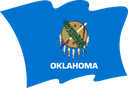
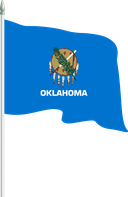
The flag of Oklahoma features a light blue field with a traditional Native American shield placed at the center. The shield is circular and made from buffalo hide, decorated with symbolic elements.
Crossing the shield are two objects: a peace pipe (calumet) and an olive branch, arranged diagonally. Around the shield are seven eagle feathers hanging from the bottom.
Below the central emblem appears the word “Oklahoma” in white capital letters, clearly identifying the state.
The overall design is clean, symbolic, and visually balanced, making the flag easily recognizable.
Meaning of the Colors and Symbols
Each element of the Oklahoma flag carries deep meaning.
The light blue background symbolizes loyalty, peace, and devotion. Blue also reflects the sky and openness, reinforcing themes of harmony.
The buffalo hide shield represents Native American defense and protection. It honors the Indigenous nations whose history is central to Oklahoma’s identity.
The peace pipe symbolizes Native American traditions and the desire for peace. It represents dialogue, respect, and unity.
The olive branch is a universal symbol of peace and friendship, emphasizing harmony between Native and non-Native communities.
The seven eagle feathers represent sacred symbols in many Native American cultures and are often associated with honor, strength, and spiritual guidance.
The word “Oklahoma” comes from the Choctaw language, meaning “Red People,” highlighting the state’s Indigenous heritage.
Historical Background and Adoption
Oklahoma’s history is deeply connected to Native American nations, particularly through events such as the Indian Removal policies of the 19th century. The area later became Oklahoma Territory and was eventually opened to non-Native settlement.
Oklahoma was admitted to the United States as the 46th state in 1907. For several years, the state used different flag designs.
The current Oklahoma flag was officially adopted on April 2, 1925. It was designed to emphasize peace and cultural respect rather than military or political imagery. Minor design refinements were made in 1941 to standardize colors and lettering.
More historical context can be found on the history of Oklahoma page.
Cultural and State Significance
The Oklahoma flag is widely respected for its strong Native American symbolism. It reflects cooperation between cultures rather than conflict, making it unique among U.S. state flags.
It is often compared with the Flag of New Mexico, which also honors Indigenous heritage, though Oklahoma’s design focuses more on peace and unity.
The flag is proudly displayed during state holidays, Native cultural celebrations, and civic events across Oklahoma.
Official Use and Flag Etiquette
The flag of Oklahoma is flown at the State Capitol, government buildings, schools, and public institutions. It is commonly displayed alongside the Flag of the United States.
Respectful handling of the flag is encouraged, especially due to its sacred symbols. The flag should be kept clean and displayed properly during official ceremonies and commemorative events.
The Flag in Modern Oklahoma
In modern Oklahoma, the flag represents shared identity and respect for history. It is frequently used in educational materials, cultural programs, and state branding.
The flag has gained praise from designers and historians for avoiding clutter while conveying deep meaning. Its message of peace remains relevant in a diverse modern society.
The continued use of Indigenous symbols reinforces Oklahoma’s commitment to honoring its roots.
Design Strength and Recognition
The Oklahoma flag is often ranked among the best U.S. state flags due to its clear symbolism and thoughtful design. The use of imagery instead of complex seals improves visibility and recognition.
Its light blue background is uncommon among state flags, further enhancing its distinctiveness.
The combination of Native and universal peace symbols creates a timeless and educational design.
Questions About the Flag of Oklahoma
When was the flag of Oklahoma adopted?
The flag was adopted on April 2, 1925.
What does the peace pipe represent?
It symbolizes peace and Native American tradition.
Why is there an olive branch on the flag?
It represents peace and unity between cultures.
What do the eagle feathers symbolize?
They represent honor, strength, and spiritual significance.
Is the Oklahoma flag the same on both sides?
Yes, the design appears on both sides of the flag.