Design of the Flag of Yemen
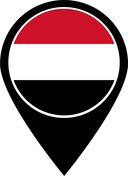
The Flag of Yemen consists of three horizontal stripes of equal width:
- Red stripe at the top
- White stripe in the middle
- Black stripe at the bottom
The flag contains no emblem, symbol, or text, giving it a clean and bold appearance. Its simplicity emphasizes color symbolism rather than imagery.
Meaning of Colors and Symbols
Each color of the Flag of Yemen carries strong symbolic meaning rooted in history and Arab identity.
The red color represents the blood shed during the struggle for independence and revolution. It symbolizes sacrifice, courage, and resistance against oppression.
The white color represents peace, hope, and a brighter future. It also symbolizes unity and the aspiration for stability.
The black color represents dark periods of the past, including foreign domination and internal conflict. It serves as a reminder of hardship overcome.
Together, the red, white, and black colors are known as Pan-Arab colors, symbolizing shared history and unity among Arab nations.
Historical Background of the Yemen Flag
The Flag of Yemen was officially adopted on May 22, 1990, when North Yemen and South Yemen were unified to form the modern Republic of Yemen.
Before unification, both North and South Yemen used similar tricolor designs with slight differences, including stars or emblems. The unification flag removed all symbols to represent equality and unity between the former states.
The design reflects Yemen’s revolutionary movements and its alignment with Arab nationalist symbolism.
Readers interested in political unification can explore more context on the History of Yemen page.
Cultural and National Significance
The Flag of Yemen holds strong emotional and political significance for its people.
It represents national unity, sovereignty, and the hope for peace despite ongoing challenges. The flag is prominently displayed during national holidays, political events, and public demonstrations.
For Yemenis, the flag symbolizes resilience, identity, and the desire for stability and independence.
Relationship to Other Arab Flags
The Flag of Yemen closely resembles the flags of Egypt, Syria, and Iraq, all of which use the Pan-Arab tricolor.
While the colors are shared, Yemen’s flag is distinct because it does not include any emblem or star. Comparing Arab flags highlights how Yemen emphasizes simplicity and unity over individual symbolism.
Its design reflects broader Arab solidarity.
Modern Use of the Flag of Yemen
Today, the Flag of Yemen is flown on government buildings, public institutions, and during national events throughout the country.
It is also used internationally to represent Yemen at embassies, global organizations, and diplomatic forums. The flag plays an important role in civic awareness, reinforcing national identity and unity.
Despite political instability, the flag remains a strong symbol of sovereignty and shared national identity.
Interesting Facts About the Flag of Yemen
- It was adopted in 1990
- It symbolizes national unification
- It uses Pan-Arab colors
- It has no emblem or text
- It represents unity and revolution
Questions About the Flag of Yemen
What do the colors of the Yemen flag represent?
Red represents sacrifice, white represents peace, and black represents past hardship.
When was the Flag of Yemen adopted?
It was adopted on May 22, 1990.
Why does the Yemen flag have no symbol?
To represent unity between North and South Yemen.
Is the Yemen flag similar to other Arab flags?
Yes, it uses Pan-Arab colors shared by several Arab nations.
Where is the Yemen flag commonly displayed?
On public buildings and during national events.