Design of the Flag of Madagascar
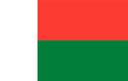
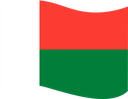
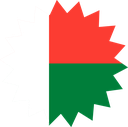
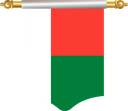
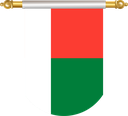
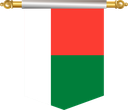
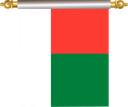
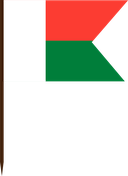
The Flag of Madagascar consists of three colors arranged in a unique layout.
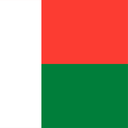
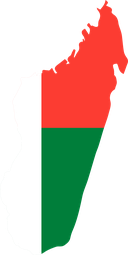
- A vertical white stripe runs along the hoist side
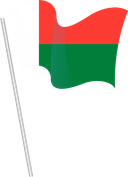
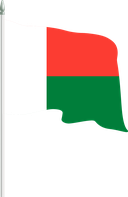
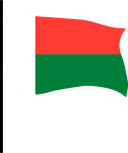
- To the right are two horizontal stripes:
- The top stripe is red
- The bottom stripe is green
This combination creates a balanced and recognizable design that distinguishes Madagascar’s flag from most tricolors.
Meaning of Colors and Symbols
Each color of the Flag of Madagascar carries strong historical and cultural meaning.
The white color represents purity, loyalty, and hope. It is also associated with the Merina Kingdom, which played a major role in Madagascar’s history.
The red color represents sovereignty, courage, and the blood shed in defense of the nation. It symbolizes strength and the determination to remain independent.
The green color represents the island’s rich natural environment, agriculture, and rural communities. It symbolizes fertility, growth, and the importance of land to Malagasy society.
Together, these colors express unity between history, people, and nature.
Historical Background of the Madagascar Flag
The Flag of Madagascar was officially adopted on October 14, 1958, shortly before the country gained full independence from France in 1960.
The red and white colors were historically linked to the Merina royal tradition, while green was added to represent the wider population and agricultural roots of the nation.
Madagascar’s transition from colonial rule to independence made the flag an important symbol of national identity and self-determination. Readers interested in this period can explore more context on the History of Madagascar page.
Cultural and National Significance
The Flag of Madagascar holds deep cultural importance for the Malagasy people. It represents unity among diverse ethnic groups spread across the island.
The flag is prominently displayed during Independence Day, national ceremonies, and cultural festivals. For citizens, it symbolizes freedom, heritage, and respect for the land.
Because Madagascar is known for its unique biodiversity, the green stripe is especially meaningful as a representation of environmental richness.
Relationship to Other African Flags
The Flag of Madagascar differs from many African flags that use Pan-African colors and horizontal stripes.
Its vertical white stripe and historical color selection reflect a blend of local tradition and modern statehood. Comparing African national flags highlights Madagascar’s distinct identity shaped by island geography and royal heritage.
Modern Use of the Flag of Madagascar
Today, the Flag of Madagascar is flown on government buildings, schools, public institutions, and national landmarks across the country. It is also displayed at embassies, international organizations, and global sporting events representing Madagascar abroad.
The flag plays an important role in civic education, helping citizens understand independence, cultural unity, and national responsibility. Its continued use reinforces Madagascar’s identity as a sovereign island nation.
Interesting Facts About the Flag of Madagascar
- It was adopted in 1958.
- The design reflects royal history.
- Green represents agriculture and nature.
- The layout is unique among African flags.
- It symbolizes unity and independence.
Frequently Asked Questions
What do the colors of the Madagascar flag represent?
White represents purity, red represents sovereignty, and green represents land and agriculture.
When was the Flag of Madagascar adopted?
It was adopted on October 14, 1958.
Why does the Madagascar flag have a vertical stripe?
It reflects historical design choices linked to royal tradition.
Is the Madagascar flag influenced by colonial history?
Yes, it was adopted during the transition to independence.
Where is the Madagascar flag commonly displayed?
It is flown on public buildings and during national events.