Design of the Flag of Fiji
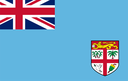
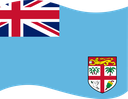
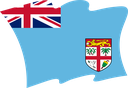
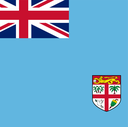
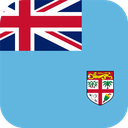
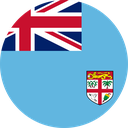
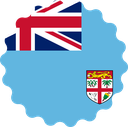
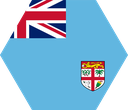
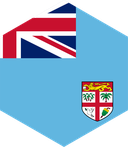
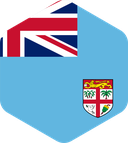
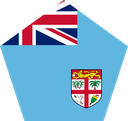
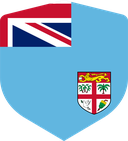
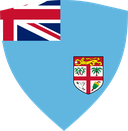
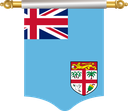
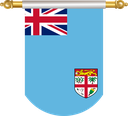
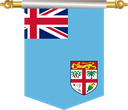
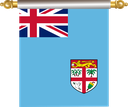
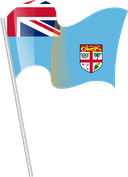
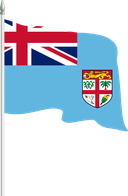
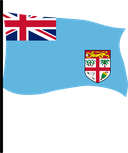
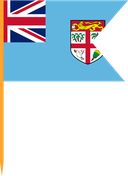
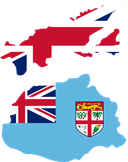
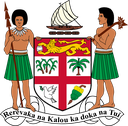
The Flag of Fiji features a light blue field with the Union Jack placed in the upper hoist-side corner. On the fly side of the flag appears the Fijian shield, which forms part of the national coat of arms.
The light blue background sets Fiji apart from many other flags that use darker tones. The Union Jack reflects historical connections, while the shield provides a strong local identity. The overall design is clean and easily recognizable.
Meaning of Colors and Symbols
Each element of the Flag of Fiji carries clear symbolic meaning.
The light blue background represents the Pacific Ocean that surrounds the islands and plays a central role in Fiji’s culture, economy, and way of life. It also symbolizes peace and openness.
The Union Jack represents Fiji’s historical ties to the United Kingdom and its past as a British colony. It reflects legal, political, and cultural influences that shaped modern Fiji.
The shield features several important symbols. The St. George’s Cross represents Christian heritage. The lion holding a cocoa pod symbolizes British influence and authority. The sugarcane, coconut palm, and dove represent agriculture, prosperity, and peace, all of which are central to Fiji’s national identity.
Historical Background of the Fiji Flag
The Flag of Fiji was officially adopted on October 10, 1970, when Fiji gained independence from British rule. Rather than creating an entirely new design, Fiji chose to retain elements of the colonial flag while incorporating national symbols.
This decision reflected a desire for continuity and stability during the transition to independence. Over time, there have been discussions about changing the flag, but it remains unchanged today. Readers interested in Fiji’s independence can explore more context on the History of Fiji page.
Cultural and National Significance
The Flag of Fiji holds strong cultural significance and represents unity among Fiji’s diverse communities. It symbolizes independence while acknowledging historical foundations.
The flag is prominently displayed during Independence Day celebrations, cultural festivals, and official ceremonies. For Fijians, it represents pride in island heritage, peaceful coexistence, and national identity.
Relationship to Other Pacific and Commonwealth Flags
The Flag of Fiji shares similarities with other Commonwealth flags that feature the Union Jack, such as those of Australia and New Zealand. However, Fiji’s light blue background and agricultural symbols make it distinct.
Compared to other Pacific island flags that emphasize indigenous symbols, Fiji’s flag highlights a blend of tradition and colonial history. This reflects the country’s unique path to nationhood.
Modern Use of the Flag of Fiji
Today, the Flag of Fiji is flown on government buildings, schools, and public spaces throughout the islands. It is also displayed at embassies, international organizations, and global events representing Fiji abroad.
The flag plays an important role in education and civic life, helping citizens understand national history, independence, and unity. Its continued use reinforces Fiji’s identity as a peaceful Pacific nation.
Interesting Facts About the Flag of Fiji
- The flag was adopted in 1970.
- It features a light blue background.
- The shield shows agricultural symbols.
- The Union Jack reflects historical ties.
- The dove symbolizes peace.
Frequently Asked Questions
What does the light blue color on the Fiji flag represent?
It represents the Pacific Ocean and peace.
Why does the Fiji flag include the Union Jack?
It reflects historical ties to the United Kingdom.
When was the Flag of Fiji adopted?
It was adopted on October 10, 1970.
What do the symbols on the shield represent?
They represent agriculture, peace, and heritage.
Where is the Fiji flag commonly displayed?
It is flown on public buildings and during national events.