Design of the Flag of Venezuela
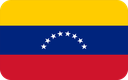
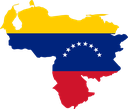
The Flag of Venezuela consists of three horizontal stripes of equal width:
- Yellow stripe on the top
- Blue stripe in the middle
- Red stripe on the bottom
Centered on the blue stripe is an arc of eight white five-pointed stars. In some official versions, the national coat of arms appears in the upper hoist corner of the yellow stripe.
The layout is symmetrical and instantly recognizable.
Meaning of Colors and Symbols
Each element of the Flag of Venezuela carries strong symbolic meaning.
The yellow color represents wealth, natural resources, and the richness of the land. It also symbolizes hope and prosperity.
The blue color represents the Caribbean Sea and the sky. It symbolizes independence, freedom, and the geographical separation from colonial rule.
The red color represents the blood shed by those who fought for independence. It symbolizes courage, sacrifice, and patriotism.
The eight white stars represent Venezuela’s provinces that supported independence. They symbolize unity, equality, and the collective strength of the nation.
Together, these elements express freedom, sacrifice, and national unity.
Historical Background of the Venezuela Flag
The original tricolor design of the Flag of Venezuela was created by Francisco de Miranda, a key figure in South American independence movements.
The flag was first raised in 1806 and later became the foundation for several national flags in the region. Venezuela officially adopted the tricolor after declaring independence from Spain in 1811.
The number of stars changed over time. In 2006, an eighth star was officially added to recognize an additional historical province, completing the current design.
Readers interested in independence movements can explore more context on the History of Venezuela page.
Cultural and National Significance
The Flag of Venezuela holds deep emotional significance for Venezuelans.
It is a symbol of independence, sovereignty, and national pride. The flag is prominently displayed during Independence Day, civic ceremonies, cultural events, and sporting competitions.
For many citizens, the flag represents resilience, shared struggle, and hope for unity and progress.
Relationship to Other South American Flags
The Flag of Venezuela is closely related to the flags of Colombia and Ecuador, which share the same yellow-blue-red tricolor.
These similarities reflect the shared history of independence under Simón Bolívar and the former union known as Gran Colombia. Comparing these flags highlights how shared revolutionary origins evolved into distinct national identities.
Venezuela’s use of stars distinguishes its flag from its neighbors.
Modern Use of the Flag of Venezuela
Today, the Flag of Venezuela is flown on government buildings, schools, public institutions, and national landmarks throughout the country.
It is also displayed at embassies, international organizations, and global events representing Venezuela abroad. The flag plays an important role in education, helping citizens understand independence, unity, and national values.
Its continued use reinforces Venezuela’s identity as a sovereign nation shaped by history and shared ideals.
Interesting Facts About the Flag of Venezuela
- It uses a tricolor shared with neighboring countries
- The stars form a curved arc
- The design dates back to the early 1800s
- An eighth star was added in 2006
- It was inspired by independence ideals
Questions About the Flag of Venezuela
What do the colors of the Venezuela flag represent?
Yellow represents wealth, blue represents freedom and the sea, and red represents sacrifice.
Why does the Venezuela flag have eight stars?
They represent the provinces that supported independence.
Who designed the Venezuela flag?
It was designed by Francisco de Miranda.
When was the current version of the flag adopted?
The current eight-star version was adopted in 2006.
Where is the Venezuela flag commonly displayed?
On public buildings and during national events.