Design of the Flag of Madeira
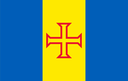
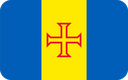
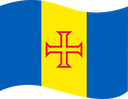
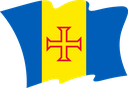
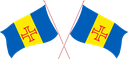
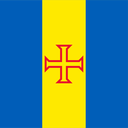
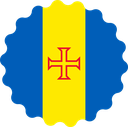
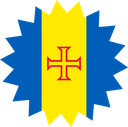
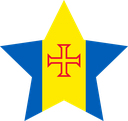
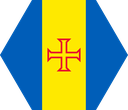
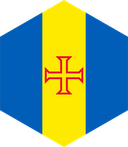
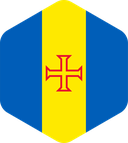
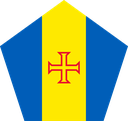
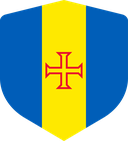
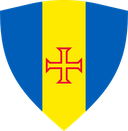
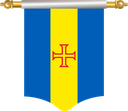
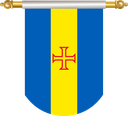
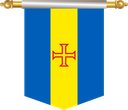
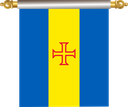
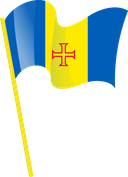
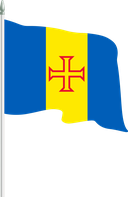
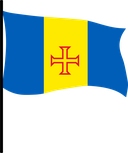
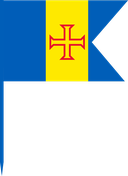
The Flag of Madeira is divided into three vertical stripes of unequal width.
- The left stripe is blue
- The center stripe is yellow and wider than the others
- The right stripe is blue
At the center of the yellow stripe is a red Cross of Christ outlined in white.
The design is bold and symmetrical, with strong contrast that highlights the central emblem.
Meaning of Colors and Symbols
Each element of the Flag of Madeira carries historical and symbolic meaning.
The blue stripes represent the Atlantic Ocean that surrounds the islands. They symbolize maritime heritage, exploration, and Madeira’s geographic identity as an island region.
The yellow stripe represents the islands’ climate, natural light, and economic prosperity. It is also associated with hope and opportunity.
The Cross of Christ is a historic Portuguese symbol linked to the Age of Discoveries. It represents faith, heritage, and Madeira’s role in early Atlantic exploration.
The red color of the cross symbolizes courage and sacrifice, while the white outline represents peace and continuity.
Together, these elements express autonomy, history, and maritime tradition.
Historical Background of the Madeira Flag
Madeira was discovered by Portuguese explorers in the early 15th century and quickly became an important stop in Atlantic navigation.
The Cross of Christ was widely used on Portuguese ships during the Age of Discoveries, making it a strong historical symbol for Madeira.
The modern Flag of Madeira was officially adopted in 1978, following the granting of political autonomy to the Autonomous Region of Madeira after Portugal’s democratic transition.
The flag was designed to reflect both regional autonomy and historical connection to Portugal. Readers interested in this background can explore more context on the History of Madeira page.
Cultural and Regional Significance
The Flag of Madeira holds strong cultural significance for residents of the islands. It represents regional pride, self-governance, and respect for history.
The flag is prominently displayed during regional holidays, public ceremonies, and cultural festivals. For Madeirans, it symbolizes identity, autonomy, and connection to the sea.
The Cross of Christ reinforces the islands’ historical importance during early global exploration.
Relationship to the Flag of Portugal
While the Flag of Madeira shares historical symbols with Portugal, it is visually distinct from the Flag of Portugal.
Portugal’s national flag emphasizes republican symbolism, while Madeira’s flag highlights maritime history and autonomy. Comparing the two flags shows how regional identity exists within a unified national framework.
Modern Use of the Flag of Madeira
Today, the Flag of Madeira is flown on regional government buildings, public institutions, ports, and cultural landmarks across the islands. It is also displayed during international events where Madeira is represented separately in cultural or sporting contexts.
The flag plays an important role in civic education, helping residents understand regional history, autonomy, and cultural heritage. Its continued use reinforces Madeira’s status as a self-governing Portuguese region.
Interesting Facts About the Flag of Madeira
- It was adopted in 1978.
- The center stripe is wider than the others.
- The Cross of Christ links to the Age of Discoveries.
- Blue represents the Atlantic Ocean.
- The flag symbolizes regional autonomy.
Frequently Asked Questions
What does the Cross of Christ on the Madeira flag represent?
It represents historical exploration, faith, and heritage.
When was the Flag of Madeira adopted?
It was adopted in 1978.
Why does the Madeira flag use blue and yellow?
Blue represents the ocean, and yellow represents prosperity and light.
Is Madeira’s flag different from Portugal’s flag?
Yes, it reflects regional autonomy and history.
Where is the Madeira flag commonly displayed?
It is flown on regional buildings and during cultural events.