Design of the Flag of Senegal
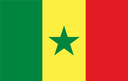
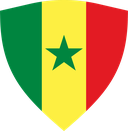
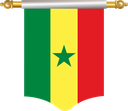
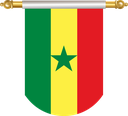
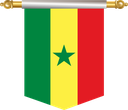
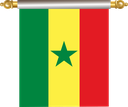
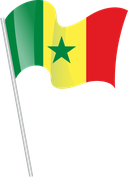
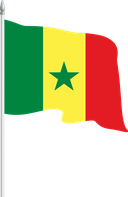
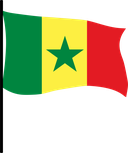
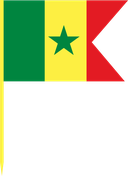
The flag of Senegal features three vertical stripes of equal width:
- Green on the hoist side
- Yellow in the center
- Red on the fly side
At the center of the yellow stripe is a green five-pointed star.
The design is clean, symmetrical, and easy to recognize. While it shares Pan-African colors with many African nations, the central star gives Senegal’s flag a distinct identity.
Meaning of the Colors and Symbols
Each color and symbol on the Senegalese flag carries deep cultural and historical meaning.
The green color represents hope, agriculture, and Islamic faith. Green is closely associated with Islam, which plays an important role in Senegalese society.
The yellow color symbolizes wealth, progress, and knowledge. It reflects natural resources as well as enlightenment and development.
The red color represents sacrifice, struggle, and determination. It honors those who fought for independence and national dignity.
The green star symbolizes unity, guidance, and national hope. Its five points are often interpreted as representing human dignity and moral values guiding the nation forward.
Together, these elements express balance between faith, progress, and sacrifice.
Historical Background and Adoption
Senegal was part of French West Africa during the colonial era. After World War II, nationalist movements gained strength across the region.
Senegal first became part of the Mali Federation in 1959, alongside present-day Mali. During this brief period, a similar tricolor flag was used.
After the federation dissolved, Senegal gained full independence on April 4, 1960, and adopted its current national flag.
The design retained Pan-African colors while introducing the green star as a uniquely Senegalese symbol. More historical context can be found on the history of Senegal page.
Cultural and National Significance
The Senegal flag holds strong national importance and is widely displayed during Independence Day celebrations, religious holidays, and official ceremonies.
It represents unity among Senegal’s diverse ethnic groups and regions. The flag is also commonly seen at sporting events, especially football matches, where it symbolizes national pride.
Among African flags, Senegal’s design is often compared with the Flag of Mali and the Flag of Guinea, though the star clearly distinguishes it.
The flag plays an important role in education, teaching values of unity and citizenship.
Official Use and Flag Etiquette
The flag of Senegal is flown at government buildings, schools, embassies, and public institutions.
It is displayed during diplomatic meetings, international conferences, and cultural festivals.
Respectful handling of the flag is encouraged. It should be kept clean, displayed correctly, and treated as a symbol of sovereignty and national unity.
During national mourning, the flag may be flown at half-mast following official protocol.
The Flag in Modern Senegal
In modern Senegal, the flag symbolizes peace, democracy, and stability. Senegal is known for its relatively peaceful political history, and the flag reflects this national character.
The green star continues to represent hope for progress and unity in a changing world.
The flag is also used widely in tourism promotion and international representation.
Design Strength and Recognition
The Senegalese flag is admired for its clarity and symbolism. The vertical tricolor is bold, while the central star adds meaning without complicating the design.
Its Pan-African colors link Senegal to the broader African independence movement while maintaining individuality.
The simple layout ensures strong recognition both within Africa and globally.
Questions About the Flag of Senegal
When was the flag of Senegal adopted?
It was adopted on April 4, 1960.
What do the colors of the Senegal flag represent?
They represent faith, progress, and sacrifice.
What does the green star symbolize?
It symbolizes unity, guidance, and hope.
Is Senegal’s flag similar to other African flags?
Yes, it uses Pan-African colors but has a unique star.
Is the flag the same on both sides?
Yes, the design appears on both sides of the flag.