Design of the Flag of Malta
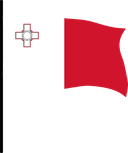
The Flag of Malta consists of two vertical stripes of equal width.
- The left stripe is white
- The right stripe is red
In the upper hoist corner of the white stripe is the George Cross, outlined in red.
The design is minimal and balanced, with the George Cross serving as the central point of significance.
Meaning of Colors and Symbols
Each element of the Flag of Malta carries strong symbolic meaning.
The white color represents peace, honesty, and purity. It reflects Malta’s desire for harmony and moral integrity.
The red color represents bravery, sacrifice, and strength. It symbolizes the courage of the Maltese people throughout centuries of defense and conflict.
The George Cross is a symbol of extraordinary bravery. It was awarded to the people of Malta by King George VI of the United Kingdom in 1942 for their heroism during World War II, when Malta endured heavy bombardment.
The red outline around the cross was added later to improve visibility and clarity.
Together, these elements express honor, sacrifice, and national pride.
Historical Background of the Malta Flag
The colors red and white have been associated with Malta for centuries. According to tradition, they date back to the time of Count Roger I of Sicily in the 11th century.
The modern Flag of Malta was officially adopted on September 21, 1964, when Malta gained independence from British rule.
The inclusion of the George Cross reflects Malta’s role during World War II and its recognition for collective bravery. Readers interested in this period can explore more context on the History of Malta page.
Cultural and National Significance
The Flag of Malta holds deep emotional importance for the Maltese people. It represents unity, courage, and respect earned on the global stage.
The flag is prominently displayed during Independence Day, national ceremonies, and remembrance events. For citizens, it symbolizes dignity, sacrifice, and pride in national history.
The George Cross is not only a military honor but also a symbol of civilian resilience.
Relationship to Other European Flags
The Flag of Malta is unique among European national flags due to the inclusion of a military decoration rather than a coat of arms or religious symbol.
While some European flags reflect monarchy or faith, Malta’s flag highlights collective courage. Comparing European flags shows how Malta’s design stands apart through historical recognition rather than abstract symbolism.
Modern Use of the Flag of Malta
Today, the Flag of Malta is flown on government buildings, schools, public institutions, and national landmarks throughout the country. It is also displayed at embassies, international organizations, and sporting events representing Malta abroad.
The flag plays an important role in civic education, helping citizens understand national values, sacrifice, and independence. Its continued use reinforces Malta’s identity as a resilient and respected European nation.
Interesting Facts About the Flag of Malta
- It was adopted in 1964.
- The George Cross was awarded in 1942.
- Red and white date back centuries.
- It symbolizes collective bravery.
- It is recognized internationally.
Frequently Asked Questions
What does the George Cross on the Malta flag represent?
It represents bravery and heroism during World War II.
When was the Flag of Malta adopted?
It was adopted on September 21, 1964.
Why is the George Cross on a national flag?
It honors the courage of the Maltese people.
What do the colors of the Malta flag symbolize?
White represents peace, and red represents courage and sacrifice.
Where is the Malta flag commonly displayed?
It is flown on public buildings and during national events.