Design of the Flag of Dominican Republic
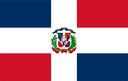
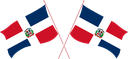
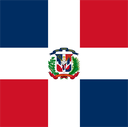
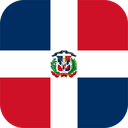
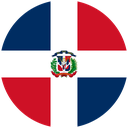
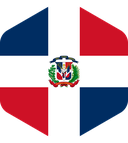
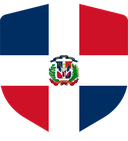
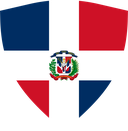
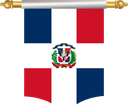
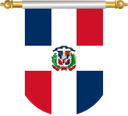
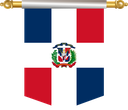
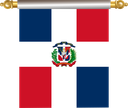
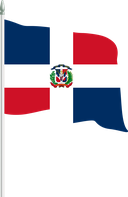
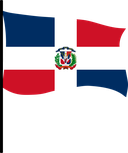
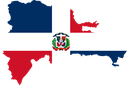
The Flag of Dominican Republic is divided by a white cross that extends to the edges of the flag. This cross separates the flag into four rectangles. The top left and bottom right rectangles are blue, while the top right and bottom left rectangles are red.
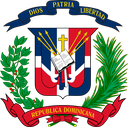
At the center of the white cross is the national coat of arms, which features a shield, laurel branches, a ribbon, and an open Bible. The balanced layout and central emblem give the flag a formal and dignified appearance that is instantly recognizable.
Meaning of Colors and Symbols
Each element of the Flag of Dominican Republic carries deep symbolic meaning.
The blue color represents liberty, protection, and the ideals of freedom. It reflects hope and the belief in a just and sovereign nation.
The red color symbolizes the blood shed by patriots who fought for independence. It represents sacrifice, courage, and the determination of the Dominican people.
The white cross stands for peace, unity, and faith. It reflects the role of Christianity in Dominican history and society.
The coat of arms is unique among national flags. It includes an open Bible, symbolizing truth and faith, with a banner reading “Dios, Patria, Libertad” (God, Fatherland, Liberty). This motto summarizes the core values of the nation.
Historical Background of the Dominican Republic Flag
The Flag of Dominican Republic was first raised on February 27, 1844, the day the country declared independence from Haitian rule. The design was inspired by earlier revolutionary symbols and emphasized both freedom and religious faith.
Since independence, the flag has remained largely unchanged, reflecting continuity and respect for national values. Minor adjustments were made to standardize proportions and details of the coat of arms. Readers interested in the independence movement can explore more context on the History of Dominican Republic page.
Cultural and National Significance
The Flag of Dominican Republic holds deep cultural and emotional significance. It is a symbol of independence, resilience, and shared belief in national ideals.
The flag is prominently displayed during Independence Day celebrations, national holidays, and civic ceremonies. For Dominicans, it represents unity across regions and generations, reinforcing pride in national identity.
Relationship to Other Caribbean Flags
Among Caribbean national flags, the Flag of Dominican Republic stands out due to its prominent white cross and central coat of arms. While many Caribbean flags emphasize colonial heritage or simple tricolor designs, the Dominican flag strongly highlights religion and constitutional values.
It is often compared to the Flag of Haiti, with which it shares the island of Hispaniola. However, the designs and symbolism of the two flags are clearly distinct, reflecting different historical paths.
Modern Use of the Flag of Dominican Republic
Today, the Flag of Dominican Republic is flown on government buildings, schools, and public spaces throughout the country. It is also displayed at embassies, international organizations, and sporting events representing the nation abroad.
The flag plays an important role in education and civic life, teaching values of patriotism, faith, and national responsibility. Its continued use reinforces the Dominican Republic’s identity on the global stage.
Interesting Facts About the Flag of Dominican Republic
- The flag was first raised in 1844.
- It features an open Bible on the coat of arms.
- The white cross symbolizes peace and faith.
- The motto reads “God, Fatherland, Liberty.”
- It is one of the few flags with a Bible symbol.
Frequently Asked Questions
What does the cross on the Dominican Republic flag represent?
It represents peace, unity, and Christian faith.
Why does the flag include a Bible?
It symbolizes truth, faith, and moral foundation.
When was the Flag of Dominican Republic first used?
It was first raised on February 27, 1844.
What do the red and blue colors symbolize?
Red represents sacrifice, and blue represents liberty.
Where is the Dominican Republic flag commonly displayed?
It is flown on public buildings and during national celebrations.