Design of the Flag of Sint Maarten
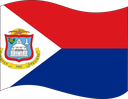
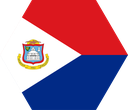
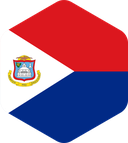
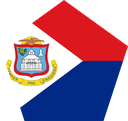
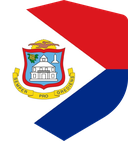
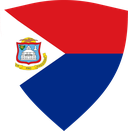
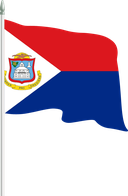
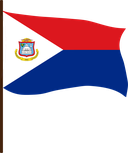
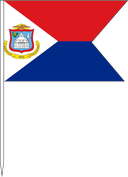
The flag of Sint Maarten consists of two horizontal stripes and a central white triangle at the hoist.
- The top stripe is red
- The bottom stripe is blue
- A white triangle extends from the hoist toward the center
Centered within the white triangle is the coat of arms of Sint Maarten.
The design is clean and balanced, with strong contrast between colors that ensures clarity and easy recognition.
Meaning of the Colors
Each color on the Sint Maarten flag carries symbolic meaning.
The red color represents courage, strength, and the sacrifices made by the people throughout history.
The blue color symbolizes the Caribbean Sea and the sky, reflecting peace, stability, and the island’s maritime environment.
The white color represents peace, harmony, and purity, emphasizing unity among the island’s diverse communities.
Together, these colors express balance between strength, peace, and natural surroundings.
Meaning of the Coat of Arms
The coat of arms is a central feature of the Sint Maarten flag and adds historical depth.
It includes:
- A pelican, the national bird, symbolizing resilience and care
- A rising sun, representing hope and a bright future
- The Courthouse of Philipsburg, symbolizing governance and justice
- The motto “Semper Pro Grediens”, meaning “Always Progressing”
These symbols reflect Sint Maarten’s values of progress, unity, and respect for law and tradition.
Historical Background and Adoption
Sint Maarten’s history includes periods of Spanish, French, Dutch, and British influence. Over time, the island developed a unique multicultural identity.
The current flag was officially adopted on June 13, 1985, when Sint Maarten was still part of the Netherlands Antilles. The design was chosen to represent local identity and future aspirations.
After the dissolution of the Netherlands Antilles in 2010, Sint Maarten became a constituent country within the Kingdom of the Netherlands. The flag remained unchanged and continues to serve as the national flag.
More historical context can be found on the history of Sint Maarten page.
Cultural and National Significance
The Sint Maarten flag holds strong national importance and is widely displayed during:
- Constitution Day (October 10)
- National holidays and cultural festivals
- Government ceremonies and public events
It represents unity among residents of diverse backgrounds and pride in self-governance.
Among Caribbean flags, Sint Maarten’s design stands out for its triangular layout and central emblem.
Official Use and Flag Etiquette
The flag of Sint Maarten is flown at government buildings, schools, and public institutions.
It is displayed during diplomatic events, regional meetings, and international sporting competitions.
Respectful handling of the flag is encouraged. It should be kept clean, displayed correctly, and treated as a symbol of national dignity.
The flag is often displayed alongside the Flag of the Netherlands to reflect constitutional ties.
The Flag in Modern Sint Maarten
In modern Sint Maarten, the flag symbolizes autonomy, progress, and cultural pride. It appears in tourism promotion, education, and national branding.
The motto “Semper Pro Grediens” continues to reflect the island’s forward-looking mindset.
The flag is also embraced by Sint Maarten communities abroad as a symbol of identity and belonging.
Design Strength and Recognition
The Sint Maarten flag is praised for its clarity and meaningful symbolism. The triangular hoist design provides a strong visual anchor.
The coat of arms adds identity without making the flag overly complex.
Its balanced color scheme ensures visibility and distinctiveness among Caribbean national flags.
Questions About the Flag of Sint Maarten
When was the flag of Sint Maarten adopted?
It was adopted on June 13, 1985.
What does the pelican symbolize?
It symbolizes resilience and care for the community.
What does the motto on the flag mean?
“Semper Pro Grediens” means “Always Progressing.”
Is Sint Maarten an independent country?
It is a constituent country within the Kingdom of the Netherlands.
Is the Sint Maarten flag the same on both sides?
Yes, the design appears on both sides of the flag.