Design of the Flag of Uganda
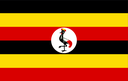
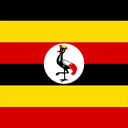
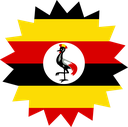
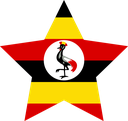
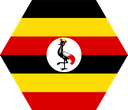
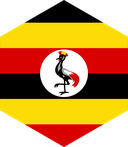
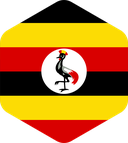
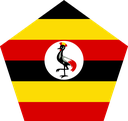
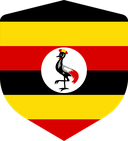
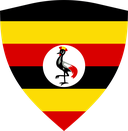
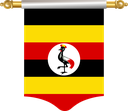
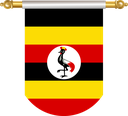
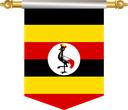
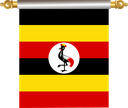
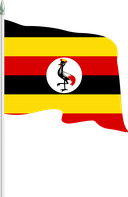
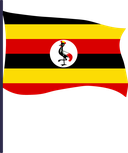
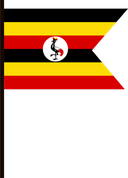
The Flag of Uganda consists of six horizontal stripes of equal width, arranged in the following order from top to bottom:
- Black
- Yellow
- Red
- Black
- Yellow
- Red
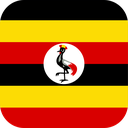
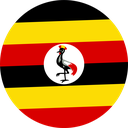
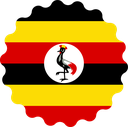
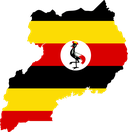
At the center of the flag is a white circle containing the image of a grey crowned crane, facing the hoist side.
The repetition of colors creates balance and rhythm, while the central emblem provides a strong focal point.
Meaning of Colors and Symbols
Each element of the Flag of Uganda carries clear symbolic meaning.
The black color represents the people of Uganda and African identity. It symbolizes unity and shared heritage.
The yellow color represents sunshine, warmth, and the bright future of the nation. It reflects optimism and energy.
The red color represents brotherhood and the blood that unites all people. It symbolizes shared humanity and solidarity.
The white circle represents peace and harmony among citizens.
The grey crowned crane is a national symbol of Uganda. It represents grace, elegance, and progress. The crane’s raised leg symbolizes movement forward, reflecting development and hope.
Together, these elements express unity, peace, and confidence.
Historical Background of the Uganda Flag
The Flag of Uganda was officially adopted on October 9, 1962, the day Uganda gained independence from British colonial rule.
Before independence, Uganda used British colonial flags that did not reflect local identity. As independence approached, a new design was chosen to represent African unity and national values.
The inclusion of the grey crowned crane preserved continuity, as the bird had been used in earlier colonial emblems while gaining new national meaning.
Readers interested in independence and nation-building can explore more context on the History of Uganda page.
Cultural and National Significance
The Flag of Uganda holds strong cultural importance and is widely respected across the country.
It is prominently displayed during Independence Day, national ceremonies, cultural festivals, and sporting events. For Ugandans, the flag symbolizes freedom, unity, and pride in national identity.
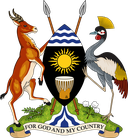
The crane has become an iconic national symbol, appearing in public art, uniforms, and state emblems.
Relationship to Other African Flags
The Flag of Uganda uses Pan-African colors, similar to those found on flags such as Kenya, Ghana, and Ethiopia.
However, Uganda’s flag is unique due to its repeated stripe pattern and central emblem. Comparing African national flags highlights how Uganda blends regional symbolism with distinct national identity.
The crane sets Uganda apart from many other African flags.
Modern Use of the Flag of Uganda
Today, the Flag of Uganda is flown on government buildings, schools, public institutions, and national landmarks throughout the country. It is also displayed at embassies and international organizations representing Uganda abroad.
The flag plays an important role in civic education, helping citizens understand independence, unity, and shared responsibility. Its continued use reinforces Uganda’s identity as a sovereign and forward-looking African nation.
Interesting Facts About the Flag of Uganda
- It was adopted in 1962.
- The crane is a national bird.
- The colors repeat twice.
- It uses Pan-African colors.
- The crane symbolizes progress.
Questions About the Flag of Uganda
What do the colors of the Uganda flag represent?
Black represents the people, yellow represents sunshine, and red represents brotherhood.
Why does the Uganda flag have a crane?
The crane represents peace, elegance, and progress.
When was the Flag of Uganda adopted?
It was adopted on October 9, 1962.
What does the white circle on the flag symbolize?
It symbolizes peace and harmony.
Where is the Uganda flag commonly displayed?
On public buildings and during national events.