Design of the Flag of Guam
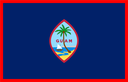
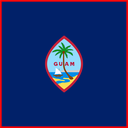
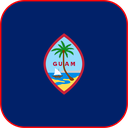
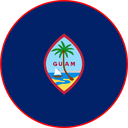
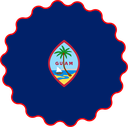
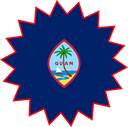
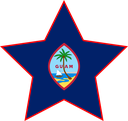
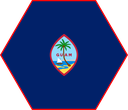
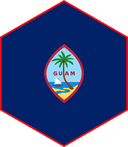
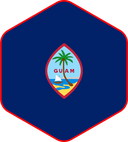
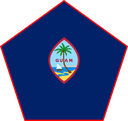
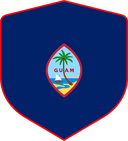
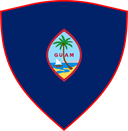
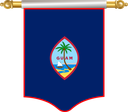
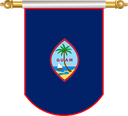
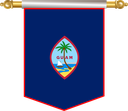
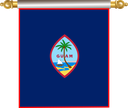
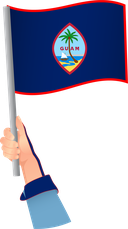
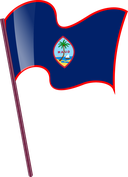
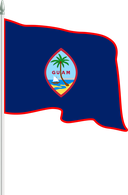
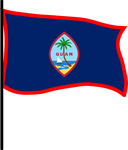
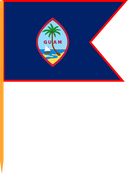
The Flag of Guam features a dark blue field with a red border surrounding all four sides. At the center of the flag is the coat of arms of Guam, displayed within an almond-shaped emblem.
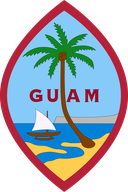
Inside the emblem is a sailing canoe (proa) on blue water, a coconut palm tree, and a rocky landscape. At the top of the emblem is the word “GUAM”, and at the bottom is the word “GUAHAN”, the island’s name in the Chamorro language.
The overall design combines bold colors with a detailed central image, making the flag visually unique among U.S. territorial flags.
Meaning of Colors and Symbols
Each element of the Flag of Guam carries strong symbolic meaning tied to island life and history.
The dark blue background represents the Pacific Ocean that surrounds Guam. It also symbolizes loyalty and strength.
The red border represents courage, sacrifice, and the blood shed during conflicts, particularly during World War II.
The almond-shaped emblem represents a slingstone, a traditional Chamorro weapon, symbolizing protection and resilience.
The sailing canoe represents the seafaring skills of the Chamorro people and the importance of the ocean for transportation and survival.
The coconut palm tree symbolizes self-sufficiency, life, and the natural resources of the island.
The rocky landform represents Guam itself, often associated with strength and endurance against natural and historical challenges.
Historical Background of the Guam Flag
The Flag of Guam was officially adopted on February 9, 1948, following World War II. The design was created to honor Chamorro culture and acknowledge the island’s experiences during wartime.
Guam became a U.S. territory in 1898 after the Spanish-American War. During World War II, the island was occupied by Japan and later liberated by U.S. forces in 1944. The flag’s symbolism reflects survival, identity, and rebuilding.
Readers interested in this period can explore more context on the History of Guam page.
Cultural and Territorial Significance
The Flag of Guam holds deep cultural significance for the Chamorro people and other residents of the island. It represents heritage, community, and pride in island identity.
The flag is prominently displayed during Liberation Day celebrations, cultural festivals, and official ceremonies. For Guamanians, it symbolizes resilience, respect for ancestors, and connection to the land and sea.
Relationship to the United States Flag
As a U.S. territory, Guam officially uses the Flag of the United States for federal representation. The U.S. flag symbolizes citizenship and national governance.
The Flag of Guam, however, represents local identity and culture. It is flown alongside the U.S. flag on public buildings, reflecting Guam’s political status and cultural uniqueness.
Relationship to Other U.S. Territorial Flags
Among U.S. territorial flags, the Flag of Guam is notable for its detailed imagery and indigenous symbolism. While other territorial flags often use seals, Guam’s flag emphasizes landscape and traditional life.
Comparing U.S. territory flags highlights Guam’s strong focus on native culture and environment rather than abstract symbolism.
Modern Use of the Flag of Guam
Today, the Flag of Guam is flown on government buildings, schools, ports, and public spaces throughout the island. It is also displayed at international cultural events and sporting competitions representing Guam abroad.
The flag plays an important role in education and civic life, helping residents understand history, culture, and identity. Its continued use reinforces Guam’s presence and heritage in the Pacific region.
Interesting Facts About the Flag of Guam
- The flag was adopted in 1948.
- The emblem represents a traditional slingstone.
- “Guahan” is Guam’s native name.
- The design reflects island survival.
- It uses a red border unlike most flags.
Frequently Asked Questions
What does the almond shape on the Guam flag represent?
It represents a traditional Chamorro slingstone.
When was the Flag of Guam adopted?
It was adopted on February 9, 1948.
Why does the Guam flag include a canoe?
It represents seafaring heritage and island life.
Is Guam an independent country?
No, Guam is an unincorporated U.S. territory.
Where is the Guam flag commonly displayed?
It is flown on public buildings and during cultural events.