Design of the Flag of Saint Vincent and the Grenadines
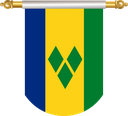
The flag of Saint Vincent and the Grenadines features three vertical stripes of equal width:
- Blue on the hoist side
- Gold (yellow) in the center
- Green on the fly side
Centered on the gold stripe are three green diamonds arranged in a V shape.
The layout is clean and symmetrical, with the diamonds forming a distinctive pattern that gives the flag its unique character.
Meaning of the Colors and Symbols
Each element of the flag carries specific symbolic meaning.
The blue stripe represents the Caribbean Sea and the Atlantic Ocean, emphasizing the nation’s island geography. It also symbolizes peace and stability.
The gold stripe symbolizes sunshine, warmth, and prosperity. It reflects optimism and the bright future of the nation.
The green stripe represents lush vegetation, agriculture, and natural resources, highlighting the fertile landscape of the islands.
The three green diamonds represent Saint Vincent and the Grenadines themselves, symbolizing unity among the islands. Their V-shaped arrangement has led to the flag’s popular nickname, “The Gems.”
The diamonds also symbolize value, strength, and beauty, reinforcing national pride.
Historical Background and Adoption
Saint Vincent and the Grenadines experienced a long colonial history under British rule, shaped by plantation agriculture and African heritage.
The country moved toward self-governance in the 20th century and gained full independence on October 27, 1979.
The national flag was officially adopted on the same day as independence. It was designed by Swiss graphic artist Heinz Schläppi, whose goal was to create a simple yet meaningful symbol free from colonial imagery.
The design replaced an earlier colonial-style flag and emphasized unity and modern national identity. More historical background can be found on the history of Saint Vincent and the Grenadines page.
Cultural and National Significance
The flag holds strong national importance and is proudly displayed during Independence Day celebrations, cultural festivals, and public ceremonies.
It represents cooperation among the islands and pride in natural beauty. The nickname “The Gems” reflects how citizens view their country as a collection of precious islands.
Among Caribbean flags, the design stands out for its geometric symbolism rather than stars or coats of arms.
The flag is widely used in education, sports events, and international representation.
Official Use and Flag Etiquette
The flag of Saint Vincent and the Grenadines is flown at government buildings, schools, embassies, and public institutions.
It is also displayed during diplomatic meetings, international sporting events, and cultural exchanges.
Respectful handling of the flag is encouraged. It should be kept clean, displayed properly, and treated as a symbol of sovereignty and national unity.
During periods of national mourning, the flag may be flown at half-mast according to official protocol.
The Flag in Modern Saint Vincent and the Grenadines
In modern times, the flag symbolizes independence, harmony, and environmental pride. It appears in tourism promotion, national branding, and civic education.
The diamond symbols continue to resonate with younger generations as a modern and positive national image.
The flag strengthens international recognition of the country despite its small size.
Design Strength and Recognition
The Saint Vincent and the Grenadines flag is widely praised for its simple yet powerful design. The diamond pattern is unique and instantly recognizable.
The balanced color scheme ensures high visibility, while the absence of complex emblems keeps the design timeless.
Its modern style makes it one of the most distinctive flags in the Caribbean.
Questions About the Flag of Saint Vincent and the Grenadines
When was the flag of Saint Vincent and the Grenadines adopted?
It was adopted on October 27, 1979.
What do the diamonds on the flag represent?
They represent the islands and are known as “The Gems.”
Why is the flag called “The Gems”?
Because the diamonds symbolize the islands as precious gems.
Who designed the flag?
It was designed by Heinz Schläppi.
Is the flag the same on both sides?
Yes, the design appears on both sides of the flag.