Design of the Flag of Vanuatu
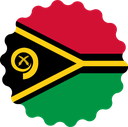
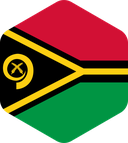
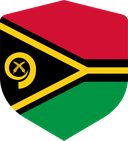
The Flag of Vanuatu features a horizontal bicolor divided diagonally by a yellow Y-shaped symbol.
- The upper field is red
- The lower field is green
- On the hoist side is a black triangle
- A yellow Y-shape runs from the hoist toward the fly
Inside the black triangle appears a yellow boar’s tusk encircling two crossed namele leaves.
The layout is dynamic and highly distinctive among Pacific flags.
Meaning of Colors and Symbols
Each element of the Flag of Vanuatu carries deep cultural meaning.
The red color represents the blood of the people and their sacrifices. It also symbolizes courage and unity.
The green color represents the fertile land, agriculture, and the natural beauty of the islands. It reflects life and growth.
The black color represents the Melanesian people of Vanuatu and their shared identity.
The yellow Y-shape represents the light of the Gospel and the unity of the islands forming a Y-like chain. It also symbolizes peace and guidance.
The boar’s tusk is a traditional symbol of prosperity, status, and leadership in Vanuatu’s culture.
The namele leaves represent peace and are traditionally used as symbols of authority and respect.
Together, these elements express unity, culture, peace, and independence.
Historical Background of the Vanuatu Flag
Vanuatu was formerly known as the New Hebrides and was jointly administered by Britain and France under a condominium system.
After years of political development and independence movements, Vanuatu gained independence on July 30, 1980.
The Flag of Vanuatu was adopted at independence to reflect indigenous culture and reject colonial symbolism. The design was chosen to emphasize Melanesian identity and national unity.
Readers interested in decolonization and Pacific history can explore more context on the History of Vanuatu page.
Cultural and National Significance
The Flag of Vanuatu holds strong cultural and emotional significance for its people.
It represents freedom, self-governance, and respect for traditional values. The flag is prominently displayed during Independence Day, cultural festivals, and national ceremonies.
For ni-Vanuatu citizens, the symbols on the flag reflect everyday life, customary authority, and community harmony.
Relationship to Other Pacific Island Flags
The Flag of Vanuatu differs from many Pacific island flags, which often include the Union Jack or stars.
Vanuatu’s flag focuses almost entirely on local symbolism, making it one of the most culturally expressive flags in the region. Comparing Pacific flags highlights Vanuatu’s strong emphasis on indigenous identity over colonial heritage.
Its design stands out for originality and meaning.
Modern Use of the Flag of Vanuatu
Today, the Flag of Vanuatu is flown on government buildings, schools, public institutions, and community centers throughout the country.
It is also displayed at embassies, international organizations, and regional Pacific events representing Vanuatu abroad. The flag plays an important role in education, reinforcing knowledge of culture, unity, and independence.
Its continued use strengthens national identity and pride.
Interesting Facts About the Flag of Vanuatu
- It was adopted in 1980
- The Y-shape represents island unity
- The boar’s tusk symbolizes prosperity
- Namele leaves represent peace
- It avoids colonial symbols
Questions About the Flag of Vanuatu
What does the boar’s tusk on the Vanuatu flag represent?
It represents prosperity, leadership, and traditional status.
Why is there a Y-shape on the flag?
It represents unity and the chain of islands.
When was the Flag of Vanuatu adopted?
It was adopted on July 30, 1980.
What do the colors of the flag symbolize?
Red represents sacrifice, green represents land, and black represents the people.
Where is the Vanuatu flag commonly displayed?
On public buildings and during national events.