Design of the Flag of Tajikistan
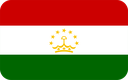
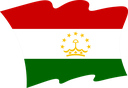
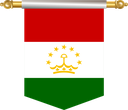
The Flag of Tajikistan consists of three horizontal stripes of unequal width:
- Red stripe at the top
- White stripe in the middle (wider than the others)
- Green stripe at the bottom
Centered on the white stripe is a golden crown, above which are seven golden stars arranged in a semicircle.
The central emblem symbolizes authority, unity, and national identity.
Meaning of Colors and Symbols
Each element of the Flag of Tajikistan carries deep symbolic meaning.
The red stripe represents unity, independence, and the struggle for freedom. It also symbolizes courage and strength.
The white stripe represents peace, purity, and the importance of cotton, a major agricultural product of Tajikistan. It also symbolizes moral clarity.
The green stripe represents agriculture, fertility, and natural wealth. Green is associated with growth and prosperity.
The golden crown represents sovereignty and the Tajik people. The word “Tajik” is often associated with the Persian term for “crowned.”
The seven stars symbolize perfection, happiness, and cultural significance, as the number seven holds an important place in Tajik tradition.
Together, these elements express independence, prosperity, and national unity.
Historical Background of the Tajikistan Flag
The Flag of Tajikistan was officially adopted on November 24, 1992, following the country’s independence from the Soviet Union in 1991.
Before independence, Tajikistan used flags associated with Soviet symbolism. The new national flag was designed to reflect Tajik cultural identity and break from the past.
The crown and stars emphasize sovereignty and cultural heritage rooted in Persian history.
Readers interested in post-Soviet transitions can explore more context on the History of Tajikistan page.
Cultural and National Significance
The Flag of Tajikistan holds strong emotional and cultural significance for its citizens. It represents freedom, unity, and the revival of national identity.
The flag is prominently displayed during Independence Day, national ceremonies, and cultural celebrations. For Tajiks, it symbolizes resilience, pride, and hope for future development.
The crown is especially meaningful as a symbol of statehood and cultural continuity.
Relationship to Other Central Asian Flags
The Flag of Tajikistan shares regional similarities with other Central Asian national flags, such as those of Uzbekistan and Kyrgyzstan, which also use horizontal stripes and symbolic emblems.
However, Tajikistan’s crown and stars make its flag distinct, emphasizing cultural heritage rather than natural symbols alone. Comparing Central Asian flags highlights diverse expressions of post-Soviet identity.
Modern Use of the Flag of Tajikistan
Today, the Flag of Tajikistan is flown on government buildings, schools, public institutions, and national landmarks throughout the country. It is also displayed at embassies, international organizations, and sporting events representing Tajikistan abroad.
The flag plays an important role in civic education, helping citizens understand independence, cultural heritage, and national responsibility. Its continued use reinforces Tajikistan’s identity as a sovereign Central Asian nation.
Interesting Facts About the Flag of Tajikistan
- It was adopted in 1992.
- The middle stripe is wider than the others.
- The crown symbolizes sovereignty.
- Seven is a culturally significant number.
- The flag reflects post-Soviet identity.
Questions About the Flag of Tajikistan
What does the crown on the Tajikistan flag represent?
It represents sovereignty and the Tajik people.
Why are there seven stars on the flag?
They symbolize perfection and cultural significance.
When was the Flag of Tajikistan adopted?
It was adopted on November 24, 1992.
What do the colors of the Tajikistan flag mean?
Red represents unity, white represents peace, and green represents fertility.
Where is the Tajikistan flag commonly displayed?
It is flown on public buildings and during national events.