Design of the Flag of Seychelles
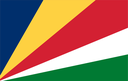
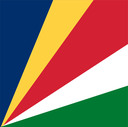
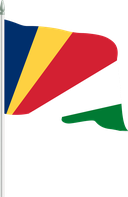
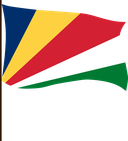
The flag of Seychelles features five diagonal bands that radiate from the lower hoist corner toward the fly side of the flag.
The colors, in order from bottom to top, are:
The diagonal rays create a sense of motion and expansion, giving the flag a unique and energetic appearance. This design is unlike most national flags and makes the Seychelles flag instantly recognizable.
Meaning of the Colors
Each color on the Seychelles flag represents a core aspect of the nation’s identity and values.
The blue color symbolizes the Indian Ocean and the sky, highlighting Seychelles’ island geography and maritime environment.
The yellow color represents the sun, which provides light, warmth, and life. It reflects optimism and the bright future of the nation.
The red color stands for determination, courage, and the willingness to work for unity. It reflects the strength and effort of the Seychellois people.
The white color symbolizes justice, harmony, and social equality, emphasizing peace among the country’s diverse population.
The green color represents land, vegetation, and environmental preservation, highlighting the nation’s commitment to nature and sustainability.
Together, these colors express balance between people, environment, and progress.
Historical Background and Adoption
Seychelles was uninhabited before European settlement and later became a French, then British, colony. The islands gained independence from the United Kingdom on June 29, 1976.
In the years following independence, Seychelles used different flags reflecting political changes. During a one-party period, the flag featured a more traditional design linked to the ruling party.
In 1996, following the restoration of multiparty democracy, the current national flag was officially adopted. The new design aimed to represent national unity beyond political divisions.
More historical context can be found on the history of Seychelles page.
Cultural and National Significance
The Seychelles flag holds strong national importance and is widely displayed during Independence Day celebrations, national holidays, and public ceremonies.
It represents unity among Seychelles’ diverse ethnic backgrounds, including African, European, and Asian influences.
Among African flags, Seychelles stands out for its modern and abstract design rather than traditional stripes or symbols.
The flag is also used in education, tourism promotion, and international representation.
Official Use and Flag Etiquette
The flag of Seychelles is flown at government buildings, schools, embassies, and public institutions.
It is displayed during international conferences, sporting events, and diplomatic occasions.
Respectful handling of the flag is encouraged. It should be kept clean, displayed correctly, and treated as a symbol of sovereignty and national unity.
During national mourning, the flag may be flown at half-mast according to official guidelines.
The Flag in Modern Seychelles
In modern Seychelles, the flag symbolizes peace, democracy, and forward movement. Its design reflects a nation moving confidently into the future while respecting its environment and people.
The vibrant colors reinforce Seychelles’ image as a welcoming, multicultural island nation.
The flag is widely embraced by citizens and the Seychellois diaspora worldwide.
Design Strength and Recognition
The Seychelles flag is widely praised for its bold originality and symbolism. The diagonal rays create a sense of energy and inclusiveness.
Its unique design ensures strong international recognition and sets Seychelles apart from other African and island nations.
The balance of colors communicates harmony between nature, people, and progress.
Questions About the Flag of Seychelles
When was the flag of Seychelles adopted?
It was officially adopted in 1996.
What makes the Seychelles flag unique?
Its diagonal, radiating color design is rare among national flags.
What do the five colors represent?
They represent ocean, sun, people, justice, and nature.
Did Seychelles use a different flag before 1996?
Yes, earlier flags reflected political periods after independence.
Is the Seychelles flag the same on both sides?
Yes, the design appears on both sides of the flag.