Design of the Flag of Macau
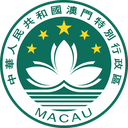
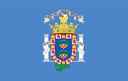
The Flag of Macau features a dark green field covering the entire background.
At the center of the flag is a white lotus flower with three petals. Beneath the lotus are three curved white lines, symbolizing water. Above the lotus are five yellow five-pointed stars, arranged in an arc, with one larger star in the center.
The design is balanced, symmetrical, and visually peaceful.
Meaning of Colors and Symbols
Each element of the Flag of Macau carries clear symbolic meaning.
The green background represents harmony, growth, and prosperity. Green also symbolizes peace and stability.
The white lotus flower represents purity, cultural identity, and moral integrity. The lotus is closely associated with Macau and appears in the city’s emblem.
The three petals symbolize the peninsula of Macau and its two islands, Taipa and Coloane.
The three curved lines represent water, highlighting Macau’s coastal location and maritime heritage.
The five yellow stars symbolize Macau’s connection to China. The large star represents China, while the four smaller stars reflect unity and cooperation under national sovereignty.
Together, these elements express peace, cultural identity, and regional harmony.
Historical Background of the Macau Flag
The Flag of Macau was officially adopted on December 20, 1999, the day Macau was transferred from Portuguese administration to the People’s Republic of China.
Before this date, Macau used colonial symbols under Portuguese rule. With the establishment of the Macau Special Administrative Region, a new flag was designed to reflect Chinese sovereignty while preserving local identity.
The lotus design was chosen because it had long been associated with Macau’s cultural and civic symbolism. Readers interested in this transition can explore more context on the History of Macau page.
Cultural and Regional Significance
The Flag of Macau holds strong cultural importance for residents. It represents peaceful coexistence, stability, and respect for both Chinese heritage and local traditions.
The flag is prominently displayed during regional celebrations, official ceremonies, and public events. For the people of Macau, it symbolizes continuity, prosperity, and regional pride.
The lotus flower serves as a unifying symbol that reflects Macau’s identity without political or religious imagery.
Relationship to Other Chinese Regional Flags
The Flag of Macau shares similarities with the Flag of Hong Kong, particularly in structure and symbolism.
Both flags use floral symbols, curved water lines, and stars to represent unity with China. However, Macau’s lotus design and green background distinguish it clearly from Hong Kong’s bauhinia flower and red field.
Comparing these regional flags highlights how different identities exist within the same national framework.
Modern Use of the Flag of Macau
Today, the Flag of Macau is flown on government buildings, public institutions, border checkpoints, and major landmarks throughout the region. It is also displayed during international events where Macau participates separately in cultural or sporting activities.
The flag plays an important role in civic education, helping residents understand regional autonomy, governance, and identity. Its continued use reinforces Macau’s status as a Special Administrative Region with its own cultural character.
Interesting Facts About the Flag of Macau
- It was adopted in 1999.
- The lotus is Macau’s official emblem.
- Green symbolizes harmony and peace.
- The stars represent unity with China.
- Water lines reflect maritime heritage.
Frequently Asked Questions
What does the lotus on the Macau flag represent?
It represents purity, cultural identity, and harmony.
When was the Flag of Macau adopted?
It was adopted on December 20, 1999.
Why does the Macau flag include stars?
They represent Macau’s connection with China.
What do the curved lines symbolize?
They symbolize water and Macau’s coastal geography.
Where is the Macau flag commonly displayed?
It is flown on public buildings and during regional events.