Design of the Flag of Mozambique
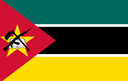
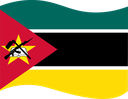
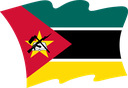
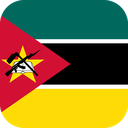
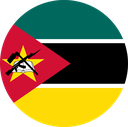
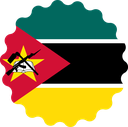
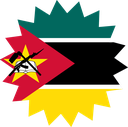
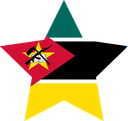
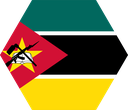
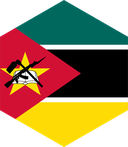
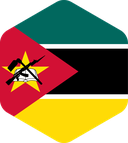
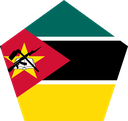
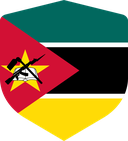
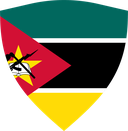
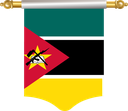
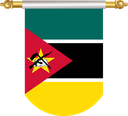
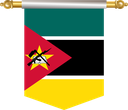
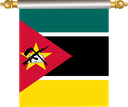
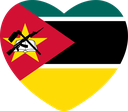
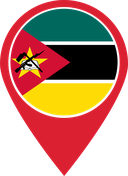
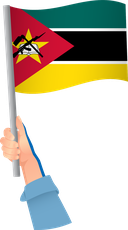
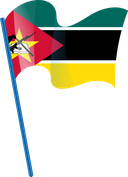
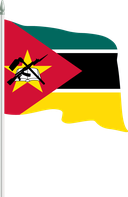
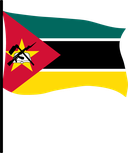
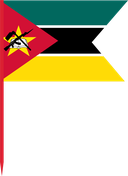
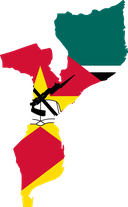
The flag of Mozambique features three horizontal stripes of green, black, and yellow, separated by thin white lines. On the hoist side is a red triangle pointing toward the center of the flag.
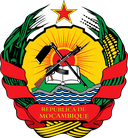
Inside the red triangle appears a yellow five-pointed star, placed behind a book, a hoe, and a rifle with a bayonet. This combination of symbols makes Mozambique’s flag unique among world flags.
The layout balances color and symbolism, ensuring that the central emblem is clearly visible while the stripes provide a strong national framework.
Meaning of the Colors and Symbols
Each element of the Mozambique flag carries deep meaning connected to the nation’s identity.
The green stripe represents the country’s fertile land and agriculture.
The black stripe symbolizes the African continent and the Mozambican people.
The yellow stripe stands for mineral wealth and economic potential.
The white stripes represent peace and justice.
The red triangle symbolizes the struggle for independence and the sacrifices made during the liberation movement.
The yellow star represents solidarity and internationalism.
The book symbolizes education and knowledge.
The hoe represents agriculture and labor.
The rifle symbolizes vigilance and defense of national sovereignty.
Together, these symbols express Mozambique’s priorities: education, work, and protection of independence.
Historical Background and Adoption
Mozambique was under Portuguese colonial rule for several centuries before gaining independence in 1975 after a long liberation struggle led by the FRELIMO movement.
Early post-independence flags reflected revolutionary ideals. The current design was officially adopted on May 1, 1983, refining earlier versions while retaining core symbolism related to independence and national defense.
The inclusion of the rifle has made Mozambique’s flag notable, as it is one of the few national flags to feature a modern weapon. More historical context can be found on the history of Mozambique page.
Cultural and National Significance
The Mozambican flag holds strong emotional significance for citizens. It is displayed during Independence Day celebrations, national holidays, and political events.
Among African flags, Mozambique’s flag stands out due to its complex symbolism. It is often compared with the Flag of Angola and the Flag of Zimbabwe, which also reflect liberation history, but Mozambique’s use of educational and agricultural symbols makes it unique.
The flag represents resilience, self-determination, and the importance of collective effort in nation-building.
Official Use and Flag Etiquette
The flag of Mozambique is flown at government buildings, schools, embassies, and public institutions. It is also displayed during international meetings and sporting events.
Respectful handling of the flag is encouraged. It should be displayed properly and not used in a disrespectful manner, as it represents national sacrifice and unity.
The Flag in Modern Mozambique
In modern Mozambique, the flag continues to symbolize independence and development. It appears in civic education, public celebrations, and national campaigns promoting unity and progress.
While discussions occasionally arise regarding the presence of the rifle symbol, the flag remains an officially recognized and widely respected national emblem.
Design Strength and Recognition
Despite its complexity, the Mozambique flag is instantly recognizable. Its bold colors and unique emblem ensure it stands out among world flags.
The design communicates Mozambique’s history clearly, making it both an educational and symbolic national banner.
Questions About the Flag of Mozambique
When was the flag of Mozambique adopted?
The current flag was adopted on May 1, 1983.
Why does Mozambique’s flag include a rifle?
The rifle represents defense of independence and national vigilance.
What does the book on the flag symbolize?
It symbolizes education and the importance of knowledge.
What do the horizontal stripes represent?
They represent agriculture (green), people (black), and resources (yellow).
Is Mozambique’s flag unique?
Yes, it is one of the few national flags featuring a modern weapon.