Design of the Flag of Montana
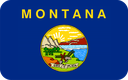
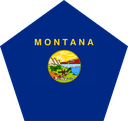
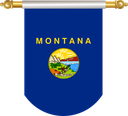
The flag of Montana features a dark blue field with the Montana state seal placed prominently in the center. Above the seal appears the word “MONTANA” written in gold capital letters.
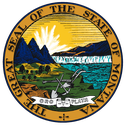
The state seal is circular and detailed, depicting a landscape scene that includes mountains, plains, and the Great Falls of the Missouri River. Tools such as a plow, shovel, and pickaxe appear in the foreground, symbolizing agriculture, labor, and mining. The overall design follows a traditional U.S. state flag style, using the seal to convey historical and economic identity.
Meaning of the Colors and Symbols
The blue background represents loyalty, perseverance, and justice, values commonly associated with American state flags. It also provides a formal backdrop that allows the detailed seal to stand out clearly.
The mountains shown on the seal symbolize Montana’s Rocky Mountain ranges and rugged terrain, while the river and plains reflect the state’s agricultural land and natural beauty.
The plow represents farming and the importance of agriculture to Montana’s economy. The pickaxe and shovel symbolize mining, an industry that played a crucial role in Montana’s development during the 19th century.
The gold lettering of the state name reflects prosperity and the historic significance of gold mining in the region. Together, these elements highlight Montana’s nickname, “The Treasure State.”
Historical Background and Adoption
Montana became the 41st state of the United States in 1889. As the state developed its identity, leaders sought a flag that would reflect Montana’s natural wealth and frontier spirit.
The flag was officially adopted in 1905, using the state seal that had already been in use since territorial days. In 1981, the word “Montana” was added above the seal to clearly distinguish the flag from those of other states with similar designs. More historical context can be found on the history of Montana page.
Cultural and State Significance
The Montana flag is primarily used in official and governmental settings. It represents state authority, heritage, and public service rather than decorative or casual use.
Among U.S. state flags, Montana’s design is often compared with the Flag of Wyoming and the Flag of North Dakota, which also emphasize western landscapes and frontier themes. While visually detailed, Montana’s flag strongly communicates the state’s economic roots and geographic character.
Official Use and Display
The flag of Montana is flown at the State Capitol, courthouses, schools, and municipal buildings. It is commonly displayed alongside the Flag of the United States during official ceremonies and public observances.
There are general guidelines for respectful handling and display. The flag is raised during state holidays and lowered according to official protocols during commemorative events.
Design Discussion and Modern Perspective
Like many U.S. state flags that feature seals, Montana’s flag has occasionally been discussed in design circles regarding simplicity and clarity. Some advocate for more streamlined designs, while others value the detailed storytelling found in the current flag.
Despite these discussions, the Montana flag remains an important legal and cultural symbol that reflects the state’s history, resources, and values.
The Flag as a Symbol of the Treasure State
The imagery and colors of the Montana flag emphasize strength, independence, and natural wealth. For residents, the flag serves as a reminder of the state’s frontier past and enduring connection to land and labor.
Its continued use reinforces Montana’s identity as a state defined by open spaces, natural beauty, and resilience.
Questions About the Flag of Montana
When was the flag of Montana adopted?
The flag was adopted in 1905, with the state name added in 1981.
What does the state seal on the flag represent?
It represents Montana’s landscape, agriculture, and mining heritage.
Why is the background of the flag blue?
Blue symbolizes loyalty, justice, and perseverance.
What industries are shown on the Montana flag?
Agriculture and mining are represented by the tools on the seal.
Is the Montana flag the same on both sides?
Yes, the design appears on both sides of the flag.