Design of the Flag of Haiti
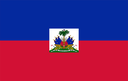
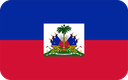
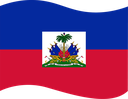
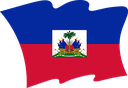
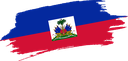
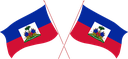
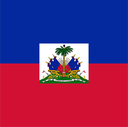
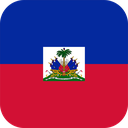
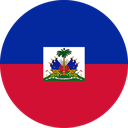
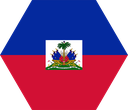
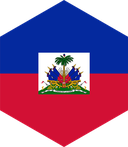
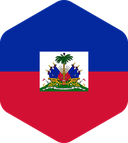
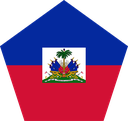
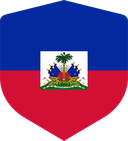
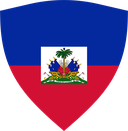
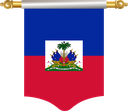
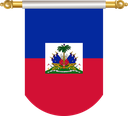
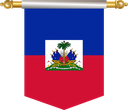
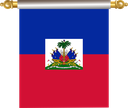
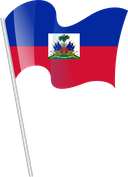
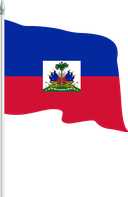
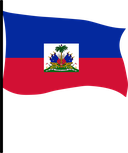
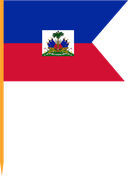
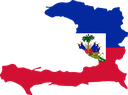
The Flag of Haiti consists of two horizontal stripes of equal width. The top stripe is blue, and the bottom stripe is red.
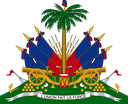
At the center of the flag is the national coat of arms, placed on a white panel. The coat of arms features a palm tree, cannons, flags, and other symbols arranged symmetrically.
There is also a civil version of the flag without the coat of arms, but the state flag with the emblem is the most commonly recognized official version.
Meaning of Colors and Symbols
Each element of the Flag of Haiti carries deep revolutionary symbolism.
The blue color represents unity and the Black citizens of Haiti. It symbolizes strength, freedom, and hope.
The red color represents the mixed-race population and the blood shed during the fight for independence. It symbolizes sacrifice, courage, and resistance.
The white panel represents peace and national unity between different groups.
The palm tree on the coat of arms symbolizes independence and victory.
The cannons and weapons represent readiness to defend freedom and sovereignty.
The national motto, “L’Union Fait La Force” (Unity Makes Strength), emphasizes cooperation and national solidarity.
Historical Background of the Haiti Flag
The Flag of Haiti was first created in 1803 during the Haitian Revolution. According to tradition, the French tricolor was modified by removing the white stripe, symbolizing rejection of colonial rule.
Haiti declared independence on January 1, 1804, becoming the first independent nation in Latin America and the Caribbean. The flag became a lasting symbol of liberation and anti-slavery resistance.
Over time, variations of the flag appeared under different governments, but the blue and red design remained central. Readers interested in this revolutionary era can explore more context on the History of Haiti page.
Cultural and National Significance
The Flag of Haiti holds profound cultural and emotional importance. It represents victory against oppression, resilience, and national pride.
The flag is prominently displayed during Independence Day celebrations on January 1, national holidays, and cultural events. For Haitians, it symbolizes freedom, dignity, and the sacrifices of ancestors.
Relationship to Other Caribbean Flags
The Flag of Haiti shares color similarities with some Caribbean flags but stands apart due to its revolutionary origins and symbolic coat of arms.
Unlike many Caribbean flags influenced by colonial designs, Haiti’s flag emerged directly from an independence movement, making it one of the most historically significant flags in the region.
Modern Use of the Flag of Haiti
Today, the Flag of Haiti is flown on government buildings, schools, and public spaces throughout the country. It is also displayed at embassies, international organizations, and global events representing Haiti abroad.
The flag plays an important role in education and civic identity, teaching values of unity, freedom, and resistance. Its continued use reinforces Haiti’s unique place in world history.
Interesting Facts About the Flag of Haiti
- The flag dates back to 1803.
- Haiti was the first Black republic.
- The motto means “Unity Makes Strength.”
- The flag emerged from a revolution.
- It symbolizes anti-slavery resistance.
Frequently Asked Questions
What do the colors of the Haiti flag represent?
Blue represents unity and freedom, while red represents sacrifice and courage.
When was the Flag of Haiti first created?
It was created in 1803 during the Haitian Revolution.
What does the coat of arms symbolize?
It symbolizes independence, defense, and unity.
Does Haiti have different versions of its flag?
Yes, there is a state flag and a civil flag.
Where is the Haiti flag commonly displayed?
It is flown on public buildings and during national events.