Official Flag Status of Saint Barthélemy
As an overseas collectivity of France since 2007, Saint Barthélemy is constitutionally part of the French Republic. Because of this status, the French Tricolour is the only legally recognized flag.
The French flag is flown at:
- Government and administrative buildings
- Schools and public institutions
- Courts and official ceremonies
- Diplomatic and international events
Saint Barthélemy does not possess a separate official territorial flag. More political context can be found on the history of Saint Barthélemy page.
Design of the Flag of France (Used in Saint Barthélemy)
The official flag used in Saint Barthélemy is the Flag of France, consisting of three vertical stripes:
- Blue on the hoist side
- White in the center
- Red on the fly side
This design symbolizes French sovereignty, citizenship, and republican values across all French territories.
Meaning of the French Flag in Saint Barthélemy
In the local context, the French flag represents:
- Legal authority and governance
- Equality of citizenship under French law
- Connection to France and the European Union
For residents, the flag symbolizes political stability and constitutional rights while coexisting with a strong local cultural identity.
The Unofficial Flag of Saint Barthélemy
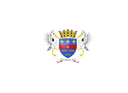
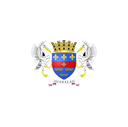
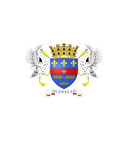
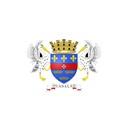
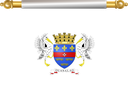
Alongside the French flag, Saint Barthélemy is often represented by an unofficial local flag displaying the coat of arms of Saint Barthélemy.
This flag has no official legal status, but it is widely used in cultural, tourism, and community contexts.
Design of the Unofficial Saint Barthélemy Flag
The unofficial flag usually features:
- A white field
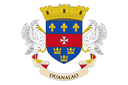
- The Saint Barthélemy coat of arms centered on the flag
The coat of arms includes:
- French royal fleurs-de-lis, symbolizing historical ties to France
- A Maltese cross, referencing the island’s brief association with the Knights of Malta
- A crown, representing authority and heritage
Meaning of the Symbols
The fleurs-de-lis highlight French cultural and historical influence.
The Maltese cross reflects the island’s colonial past under the Order of Saint John during the Swedish era.
The crown symbolizes governance, continuity, and historical legacy.
Together, these symbols express Saint Barthélemy’s layered European history and modern French identity.
Historical Background of Flag Usage
Saint Barthélemy was colonized by France in the 17th century and later transferred to Sweden in 1784, before returning to French control in 1878.
Despite these changes, the island never developed a separate national flag, as it remained a colonial or territorial possession rather than an independent state.
The coat of arms and its unofficial flag emerged later as cultural symbols, especially with the rise of tourism and local identity expression in the 20th century.
Cultural and Social Significance
In everyday life, both flags may be seen:
- The French flag in official and governmental settings
- The unofficial Saint Barthélemy flag in tourism branding, festivals, and local events
The unofficial flag is often used to promote the island’s distinct character while respecting its political status within France.
This dual-flag presence reflects Saint Barthélemy’s identity as culturally Caribbean and politically French.
Official Use and Flag Etiquette
Only the French flag may be used for official representation and government authority.
The unofficial Saint Barthélemy flag has no restrictions and is freely displayed in private, cultural, and commercial contexts.
Both flags are generally displayed respectfully and peacefully, with no conflict in symbolism or usage.
The Flag in Modern Saint Barthélemy
In modern Saint Barthélemy, flag usage emphasizes balance. The French flag represents governance and international recognition, while the local flag celebrates heritage and identity.
The unofficial flag has become a recognizable symbol among visitors and residents alike, especially in tourism and cultural promotion.
Design Strength and Recognition
The French flag ensures global recognition and legal clarity, while the unofficial Saint Barthélemy flag provides local cultural expression.
Together, they communicate the island’s dual identity clearly and effectively.
Questions About the Flag of Saint Barthélemy
Does Saint Barthélemy have its own official flag?
No, the French flag is the only official flag.
What flag is used on government buildings?
The flag of France.
What is the unofficial Saint Barthélemy flag?
A cultural flag featuring the island’s coat of arms.
Can the local flag replace the French flag?
No, it has no legal status.
Why are two flags often seen on the island?
One represents political authority, the other cultural identity.