History and Design of the Angola Africa Flag
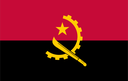
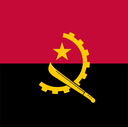
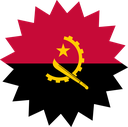
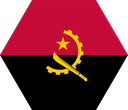
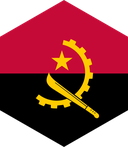
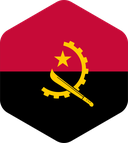
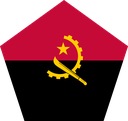
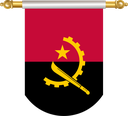
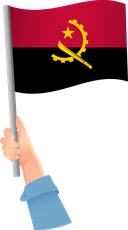
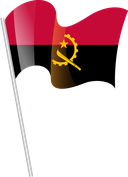
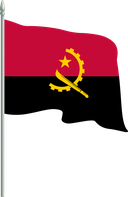
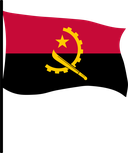
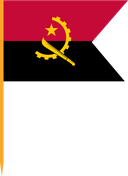
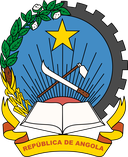
The current Angola Africa flag was officially approved on November 11, 1975, when Angola gained its independence from Portugal. The design may consists of two horizontal segments, a red upper half and a black lower half part. In the center, there is a yellow emblem, which also featuring a half gear wheel, a machete, and a star of flag.
The colors and symbols are deeply allied to Angola’s national story. The black color also represents the African continent and the living people of Angola, while red color also symbolizes the sacrifices made during the struggle for independence of Angola. The yellow elements may represent the country’s wealth and natural resources.
Angola National Flag Meaning and Flag Symbolism
Many people can also search for Angola flag meaning because every element of the design also brings historical importance. The flag also represents the national pride, its independence, and the fortitude of Angolan citizens.
The red and black colors in flag design also show the link between Angola’s past and present, while the golden symbols highlight its economic potential and development. Like many national flags around the world in all time history, including these Namibia and South Africa, Angola’s flag mostly reflects the country’s journey to independence and its unity.
The Angola flag emoji is also commonly used online to represent Angola history, its people, sports teams, travel destinations, and cultural celebrations.
Where Is Angola Africa Located?
Many readers mostly ask, “where is Angola africa located?” Angola is mainly situated on the western coast side of Southern Africa. It also borders the Atlantic Ocean to the west region and shares its land borders with Namibia, Zambia, and with the Democratic Republic of the Congo.
The capital city of Angola is Luanda, which is also the country’s main and largest city and a major National economic center. The nation is known for beautiful landscapes, including wide beaches, rivers, open forests, and gorgeous wildlife areas.
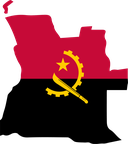
A useful Angola flag map search can also help travelers and students to understand Angola’s geographic position within western Africa side.
Language, Culture, and Fun Facts About Angola
If you are wondering about, what language is spoken in Angola, Portuguese is the official National speaking language due to Angola’s colonial history. However, many common local languages are also spoken, including Umbundu, Ki Mbundu, and Kikongo.
Angola culture is influenced by its traditional African customs, music, dance, art & literature, and Portuguese legacy. Popular music styles such as semba and kizomba have also gained international attention.
Some interesting Angola fun facts include:
- Angola is worldwide one of the largest Africa’s oil producers
- The country is main home to diverse wildlife and natural landscapes.
- Angola has a big coastline along the Atlantic Ocean.
- The giant sable antelope is one of its famous national animals in country.
Frequently Asked Questions
What does Angola's National flag mean?
Angola’s National flag also represents its independence, African identity, national resources, and many sacrifices made during the country’s liberation struggle for getting freedom.
What does the Angola flag represent?
The National flag also represents Angola’s people, old history, economic potential, unity, and progress of freedom to be live easily.
What is the flag of Angola?
The flag of Angola has two basically horizontal colors, red and black, with a yellow color emblem also containing a gear, machete, and star.
Where is Angola Africa located?
Angola is located in southwestern Africa along the Atlantic Ocean, bordered by Namibia, Zambia, and the Democratic Republic of the Congo.
What language is spoken in Angola?
Portuguese is Angola’s official language, while several indigenous languages are also spoken across the country.