Design of the Flag of San Marino
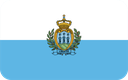
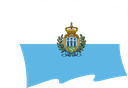
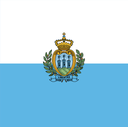
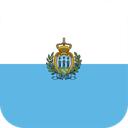
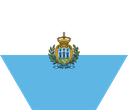
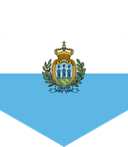
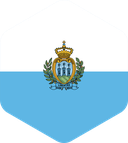
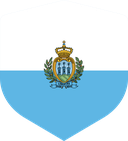
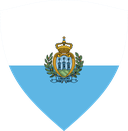
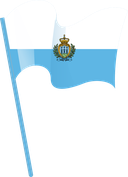
The flag of San Marino consists of two horizontal stripes of equal height:
- White on the top
- Light blue on the bottom
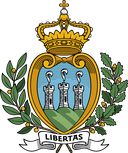
Centered on the flag is the national coat of arms of San Marino, which appears in full color on both the civil and state flag.
The overall design is balanced and formal, combining a clean background with a detailed central emblem that highlights the country’s historic institutions.
Meaning of the Colors
The colors of the San Marino flag carry symbolic meaning linked to national values.
The white stripe represents peace, honesty, and liberty. It reflects the republic’s long-standing commitment to freedom and democratic governance.
The light blue stripe symbolizes freedom, loyalty, and the open sky. It also represents hope and the ideals of independence that San Marino has preserved for centuries.
Together, white and blue express harmony, stability, and civic virtue.
Meaning of the Coat of Arms
The coat of arms is the most significant element of the San Marino flag and contains several important symbols.
At its center is a shield featuring three towers, each topped with a feather. These towers represent the Three Towers of San Marino—Guaita, Cesta, and Montale—located on Mount Titano.
Above the shield is a crown, symbolizing sovereignty and the republic’s independence.
Surrounding the shield is a wreath of oak and laurel branches, representing strength, honor, and endurance.
Below the shield is a ribbon bearing the national motto: “Libertas”, meaning “Freedom.” This motto is central to San Marino’s identity and history.
Historical Background and Adoption
San Marino traces its origins to 301 AD, making it one of the oldest surviving republics in the world. Throughout centuries of political change in Europe, San Marino managed to maintain autonomy through diplomacy and neutrality.
The white and blue colors were officially adopted as national colors in 1797, influenced by republican movements in Europe.
The modern flag, featuring the coat of arms, was officially standardized on April 6, 1862, ensuring consistency in design and usage.
More historical background can be found on the history of San Marino page.
Cultural and National Significance
The San Marino flag holds deep national importance and is proudly displayed during national holidays, civic ceremonies, and official events.
It represents independence, democratic tradition, and the resilience of a small state in a changing political landscape.
Among European flags, San Marino’s design is often compared with the Flag of Slovenia due to shared colors, though the symbolism and historical context are distinct.
The motto “Libertas” is especially meaningful, reflecting the republic’s core value.
Official Use and Flag Etiquette
The flag of San Marino is flown at government buildings, public institutions, and embassies.
It is also displayed during diplomatic meetings, international events, and cultural celebrations.
Respectful handling of the flag is encouraged. It should be displayed properly, kept clean, and treated as a symbol of sovereignty and civic pride.
The flag is often displayed alongside other European national flags during international gatherings.
The Flag in Modern San Marino
In modern San Marino, the flag continues to symbolize independence and historical continuity. It appears in education, tourism promotion, and official documentation.
The flag reinforces San Marino’s unique status as an ancient republic in the modern European landscape.
Despite the country’s small size, the flag ensures strong international recognition.
Design Strength and Recognition
The San Marino flag is admired for combining simplicity and historic depth. The clean background highlights the detailed coat of arms without overwhelming the design.
Its symbolism is deeply rooted in place, history, and civic values.
The flag’s timeless appearance ensures relevance across generations.
Questions About the Flag of San Marino
When was the flag of San Marino officially adopted?
The modern design was standardized in 1862.
What does the motto “Libertas” mean?
It means “Freedom.”
What do the three towers represent?
They represent the Three Towers of Mount Titano.
Why does the flag include a crown?
It symbolizes sovereignty and independence.
Is the San Marino flag the same on both sides?
Yes, the design appears on both sides of the flag.