Design of the Flag of Iraq
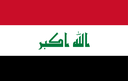
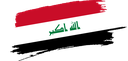
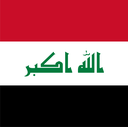
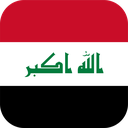
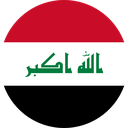
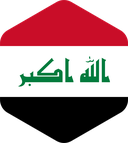
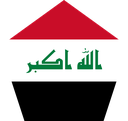
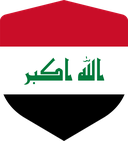
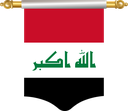
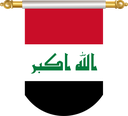
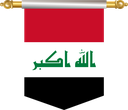
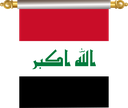
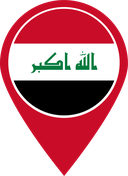
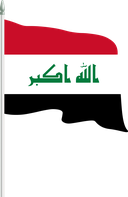
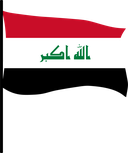
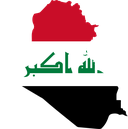
The Flag of Iraq consists of three horizontal stripes of equal width. From top to bottom, the colors are red, white, and black.
At the center of the white stripe is a green Arabic inscription reading “Allahu Akbar” (God is Great). The inscription is written in Kufic-style Arabic script.
The design is bold and balanced, with strong contrast that ensures visibility and symbolic clarity.
Meaning of Colors and Symbols
Each element of the Flag of Iraq carries deep historical and cultural meaning.
The red stripe represents courage, sacrifice, and the struggle against oppression. It symbolizes the blood shed for freedom and independence.
The white stripe represents peace, hope, and a brighter future. It also reflects unity and reconciliation.
The black stripe represents strength, endurance, and the hardships faced by the nation. It is also linked to historical struggles in Arab history.
The green inscription represents Islam and faith. Green is traditionally associated with Islam and spiritual renewal.
The phrase “Allahu Akbar” emphasizes religious identity and moral authority within the national framework.
Historical Background of the Iraq Flag
Iraq’s flag history reflects major political shifts throughout the 20th and 21st centuries. The red-white-black tricolor was inspired by the Arab Revolt flag, symbolizing Arab unity and independence.
The current version of the Flag of Iraq was officially adopted in 2008, replacing earlier versions that included stars or different inscriptions. The goal was to create a design that reflected national unity rather than political ideology.
Earlier flags, particularly during the Baʿath era, included green stars symbolizing Arab socialism. These elements were later removed to create a more neutral national symbol.
Readers interested in these political transitions can explore more context on the History of Iraq page.
Cultural and National Significance
The Flag of Iraq holds strong emotional and cultural importance. It represents survival, identity, and hope amid decades of conflict and transformation.
The flag is displayed during national holidays, religious occasions, and official ceremonies. For many Iraqis, it symbolizes resilience, faith, and the desire for stability and unity.
Respect for the flag is emphasized, as it reflects both national pride and spiritual values.
Relationship to Other Arab Flags
The Flag of Iraq is part of the Pan-Arab color tradition, sharing red, white, black, and green with many Arab national flags such as Egypt, Syria, and Yemen.
What distinguishes Iraq’s flag is the central Arabic inscription, which adds a clear religious dimension. Comparing Arab flags highlights shared identity while revealing unique national expressions.
Modern Use of the Flag of Iraq
Today, the Flag of Iraq is flown on government buildings, schools, mosques, and public spaces throughout the country. It is also displayed at embassies, international organizations, and sporting events representing Iraq abroad.
The flag plays an important role in civic education, helping citizens understand national identity, faith, and historical continuity. Its continued use reinforces Iraq’s sovereignty and cultural presence.
Interesting Facts About the Flag of Iraq
- The current design was adopted in 2008.
- It uses Pan-Arab colors.
- The inscription is written in Arabic.
- Earlier versions included green stars.
- The flag reflects both national and religious identity.
Frequently Asked Questions
What does the inscription on the Iraq flag mean?
It means “God is Great.”
When was the current Flag of Iraq adopted?
It was adopted in 2008.
Why does Iraq use Pan-Arab colors?
They symbolize Arab unity and shared heritage.
Has the Iraq flag changed over time?
Yes, it has changed multiple times due to political shifts.
Where is the Iraq flag commonly displayed?
It is flown on public buildings and during national events.