Design of the Flag of New Zealand
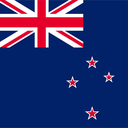
The flag of New Zealand features a dark blue field with the Union Jack placed in the upper hoist corner. To the right of the flag are four red five-pointed stars, each outlined in white, arranged in the shape of the Southern Cross constellation.
The overall layout follows the traditional British Blue Ensign style, which is used by several Commonwealth nations. The stars are evenly spaced and clearly visible against the blue background, giving the flag a balanced and recognizable appearance.
Meaning of the Colors and Symbols
Each element of the New Zealand flag carries historical and geographic meaning.
The blue background represents the surrounding Pacific Ocean and the country’s maritime environment. Blue also symbolizes loyalty, stability, and calmness.
The Union Jack reflects New Zealand’s historical ties to the United Kingdom and its status as a former British colony. It also represents shared political and cultural traditions inherited from Britain.
The four red stars represent the Southern Cross, a constellation visible in the southern sky and commonly used as a regional symbol by Southern Hemisphere nations. The stars symbolize New Zealand’s geographic location and national identity in the Pacific region.
The white borders around the stars improve visibility and symbolize purity and clarity.
Historical Background and Adoption
New Zealand was colonized by Britain in the 19th century and became a self-governing dominion within the British Empire. As the country developed its own national identity, a distinct flag was needed to represent it internationally.
The current flag was officially adopted on March 24, 1902, based on earlier ensign designs used by New Zealand ships. The design helped differentiate New Zealand from other British territories while maintaining a clear link to Britain.
Over time, the flag has remained unchanged, reflecting continuity and tradition. More historical context can be found on the history of New Zealand page.
Cultural and National Significance
The New Zealand flag is used during national holidays, official ceremonies, and international events such as sporting competitions and diplomatic meetings. It represents the country on the global stage and is a symbol of sovereignty and state authority.
The flag is sometimes compared with the Flag of Australia, which also features the Union Jack and Southern Cross. However, New Zealand’s flag uses four stars instead of five and has distinct color arrangements, making it visually unique.
Within New Zealand, the flag is associated with national pride, public service, and international recognition.
Official Use and Flag Etiquette
The flag of New Zealand is flown at government buildings, schools, embassies, and public institutions. It is also displayed during national commemorations such as Waitangi Day and ANZAC Day.
Guidelines exist for respectful display and handling of the flag. It should be flown properly and treated with dignity, particularly during official and ceremonial occasions.
Discussions and Modern Perspectives
In recent years, New Zealand has engaged in public discussions about national symbols, including referendums on whether to change the flag. Although alternative designs were proposed, the existing flag was retained following a public vote.
These discussions highlighted the balance between tradition and evolving national identity. Despite differing opinions, the flag remains the official symbol of the nation.
The Flag in Modern New Zealand
Today, the flag continues to represent New Zealand’s place in the world as a peaceful, democratic, and independent nation. It is commonly seen at international sporting events, cultural festivals, and global forums.
The flag’s design emphasizes historical continuity while maintaining strong recognition worldwide.
Design Influence and Recognition
The New Zealand flag is easily recognizable due to its clear symbolism and traditional layout. Its use of the Southern Cross connects it to the wider Pacific region, while the Union Jack reflects historical foundations.
This combination of regional and historical elements has helped the flag remain relevant for over a century.
Questions About the Flag of New Zealand
When was the flag of New Zealand adopted?
The flag was officially adopted on March 24, 1902.
What do the stars on the flag represent?
They represent the Southern Cross constellation.
Why does the New Zealand flag include the Union Jack?
It reflects historical ties to the United Kingdom.
Is the New Zealand flag similar to Australia’s?
Yes, but New Zealand’s flag has four stars instead of five.
Is the New Zealand flag the same on both sides?
Yes, the design appears on both sides of the flag.