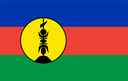
Official Flag Status of Réunion
As an overseas department of France, Réunion is constitutionally part of the French Republic. This means that the French Tricolour is the official flag used across the island for all state purposes.
The French flag is flown at:
- Government buildings
- Schools and public institutions
- Courts and administrative offices
- Official ceremonies and national holidays
No separate official flag has been adopted for Réunion under French law. More background on governance can be found on the history of Réunion page.
Design of the Flag of France (Used in Réunion)
The flag used officially in Réunion is the Flag of France, consisting of three vertical stripes of equal width:
- Blue on the hoist side
- White in the center
- Red on the fly side
The design is simple, symmetrical, and instantly recognizable worldwide. It represents French sovereignty and republican values on the island.
Meaning of the French Flag in Réunion
In the context of Réunion, the French flag symbolizes:
- Citizenship and equality under French law
- Republican values of liberty, equality, and fraternity
- Political unity with mainland France
For many residents, the flag represents legal rights, social protections, and connection to France, while coexisting with a strong local cultural identity.
The Unofficial Regional Flag of Réunion
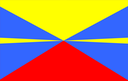
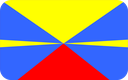
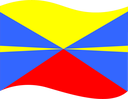
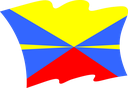
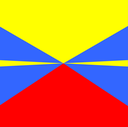
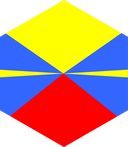
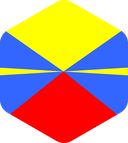
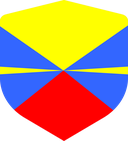
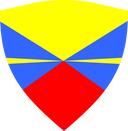
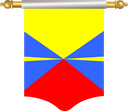
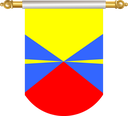
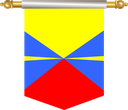
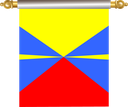
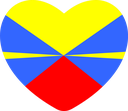
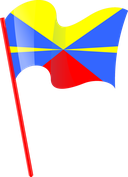
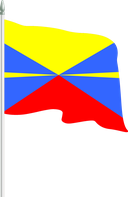
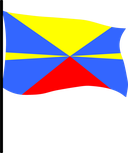
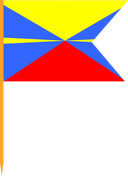
Alongside the French flag, Réunion also has a widely recognized unofficial regional flag, commonly known as “Lö Mahavéli” (also spelled Lo Mavéli).
This flag is not official, but it is often used in cultural events, tourism, and local identity expression.
Design of the Unofficial Réunion Flag
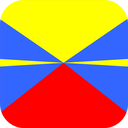
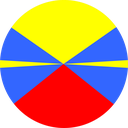
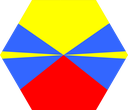
The unofficial flag features:
- A blue background, symbolizing the sky and Indian Ocean
- A yellow triangular sunburst, representing the rising sun
- Red rays extending outward, symbolizing volcanic energy
The design is inspired by Réunion’s dramatic landscape, especially Piton de la Fournaise, one of the world’s most active volcanoes.
Meaning of the Unofficial Flag Symbols
The blue color represents the ocean surrounding Réunion and openness to the world.
The yellow sun symbolizes hope, renewal, and life in the tropics.
The red rays represent volcanic strength, energy, and the island’s geological identity.
Together, these elements express Réunion’s natural environment, resilience, and Creole culture rather than political authority.
Historical Background of Flag Usage
Réunion was claimed by France in the 17th century and has remained under French control ever since. It became an overseas department in 1946, granting full French citizenship to its residents.
Because Réunion never became an independent state, there was no historical moment that required the creation of a national flag. The French tricolour therefore remained the sole official symbol.
The unofficial regional flag emerged much later, in the late 20th century, as part of a broader movement to celebrate local identity, language, and culture.
Cultural and Social Significance
In daily life, both flags can be seen:
- The French flag in official and administrative contexts
- The unofficial Réunion flag in festivals, cultural events, music, and local art
This dual usage reflects Réunion’s reality: politically French, culturally Creole, with influences from Africa, Europe, India, and Asia.
The regional flag is especially popular among younger generations and in cultural preservation movements.
Official Use and Flag Etiquette
Only the French flag has legal standing for official display. It follows the same rules of respect and protocol as in mainland France.
The unofficial Réunion flag has no legal restrictions, as it is a cultural symbol. It is used freely in non-governmental settings without replacing the French tricolour.
Both flags are generally displayed peacefully, without conflict, representing different aspects of identity.
The Flag in Modern Réunion
In modern Réunion, flag usage highlights balance rather than opposition. The French flag represents governance and citizenship, while the regional flag represents heritage and belonging.
The coexistence of these symbols reflects the island’s multicultural harmony and its place within the French Republic.
This makes Réunion’s flag situation unique among Indian Ocean territories.
Design Strength and Recognition
The French flag ensures global recognition and legal clarity, while the unofficial Réunion flag provides strong local symbolism tied to nature and culture.
Together, they communicate Réunion’s identity more completely than a single flag could.
Questions About the Flag of Réunion
Does Réunion have its own official flag?
No, the French flag is the only official flag.
What flag is used on government buildings in Réunion?
The flag of France.
What is the Lö Mahavéli flag?
It is an unofficial cultural flag of Réunion.
Can the regional flag replace the French flag?
No, it has no official legal status.
Why are two flags seen on the island?
One represents political status, the other cultural identity.