Design of the Flag of Curacao
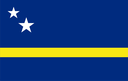
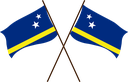
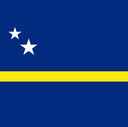
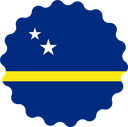
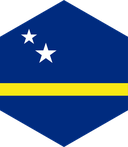
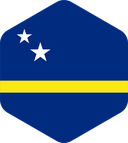
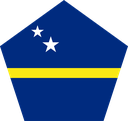
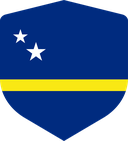
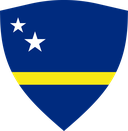
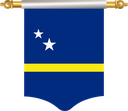
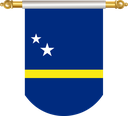
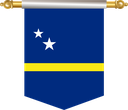
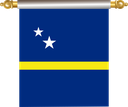
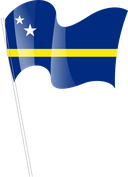
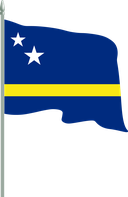
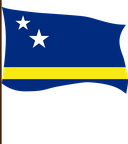
The Flag of Curacao features a deep blue background with two horizontal stripes near the bottom. The upper stripe is yellow, and the lower stripe is white. In the upper hoist-side corner, there are two white five-pointed stars arranged diagonally.
The design is clean and modern, with strong color contrast. The stars stand out clearly against the blue field, while the stripes add balance and visual structure. The overall layout makes the flag easily recognizable among Caribbean and world flags.
Meaning of Colors and Symbols
Each element of the Flag of Curacao carries specific symbolic meaning connected to the island’s geography and identity.
The blue background represents the Caribbean Sea and the sky, symbolizing peace, freedom, and the island’s maritime environment.
The yellow stripe represents the sun, warmth, and happiness, as well as the natural brightness of life on the island. It also symbolizes hope and optimism for the future.
The white stripe represents peace, harmony, and respect among the diverse communities living on Curacao.
The two white stars are one of the most important symbols on the flag. They represent the two main land areas of the country: the island of Curacao and the smaller island of Klein Curacao. The five points of each star symbolize unity among the people.
Historical Background of the Curacao Flag
The Flag of Curacao was officially adopted on July 2, 1984, during a period when Curacao sought to strengthen its distinct identity while remaining part of the Kingdom of the Netherlands.
Before adopting its own flag, Curacao used the flag of the Netherlands and later symbols of the Netherlands Antilles. The introduction of a unique flag marked an important step toward cultural and political self-expression. Readers interested in this development can explore more details on the History of Curacao page.
Cultural and National Significance
The Flag of Curacao holds strong cultural importance for the people of the island. It represents pride in local heritage, language, and traditions, while also reflecting peaceful coexistence among diverse cultural groups.
The flag is prominently displayed during national holidays, cultural festivals, and official ceremonies. For citizens, it symbolizes identity, unity, and recognition within the Caribbean and the wider world.
Relationship to Other Caribbean and Dutch Flags
The Flag of Curacao differs significantly from the flag of the Netherlands, emphasizing local symbolism rather than European heraldry. Unlike many Caribbean territories that use British ensign designs, Curacao’s flag is entirely symbolic and modern.
When compared to other Caribbean flags, Curacao’s design stands out for its simplicity and strong geographic meaning. The stars and stripes focus on island unity rather than political ideology.
Modern Use of the Flag of Curacao
Today, the Flag of Curacao is flown on government buildings, schools, and public spaces throughout the island. It is also displayed at international events, sporting competitions, and diplomatic gatherings representing Curacao abroad.
The flag plays an important role in education and civic life, helping residents understand national identity, autonomy, and shared values. Its continued use reinforces Curacao’s recognition as a self-governing country within the Kingdom of the Netherlands.
Interesting Facts About the Flag of Curacao
- The flag was adopted in 1984.
- It features two stars for Curacao and Klein Curacao.
- Blue represents sea and sky.
- Yellow symbolizes the sun.
- The design is unique among Caribbean flags.
Frequently Asked Questions
What do the stars on the Curacao flag represent?
They represent Curacao and Klein Curacao, the two land areas.
Why is blue the main color on the flag?
Blue represents the Caribbean Sea and the sky.
When was the Flag of Curacao adopted?
It was officially adopted on July 2, 1984.
Is Curacao an independent country?
Curacao is an autonomous country within the Kingdom of the Netherlands.
Where is the Curacao flag commonly displayed?
It is flown on public buildings and during national events.