Design of the Flag of South Africa
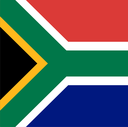
The flag of South Africa features a horizontal design with a green Y-shaped band that extends from the hoist to the fly side.
The main elements include:
- Black triangle at the hoist
- Green Y-shape with white borders
- Red field on the top
- Blue field on the bottom
- Yellow border separating the black triangle from the green band
The design is modern and distinctive, unlike traditional tricolors or emblem-based flags. The Y-shape visually represents movement and unity.
Meaning of the Colors and Symbols
Each color on the South African flag carries meaning, though the government has avoided assigning rigid definitions to allow inclusive interpretation.
The black color represents the people of South Africa, particularly those historically marginalized.
The green color symbolizes fertility, growth, and the land, as well as unity and convergence.
The yellow (gold) color reflects natural wealth and resources, especially mineral riches.
The red color is often associated with sacrifice and struggle, reflecting the nation’s difficult history.
The blue color represents the sky and oceans, symbolizing openness, peace, and opportunity.
The Y-shape symbolizes the convergence of different paths into a single united future.
Together, these elements express reconciliation and shared progress.
Historical Background and Adoption
Before 1994, South Africa used flags associated with colonial and apartheid-era governments, which did not represent the entire population.
As the country prepared for its first democratic elections, a new national flag was urgently needed to represent unity and equality.
The current flag was designed by Frederick Brownell, the State Herald, and was officially adopted on April 27, 1994, the day of South Africa’s first democratic election.
Initially introduced as an interim flag, it quickly gained public acceptance and was permanently adopted later that year.
More historical context can be found on the history of South Africa page.
Cultural and National Significance
The South African flag holds deep national significance and is strongly associated with freedom and democracy.
It is widely displayed during:
- Freedom Day (April 27)
- National celebrations and public holidays
- Sporting events, especially rugby and football
- Cultural and international events
The flag is often seen as a symbol of reconciliation following apartheid and is respected across political and cultural lines.
Among African flags, South Africa’s design is unique due to its modern symbolism and absence of traditional Pan-African tricolors.
Official Use and Flag Etiquette
The flag of South Africa is flown at government buildings, schools, embassies, and public institutions.
It is displayed during official ceremonies, diplomatic meetings, and national commemorations.
Respectful handling of the flag is encouraged. It should be kept clean, displayed correctly, and treated as a symbol of democracy and unity.
During periods of national mourning, the flag may be flown at half-mast according to official protocol.
The Flag in Modern South Africa
In modern South Africa, the flag symbolizes diversity, constitutional values, and a shared national future. It appears in tourism promotion, education, and national branding.
The flag is embraced by citizens of all backgrounds and is often used to promote social cohesion.
It is also widely recognized internationally as a symbol of peaceful political transition.
Design Strength and Recognition
The South African flag is praised for its bold innovation and inclusive symbolism. The Y-shaped design clearly communicates unity and forward movement.
Its multiple colors reflect diversity without hierarchy, reinforcing equality.
The design’s originality ensures instant recognition worldwide.
Questions About the Flag of South Africa
When was the flag of South Africa adopted?
It was adopted on April 27, 1994.
What does the Y-shape on the flag represent?
It represents unity and convergence of different paths.
Who designed the South African flag?
It was designed by Frederick Brownell.
Why does the flag have so many colors?
The colors represent diversity and shared heritage.
Is the South Africa flag the same on both sides?
Yes, the design appears on both sides of the flag.