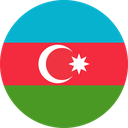
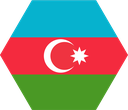
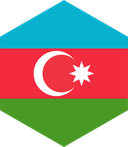
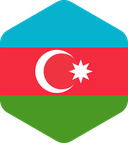
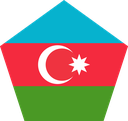
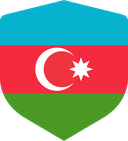
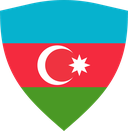
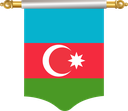
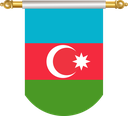
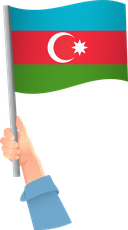
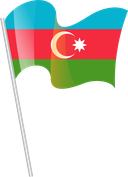
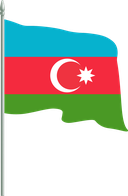
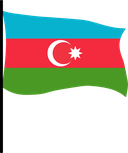
What type of Flag of Azerbaijan also Look like?
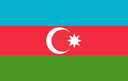
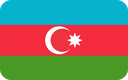
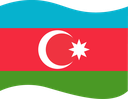
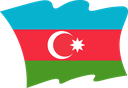
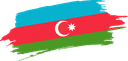
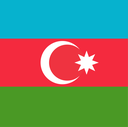
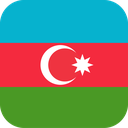
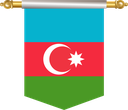
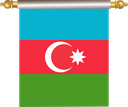
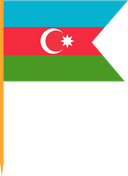
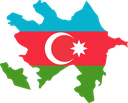
The National Flag of Azerbaijan has three equal parallel strips. Blue color also looks at the top, red color is in the middle area, and green color is at bottom. A white color crescent and an eight pointed star are also placed in the Centre of the red stripe.
The design was first approved in 1918 during the Azerbaijan Independent Nation. It was renovated in 1991 as Azerbaijan also moved develop independence from the Soviet Union. Today, the flag is also displayed on Official government architectures, at international events, and during national Global celebrations.
The Azerbaijan Flag emoji also follows the same tricolor outline and it is mostly used online & on social media services to represent the country image, its people, National sports teams, Official Country organizations, National ceremonies and Global events.
Azerbaijan Flag Meaning and Symbolism
The Azerbaijan Flag meaning is also related to the country’s old history and his national values. Blue color is usually linked with Azerbaijan’s Turkic legacy. Red color also signifies modern development, democracy, and development progress. Green color reflects the country’s Islamic national tradition.
The white color crescent is also connected with Islam. The eight pointed star has numerous versions. It is regularly connected with Turkic identity or with the historical spelling of “Azerbaijan” in the Arabic alphabet. Because versions can be vary, readers should treat with symbolic explanations, as cultural traditions quite than modest technical facts.
Some these elements also make the national flag of Azerbaijan, a pictorial summary of legacy, spirit, and identity. This balanced design also explains, why the flag remains a powerful symbol at home and abroad.
In what Region Azerbaijan does Located?
Azerbaijan also located in the South Caucasus, beside the Caspian Sea. It also share borders with other countries like, Russia, Georgia, Armenia, and Iran. A search for Azerbaijan world map also shows its main position between Eastern Europe and Western Asia.
People frequently ask what region is Azerbaijan in, because the country assembles at a geographic and old cultural junctions. It is usually described as a South Caucasian country with associations with Europe and Asia. A search for map Armenia and Azerbaijan also helps to explain the location of the two neighborhood states.
Capital, province and Culture of Azerbaijan
Major Azerbaijan cities include Baku, Ganja, Sumqayit, and Sheki. Baku is the capital City of Azerbaijan, also known for its Caspian Sea coastline view, modern Old architecture, and historic Old City Memories.
Azerbaijan culture also combines Turkic, Caucasian, Persian, and some Islamic inspirations. Traditional carpet plaiting, mugham music, tea hospitality, poetry, and Nowruz celebrations stay as important part. Azerbaijan also joins all international organizations such as the United Nations, it also helping to connect its national identity with the broader world.
Questions about Azerbaijan Country
Is Azerbaijan in What region? Europe or Asia.
Azerbaijan is in South Caucasus region and it is also considered on inclusive continent, with geographical and old cultural connections with Europe and Asia.
Where Is the Country Kazakhstan Located?
Kazakhstan is located in Central Asia, with a smaller western portion in Europe. It share borders with Russia, China, Kyrgyzstan, Uzbekistan, Turkmenistan, and the Caspian Sea.
What Language Do They Speak in Azerbaijan?
Azerbaijani, is the official National Country language. Russian is also widely assumed, especially in some cities, although several minority languages are also spoken in different regions.
What Does the Azerbaijan Flag Look Like?
It has three horizontal stripes blue, red, and green Color, with a white color crescent and eight pointed star in the Centre of the red stripe of national Flag design.
What Does the Azerbaijan Flag Generally Mean?
Blue Color represents Turkic heritage, red symbolises progress and modern development, and green reflects Islamic tradition, while the crescent and star express cultural identity.