Design of the Flag of British Indian Ocean Territory
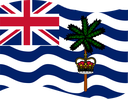
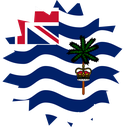
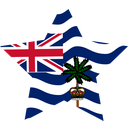
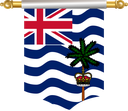
The flag of the British Indian Ocean Territory is a British Blue Ensign featuring a wavy blue and white field on the fly side. The Union Jack is placed in the upper hoist-side corner, following standard British ensign tradition.
Centered on the wavy stripes is the territorial coat of arms, which includes a palm tree, a crown, and an anchor. The horizontal wavy stripes give the flag a distinctive maritime appearance, setting it apart from many other British Overseas Territory flags.
Meaning of Colors and Symbols
Each element of the flag carries symbolic meaning. The blue and white wavy stripes represent the Indian Ocean and emphasize the territory’s maritime location. The waves symbolize isolation, sea routes, and strategic importance.
The palm tree on the coat of arms represents the tropical nature of the islands and natural vegetation. The crown symbolizes British sovereignty and governance under the United Kingdom. The anchor represents naval presence, stability, and the territory’s importance in maritime security.
The Union Jack reinforces constitutional ties to the UK and confirms administrative authority over the territory.
Historical Background of the British Indian Ocean Territory Flag
The British Indian Ocean Territory was officially established in 1965, separating it administratively from other British colonies in the region. The territory was created primarily for strategic and defense purposes.
The flag and coat of arms were adopted later to provide a clear visual identity. The design reflects the territory’s purpose and location rather than local culture, as the islands have no permanent civilian population. Readers interested in the political background can explore more details on the History of British Indian Ocean Territory page.
Political and Administrative Significance
The flag of the British Indian Ocean Territory represents governance rather than cultural identity. The territory is administered directly by the United Kingdom, and access is highly restricted.
The flag is used in official documents, diplomatic references, and administrative contexts. It serves as a symbol of authority, jurisdiction, and international recognition under British administration.
Relationship to Other British Overseas Territory Flags
Like many British Overseas Territories, this flag follows the Blue Ensign format. However, the wavy stripe pattern makes it visually unique.
Compared to flags of inhabited territories, the British Indian Ocean Territory flag focuses on geography and administration rather than community symbolism. This reflects its role as a restricted and strategically important region.
Modern Use of the Flag of British Indian Ocean Territory
Today, the flag of the British Indian Ocean Territory is used primarily for official and administrative purposes. It may be displayed at government offices, on official documents, and during formal international references.
Due to restricted access to the islands, the flag is rarely seen in public use. Its primary function remains legal and symbolic representation of British authority.
Interesting Facts About the Flag of British Indian Ocean Territory
- The flag uses distinctive wavy blue and white stripes.
- It follows the British Blue Ensign tradition.
- The territory was established in 1965.
- The islands have no permanent civilian population.
- The design emphasizes maritime location and governance.
Frequently Asked Questions
Does the British Indian Ocean Territory have its own flag?
Yes, it uses a British Blue Ensign with a unique territorial design.
What do the wavy stripes on the flag represent?
They represent the Indian Ocean and maritime surroundings.
When was the British Indian Ocean Territory established?
The territory was established in 1965.
Is the British Indian Ocean Territory inhabited?
No, it has no permanent civilian population.
Where is the flag commonly used?
It is used in official and administrative contexts.