Design of the Flag of the United Kingdom
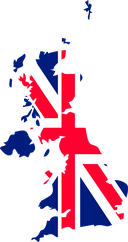
The Flag of the United Kingdom is a combination of three different crosses, layered together on a blue background.
The design includes:
- A red cross of St George (England) on a white background
- A white diagonal cross of St Andrew (Scotland)
- A red diagonal cross of St Patrick (Ireland)
These crosses are placed asymmetrically to ensure each nation’s symbol remains visible. The blue field forms the base of the flag.
Meaning of Colors and Symbols
Each element of the Flag of the United Kingdom has specific historical meaning.
The red cross of St George represents England and symbolizes bravery and sacrifice.
The white diagonal cross of St Andrew represents Scotland and symbolizes faith and tradition.
The red diagonal cross of St Patrick represents Ireland and symbolizes unity and heritage.
The blue background originates from Scotland and represents loyalty, perseverance, and stability.
Together, these symbols express political union, shared history, and cooperation among the nations of the United Kingdom.
Historical Background of the United Kingdom Flag
The Flag of the United Kingdom was first created in 1606 following the union of the crowns of England and Scotland under King James VI and I.
At that time, the flag combined the crosses of England and Scotland. In 1801, after Ireland formally joined the United Kingdom, the red diagonal cross of St Patrick was added, creating the current design.
Wales is not directly represented in the flag because it had already been legally united with England before the flag was created.
Readers interested in political unions and monarchy can explore more context on the History of the United Kingdom page.
Cultural and National Significance
The Flag of the United Kingdom holds deep cultural and symbolic importance both domestically and internationally.
It represents monarchy, national unity, and global influence. The flag is widely used during national celebrations, royal events, military ceremonies, and public commemorations.
Beyond the UK, the Union Jack has become a global symbol associated with British culture, history, and international presence.
Relationship to Other National and Territorial Flags
The Flag of the United Kingdom appears in the designs of many Commonwealth and British Overseas Territory flags, including those of Australia, New Zealand, and Bermuda.
In these flags, the Union Jack symbolizes historical ties to Britain. Comparing these flags highlights how British influence shaped flag designs across the world.
The Union Jack remains one of the most influential flag designs globally.
Modern Use of the Flag of the United Kingdom
Today, the Flag of the United Kingdom is flown on government buildings, royal residences, military sites, and public institutions across England, Scotland, Wales, and Northern Ireland.
It is also displayed at embassies, international organizations, and global events representing the UK abroad. The flag plays an important role in civic education, helping citizens understand national history, unity, and constitutional structure.
Its continued use reinforces the United Kingdom’s identity as a long-standing constitutional state.
Interesting Facts About the Flag of the United Kingdom
- It is commonly called the Union Jack.
- It was finalized in 1801.
- Wales is not directly represented.
- It combines three national crosses.
- It appears on many overseas flags.
Questions About the Flag of the United Kingdom
Why is the UK flag called the Union Jack?
It represents the union of different countries under one flag.
Which countries are represented on the UK flag?
England, Scotland, and Ireland are represented.
Why is Wales not on the UK flag?
Wales was already united with England when the flag was created.
When was the current UK flag adopted?
It was adopted in 1801.
Where is the UK flag commonly displayed?
On government buildings and during national events.