Design of the Flag of Bosnia and Herzegovina
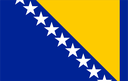
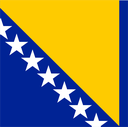
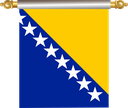
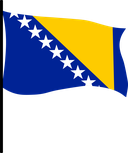
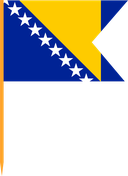
The flag of Bosnia and Herzegovina features a blue background with a yellow right triangle extending from the top to the bottom on the fly side. Along the hypotenuse of the triangle runs a diagonal line of white five-pointed stars, some of which are partially cut off by the edges of the flag.
The geometric layout is modern and asymmetrical, giving the flag a distinctive appearance. The combination of blue, yellow, and white creates strong contrast and clear visibility. The partial stars symbolize continuity beyond the borders of the flag.
Meaning of Colors and Symbols
Each element of the Bosnia and Herzegovina flag carries symbolic meaning. The blue color represents peace, stability, and the country’s connection to Europe. Blue is often associated with international cooperation and harmony.
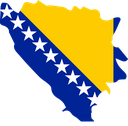
The yellow triangle is commonly interpreted as symbolizing the shape of Bosnia and Herzegovina’s territory. Yellow also represents hope, light, and a positive future.
The white stars symbolize Europe and international unity. Their endless continuation beyond the flag’s edges suggests infinity and continuity. Together, the colors and symbols reflect neutrality, inclusiveness, and a forward-looking national identity.
Historical Background of the Bosnia and Herzegovina Flag
The current flag of Bosnia and Herzegovina was officially adopted in 1998, following the end of the Bosnian War and the signing of the Dayton Peace Agreement. The design was selected to represent all citizens equally and avoid symbols linked to any single ethnic group.
The adoption of the flag marked an important step in rebuilding the country’s institutions and international image. It symbolizes peace, reconstruction, and cooperation after conflict. Readers interested in the historical context of this period can explore more details on the History of Bosnia and Herzegovina page.
Cultural and National Significance
The flag of Bosnia and Herzegovina represents unity in diversity. The country is home to multiple ethnic and religious communities, and the flag serves as a neutral national symbol for all citizens.
The flag is displayed during national holidays, official ceremonies, and international events. For many people, it represents peace, sovereignty, and hope for long-term stability. Its modern design reflects a focus on shared values rather than historical divisions.
Relationship to European Flags
The Bosnia and Herzegovina flag shares visual similarities with the flag of the European Union, particularly through the use of blue and stars. This design choice highlights the country’s aspiration toward European integration and cooperation.
Unlike traditional heraldic flags, Bosnia and Herzegovina’s design is contemporary and symbolic. It emphasizes international alignment and future-oriented identity rather than historical emblems.
Modern Use of the Flag of Bosnia and Herzegovina
Today, the flag of Bosnia and Herzegovina is flown on government buildings, schools, and public institutions across the country. It is also displayed at embassies and international organizations representing the nation abroad.
The flag plays an important role in education, diplomacy, and international sports events. Its continued use reinforces Bosnia and Herzegovina’s identity as a sovereign state committed to peace and cooperation.
Interesting Facts About the Flag of Bosnia and Herzegovina
- The flag was adopted in 1998.
- It avoids ethnic or religious symbols.
- The stars extend beyond the edges of the flag.
- The design reflects European identity.
- It symbolizes unity after conflict.
Frequently Asked Questions
What do the stars on the Bosnia and Herzegovina flag represent?
They represent Europe and continuity beyond borders.
Why does the flag avoid ethnic symbols?
To represent all citizens equally in a diverse society.
When was the flag of Bosnia and Herzegovina adopted?
The flag was adopted in 1998.
What does the yellow triangle symbolize?
It represents the country’s territory and hope for the future.
Is the Bosnia and Herzegovina flag used internationally?
Yes, it is used in diplomacy, international events, and global organizations.