Design of the Flag of Panama
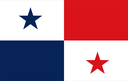
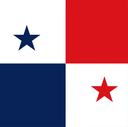
The flag of Panama is divided into four equal rectangular quarters, arranged in a 2×2 layout.
- The top-left quarter is white with a blue five-pointed star
- The top-right quarter is solid red
- The bottom-left quarter is solid blue
- The bottom-right quarter is white with a red five-pointed star
This quartered layout is uncommon among national flags and gives the Panamanian flag a unique and easily recognizable appearance.
The stars are centered within their respective white quarters, maintaining symmetry and balance.
Meaning of the Colors and Symbols
Each color and symbol on the Panama flag has clear political and national meaning.
The blue color represents conservatism, honesty, and purity. It symbolizes one of the major political traditions present during Panama’s early years as a republic.
The red color represents liberalism, courage, and authority. It reflects the other major political movement in Panama’s early political history.
The white background symbolizes peace and harmony between political parties and the nation’s desire for unity.
The blue star represents purity and honesty in public life, while the red star symbolizes authority and law. Together, the stars represent balance, cooperation, and democratic governance.
Historical Background and Adoption
Panama was part of Colombia until 1903, when it declared independence with international support. Following independence, Panama sought national symbols that would represent unity rather than division.
The original flag design was created in 1903 by María Ossa de Amador, the wife of one of Panama’s founding leaders. The design emphasized political balance between opposing parties.
The flag was officially adopted on March 25, 1925, after being used provisionally for several years. Its adoption reflected Panama’s commitment to democracy and peaceful coexistence.
More historical context can be found on the history of Panama page.
Cultural and National Significance
The Panamanian flag holds strong cultural importance and is widely displayed during Independence Day celebrations, national holidays, and civic ceremonies.
It represents unity, compromise, and national identity. The flag is commonly seen in schools, government offices, and international events where Panama is represented.
Among Central American flags, Panama’s design stands out due to its quartered layout and use of political symbolism rather than geographic imagery.
The flag is sometimes compared with the Flag of Costa Rica and the Flag of Nicaragua, though Panama’s design philosophy is unique.
Official Use and Flag Etiquette
The flag of Panama is flown at government buildings, schools, embassies, and public institutions. It is also displayed during diplomatic meetings and international sporting events.
Respectful handling of the flag is encouraged. It should be displayed properly and kept clean. During national mourning or special commemorations, the flag may be flown at half-mast according to official protocol.
The flag plays a central role in patriotic education and national ceremonies.
The Flag in Modern Panama
In modern Panama, the flag symbolizes stability, democracy, and international cooperation. It appears in public demonstrations, cultural festivals, and global forums.
The flag’s balanced design continues to reflect Panama’s political maturity and commitment to peaceful governance.
Its presence alongside international flags highlights Panama’s role as a global trade hub and diplomatic bridge between regions.
Design Strength and Recognition
The Panama flag is praised for its simplicity, clarity, and strong symbolism. The quartered design makes it instantly recognizable, while the limited color palette ensures strong visual impact.
Unlike many flags that rely on complex emblems, Panama’s flag communicates meaning through basic shapes and colors.
Its design remains relevant and timeless, reinforcing national unity across generations.
Questions About the Flag of Panama
When was the flag of Panama adopted?
The flag was officially adopted on March 25, 1925.
What do the red and blue colors represent?
They represent Panama’s historical political parties.
What do the white sections symbolize?
They symbolize peace and harmony.
Why are there two stars on the flag?
They represent honesty, authority, and balanced governance.
Is the Panama flag the same on both sides?
Yes, the design appears on both sides of the flag.