Design of the Flag of Italy
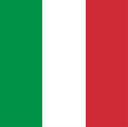
The Flag of Italy consists of three vertical stripes of equal width. From left to right, the colors are green, white, and red.
The design is clean and symmetrical, with no coat of arms on the civil flag. The proportions and color tones are officially defined to ensure consistency across all official uses.
Meaning of Colors and Symbols
Each color of the Flag of Italy carries layered historical and symbolic meaning.
The green stripe is often associated with Italy’s landscapes, hills, and plains. It also represents hope and renewal.
The white stripe symbolizes peace, honesty, and faith. It is sometimes linked to the snow-capped Alps in northern Italy.
The red stripe represents courage, sacrifice, and the blood shed by those who fought for Italian independence. It is also associated with love and patriotism.
Together, the three colors express unity, sacrifice, and aspiration, reflecting Italy’s national character.
Historical Background of the Italy Flag
The origins of the Flag of Italy date back to 1797, when a green, white, and red tricolor was adopted by the Cisalpine Republic, a state influenced by the French Revolution.
Inspired by the French tricolor, the Italian flag became a symbol of republicanism and resistance against foreign rule. Throughout the 19th century, it was widely used by movements seeking Italian unification, known as the Risorgimento.
After the Kingdom of Italy was established in 1861, the tricolor became the national flag, later modified with royal symbols. Following the abolition of the monarchy in 1946, the modern plain tricolor was officially adopted.
Readers interested in this unification process can explore more context on the History of Italy page.
Cultural and National Significance
The Flag of Italy holds deep cultural and emotional importance. It represents unity among Italy’s regions, each with its own traditions, languages, and history.
The flag is prominently displayed during national holidays such as Republic Day on June 2, public ceremonies, and international sporting events. For Italians, it symbolizes freedom, democratic values, and shared heritage.
Relationship to Other European Tricolor Flags
The Flag of Italy is part of the European tricolor tradition, alongside flags such as France and Ireland.
What distinguishes Italy’s flag is its historical connection to unification and republican ideals rather than a single revolution. Comparing European tricolors highlights Italy’s emphasis on unity across diverse regions.
Modern Use of the Flag of Italy
Today, the Flag of Italy is flown on government buildings, schools, and public spaces throughout the country. It is also displayed at embassies, international organizations, and global events representing Italy abroad.
The flag plays an important role in education and civic life, helping citizens understand national history, unity, and democratic principles. Its continued use reinforces Italy’s identity as a modern European republic.
Interesting Facts About the Flag of Italy
- The tricolor dates back to 1797.
- It was inspired by the French Revolution.
- The modern version was adopted in 1946.
- It symbolizes unification and independence.
- It has no emblem on the civil flag.
Frequently Asked Questions
What do the colors of the Italy flag represent?
Green represents hope and land, white represents peace, and red represents sacrifice.
When was the Flag of Italy officially adopted?
The modern version was adopted in 1946.
Why does Italy use a tricolor flag?
It reflects revolutionary ideals and national unity.
Is the Italy flag similar to other European flags?
Yes, it follows the tricolor tradition but has unique meaning.
Where is the Italy flag commonly displayed?
It is flown on public buildings and during national events.