Design of the Flag of Uruguay
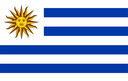
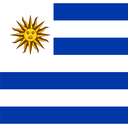
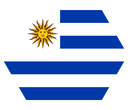
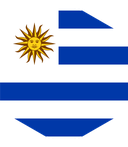
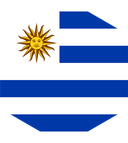
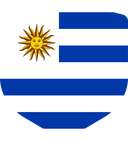
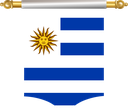
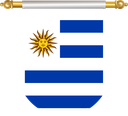
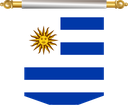
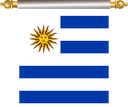
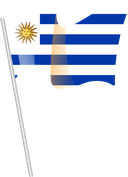
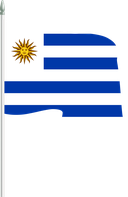
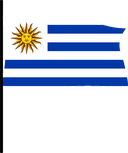
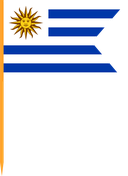
The Flag of Uruguay features nine horizontal stripes of equal width that alternate between white and blue.
In the upper hoist corner (canton), the flag displays a white square containing the Sun of May, a golden sun with a human face and alternating straight and wavy rays.
The layout is balanced and bright, making the flag easily recognizable.
Meaning of Colors and Symbols
Each element of the Flag of Uruguay carries clear symbolic meaning.
The white stripes represent peace, honesty, and democratic values. They also reflect ideals of liberty and fairness.
The blue stripes symbolize the sky, the Atlantic Ocean, and national freedom. Blue also represents loyalty and perseverance.
The Sun of May is a symbol of independence and enlightenment. It represents the birth of freedom in the region and the rise of a sovereign nation. The sun’s rays symbolize energy, life, and hope.
Together, these elements express independence, optimism, and unity.
Historical Background of the Uruguay Flag
The design of the Flag of Uruguay was inspired by the flag of the United States, particularly its use of stripes to represent political unity.
Uruguay adopted its first national flag in 1828, shortly after gaining independence following years of conflict involving Spain, Portugal, and neighboring powers.
The current version of the flag was officially standardized in 1830, aligning with the adoption of Uruguay’s constitution.
The Sun of May links Uruguay to broader South American independence movements, especially those connected to the Río de la Plata region.
Readers interested in independence and regional history can explore more context on the History of Uruguay page.
Cultural and National Significance
The Flag of Uruguay holds strong cultural and emotional importance for its citizens.
It is prominently displayed during Independence Day, civic ceremonies, sporting events, and public celebrations. For Uruguayans, the flag represents democratic traditions, national unity, and peaceful development.
The Sun of May is especially meaningful, symbolizing the dawn of independence and national identity.
Relationship to Other South American Flags
The Flag of Uruguay shares the Sun of May symbol with the flag of Argentina, reflecting shared historical roots in regional independence movements.
However, Uruguay’s striped design makes it visually distinct. Comparing South American flags highlights how countries express shared history while maintaining unique national identities.
Uruguay’s flag emphasizes clarity, order, and enlightenment ideals.
Modern Use of the Flag of Uruguay
Today, the Flag of Uruguay is flown on government buildings, schools, public institutions, and private homes throughout the country.
It is also displayed at embassies, international organizations, and global sporting events representing Uruguay abroad. The flag plays an important role in civic education, helping citizens understand national history, democracy, and independence.
Its continued use reinforces Uruguay’s reputation as a stable and democratic South American nation.
Interesting Facts About the Flag of Uruguay
- It was inspired by the U.S. flag
- It features nine stripes
- The Sun of May symbolizes independence
- It was standardized in 1830
- It reflects democratic ideals
Questions About the Flag of Uruguay
What do the stripes on the Uruguay flag represent?
They represent unity and democratic values.
What is the Sun of May?
It symbolizes independence, freedom, and enlightenment.
When was the Flag of Uruguay adopted?
It was standardized in 1830.
Why does Uruguay’s flag resemble the U.S. flag?
It was inspired by early republican symbolism.
Where is the Uruguay flag commonly displayed?
On public buildings and during national events.