Design of the Flag of Lesotho
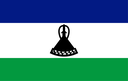
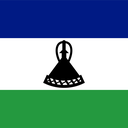
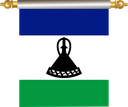
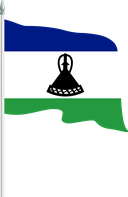
The Flag of Lesotho features three horizontal stripes of equal width.
- The top stripe is blue
- The middle stripe is white
- The bottom stripe is green
At the center of the white stripe is a black Basotho hat, known as the Mokorotlo.
The design is balanced and minimalist, with the cultural symbol clearly visible against the light background.
Meaning of Colors and Symbols
Each element of the Flag of Lesotho carries strong symbolic meaning.
The blue stripe represents the sky and rain, which are essential for life and agriculture in Lesotho. It symbolizes hope and blessing.
The white stripe represents peace, purity, and national unity. It reflects Lesotho’s commitment to harmony and coexistence.
The green stripe represents the land, agriculture, and prosperity. It symbolizes growth and connection to the natural environment.
The black Mokorotlo hat is a traditional Basotho symbol. It represents cultural heritage, identity, and authority. The hat is associated with leadership and is a strong marker of Basotho tradition.
Together, these elements express peace, culture, and respect for nature.
Historical Background of the Lesotho Flag
The current Flag of Lesotho was officially adopted on October 4, 2006, replacing earlier versions that were more militaristic in appearance.
Previous flags included symbols such as shields and weapons, reflecting earlier political contexts. The redesign aimed to project a peaceful national image and highlight cultural heritage rather than conflict.
Lesotho gained independence from British rule in 1966, and the evolution of its flag reflects changing national priorities. Readers interested in these developments can explore more context on the History of Lesotho page.
Cultural and National Significance
The Flag of Lesotho holds strong cultural importance for its people. It emphasizes peace and identity rather than political ideology.
The flag is prominently displayed during Independence Day, public ceremonies, and cultural festivals. For citizens, it symbolizes unity, tradition, and pride in Basotho heritage.
The Mokorotlo hat is widely used beyond the flag, appearing in architecture, emblems, and national branding.
Relationship to Other African Flags
The Flag of Lesotho differs from many African flags that use Pan-African colors and revolutionary symbolism.
Instead, Lesotho’s flag focuses on peace and cultural expression. Comparing African flags highlights how Lesotho chose a calm, heritage-based identity rather than a struggle-based narrative.
Modern Use of the Flag of Lesotho
Today, the Flag of Lesotho is flown on government buildings, schools, public institutions, and national monuments throughout the country. It is also displayed at embassies, international organizations, and sporting events representing Lesotho abroad.
The flag plays an important role in education and civic life, helping citizens understand national values, peace, and cultural continuity. Its continued use reinforces Lesotho’s identity as a peaceful mountain kingdom.
Interesting Facts About the Flag of Lesotho
- It was adopted in 2006.
- The Mokorotlo is a traditional hat.
- The design emphasizes peace over conflict.
- Blue symbolizes rain and life.
- It differs from Pan-African color schemes.
Frequently Asked Questions
What does the hat on the Lesotho flag represent?
It represents Basotho culture, identity, and leadership.
When was the Flag of Lesotho adopted?
It was adopted on October 4, 2006.
Why does the Lesotho flag emphasize peace?
The design reflects national unity and stability.
Is the Mokorotlo a cultural symbol?
Yes, it is a traditional Basotho symbol.
Where is the Lesotho flag commonly displayed?
It is flown on public buildings and during national events.