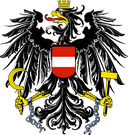
Design of the Flag of Austria
The flag of Austria consists of three horizontal stripes of equal width. The top and bottom stripes are red, while the middle stripe is white. The design is clean, symmetrical, and free from additional symbols or text.
Austria uses two main versions of the flag. The civil flag features only the red-white-red stripes, while the state flag includes the national coat of arms at the center. The plain tricolor version is most commonly recognized and widely used, both within Austria and internationally.
Meaning of Colors and Symbols
The colors of the Austria flag carry symbolic meaning rooted in history. The red color is traditionally associated with bravery, strength, and sacrifice. It reflects the struggles and resilience of the Austrian people throughout history.
The white stripe symbolizes peace, honesty, and purity. Together, the red and white colors represent balance between strength and harmony. While there are various legends explaining the origin of the colors, their lasting presence has made them powerful national symbols.
Unlike many flags, the Austrian flag relies solely on color symbolism rather than complex imagery. This simplicity has helped it remain relevant and recognizable for centuries.
Historical Background of the Austria Flag
The origins of the Austria flag date back to the 12th century, making it one of the world’s oldest flags. According to popular legend, the red-white-red design emerged during a medieval battle when a duke’s white tunic became stained with blood, leaving a white strip beneath his belt.
Historically, the colors were associated with the ruling Babenberg dynasty and later became a national symbol. The modern Austrian flag was officially adopted in its current form in 1918, following the end of the Austro-Hungarian Empire. Readers interested in Austria’s broader historical transformation can explore the History of Austria page for additional context.
Cultural and National Significance
The flag of Austria holds strong cultural importance and is a symbol of national pride. It is widely displayed during national holidays, cultural festivals, and public events. For Austrians, the flag represents continuity, independence, and respect for tradition.
The flag is also closely associated with Austria’s cultural achievements, including music, art, and architecture. Its simple design allows it to be easily integrated into national celebrations and international representations.
Relationship to Other National Flags
The Austria flag is often compared to flags with similar red and white color schemes. However, its horizontal red-white-red arrangement is unique and deeply tied to Austrian history.
Some flags around the world share similar colors, but Austria’s design remains distinct due to its age and historical continuity. Visitors exploring European flags may notice how Austria’s flag stands out for its simplicity compared to more complex designs.
Modern Use of the Flag of Austria
Today, the flag of Austria is flown on government buildings, schools, and public institutions across the country. It is also displayed during international events, representing Austria on the global stage.
The flag is widely used in tourism promotion, sports events, and educational materials. Its continued use reflects strong national attachment and respect for historical symbols.
Interesting Facts About the Flag of Austria
- It is one of the oldest national flags in the world.
- The design dates back to the 12th century.
- Austria uses both civil and state versions of the flag.
- The colors are linked to medieval dynasties.
- The flag has remained largely unchanged for centuries.
Frequently Asked Questions
What do the colors of the Austria flag represent?
Red represents strength and bravery, while white symbolizes peace and honesty.
When was the flag of Austria officially adopted?
The modern flag was adopted in 1918.
Is the Austria flag one of the oldest in the world?
Yes, it is considered one of the oldest national flags still in use.
Does Austria have different versions of its flag?
Yes, Austria has a civil flag and a state flag with the coat of arms.
Where is the Austria flag commonly displayed?
It is flown on government buildings, schools, and during national events.