Design of the Flag of Minnesota
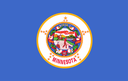
The flag of Minnesota features a medium blue field with the state seal displayed prominently in the center. Surrounding the seal is a white ring bearing the name of the state at the top and the year 1858, the year Minnesota became a U.S. state, at the bottom.
The seal itself is circular and detailed. It depicts a landscape scene showing land, water, trees, and sky, symbolizing Minnesota’s natural environment. Within the seal are a farmer plowing a field, a Native American figure on horseback, tools, and other elements that reflect the state’s early economy and settlement period.
Meaning of the Colors and Symbols
The blue background of the Minnesota flag represents loyalty, perseverance, and justice, values commonly associated with U.S. state flags. It also provides a strong contrast that highlights the detailed state seal.
Inside the seal, the natural landscape symbolizes Minnesota’s lakes, rivers, and fertile land. The plow, axe, and tools represent agriculture, labor, and industry, all of which have played important roles in the state’s development.
The Native American figure reflects the presence of indigenous peoples in the region before European settlement. Historically, this imagery has been interpreted as representing the transition from Native lands to agricultural settlement, which has led to modern discussions about representation and symbolism.
The white ring around the seal symbolizes unity and clarity, framing the emblem and reinforcing the official nature of the flag.
Historical Background and Adoption
Minnesota became the 32nd state of the United States in 1858. Early versions of the state seal and flag evolved throughout the 19th and early 20th centuries.
The current version of the Minnesota flag was officially adopted in 1983 to standardize earlier designs and ensure consistent use across state institutions. The adoption reinforced the flag’s role as a formal symbol of state authority. More historical context can be found on the history of Minnesota page.
Cultural and State Significance
The Minnesota flag is primarily used in official settings such as government buildings, schools, and civic ceremonies. It represents state governance and public service rather than popular or decorative use.
In comparisons with other U.S. state flags, Minnesota’s design is similar to the Flag of Wisconsin and the Flag of Iowa, which also feature state seals on blue fields. While functional, the Minnesota flag has been the subject of ongoing public discussion regarding modernization and inclusivity.
Official Use and Display
The flag of Minnesota is flown at the State Capitol, courthouses, and municipal buildings. It is commonly displayed alongside the Flag of the United States and local flags during official events.
Guidelines exist for proper display and respectful handling. The flag is raised during state observances and lowered in accordance with official protocols.
Modern Discussions and Redesign Efforts
In recent years, the Minnesota flag has been part of public conversations about design clarity and cultural representation. While the official flag remains unchanged, these discussions reflect broader efforts to reassess historical symbols and ensure they align with modern values.
Despite these debates, the current flag continues to serve as the legal and official symbol of the state.
Questions About the Flag of Minnesota
When was the current flag of Minnesota adopted?
The current design was officially adopted in 1983.
What does the state seal on the flag represent?
It represents Minnesota’s natural environment, agriculture, and early settlement.
Why is the flag blue?
Blue symbolizes loyalty, justice, and perseverance.
Is the Minnesota flag used for decorative purposes?
It is mainly used for official and governmental representation.
Has there been discussion about redesigning the flag?
Yes, public discussions about modernization have taken place in recent years.