Design of the Flag of American Samoa
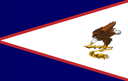
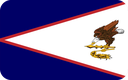
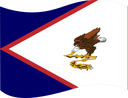
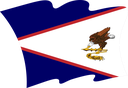
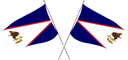
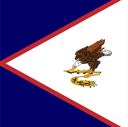
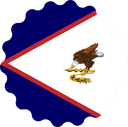
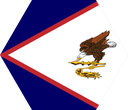
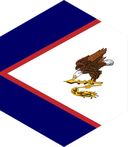
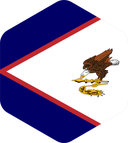
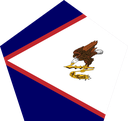
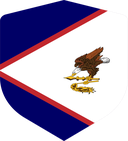
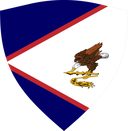
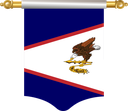
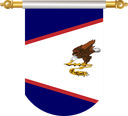
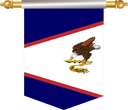
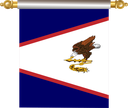
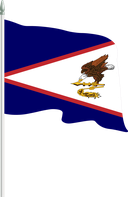
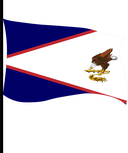
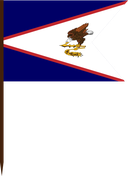
The flag of American Samoa features a dark blue field with a white triangle bordered in red, pointing toward the hoist side. Inside the triangle is a brown bald eagle holding traditional Samoan symbols. The overall design is bold, asymmetrical, and highly distinctive among world flags.
The white triangle creates strong contrast against the dark blue background, drawing attention to the central emblem. The red border adds visual strength and balance, while the eagle becomes the focal point of the flag. This combination of colors and shapes gives the flag a dynamic and memorable appearance.
Meaning of Colors and Symbols
The symbolism of the American Samoa flag is rich and culturally meaningful. The dark blue background represents loyalty and the ocean, which plays a vital role in Samoan life and culture. Blue also reflects the territory’s connection to the United States.
The white triangle symbolizes purity and peace, while the red border represents courage and strength. At the center, the bald eagle is a key symbol of the United States, representing authority and protection. The eagle holds a fue (fly whisk) and a to’oto’o (war club), which are traditional Samoan symbols of leadership and wisdom. This combination reflects the balance between American governance and Samoan tradition.
Historical Background of the American Samoa Flag
The current flag of American Samoa was officially adopted on April 17, 1960, a date that holds historical importance for the territory. The design was chosen to clearly represent both Samoan cultural identity and its political relationship with the United States.
American Samoa became a U.S. territory in the early 20th century, and the flag was created to visually express this connection while preserving traditional symbols. The use of the bald eagle alongside Samoan cultural objects was a deliberate choice to show mutual respect. Readers seeking more historical detail can explore the History of American Samoa page for additional context.
Cultural and Territorial Significance
The flag of American Samoa is an important symbol of pride and identity for its people. It is commonly displayed during cultural festivals, territorial holidays, and official events. For residents, the flag represents unity, heritage, and respect for traditional leadership structures.
The flag also highlights American Samoa’s distinct status within the United States. Unlike U.S. states, territories maintain unique cultural and legal traditions, and the flag visually communicates this balance between autonomy and affiliation.
Relationship to Other U.S. Flags
While the American Samoa flag includes the bald eagle, it differs significantly from the flag of the United States and other U.S. territorial flags in its design and symbolism. The use of indigenous cultural elements sets it apart and emphasizes local identity.
Visitors exploring U.S. territories may also compare it with flags of other regions to understand how each territory represents its heritage within the broader American framework. American Samoa’s flag stands out for its strong cultural symbolism.
Modern Use of the Flag of American Samoa
Today, the flag of American Samoa is flown on government buildings, schools, and public spaces throughout the territory. It is also displayed during official ceremonies and cultural celebrations. The flag is often flown alongside the U.S. flag, symbolizing the territory’s political relationship.
The flag is also used in educational materials and tourism promotion, helping raise awareness of American Samoa’s unique cultural identity. Its consistent use reinforces pride and recognition both locally and internationally.
Interesting Facts About the Flag of American Samoa
- The flag was officially adopted in 1960.
- It features the bald eagle, a symbol of the United States.
- Traditional Samoan leadership symbols appear on the flag.
- The design is asymmetrical and highly distinctive.
- It represents both cultural heritage and political status.
Frequently Asked Questions
What does the eagle on the American Samoa flag represent?
The eagle represents the authority and protection of the United States.
What are the objects held by the eagle on the flag?
They are traditional Samoan symbols of leadership and wisdom.
When was the flag of American Samoa adopted?
The flag was adopted on April 17, 1960.
Is American Samoa an independent country?
No, it is an unincorporated territory of the United States.
Where is the flag of American Samoa commonly displayed?
It is flown on government buildings, schools, and during cultural events.