Design of the Flag of Cape Verde
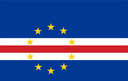
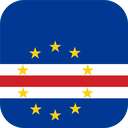
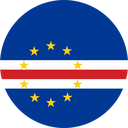
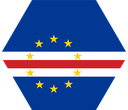
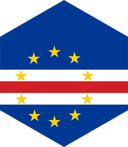
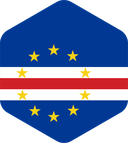
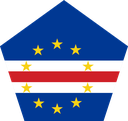
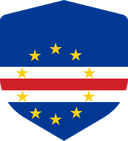
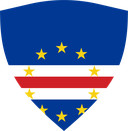
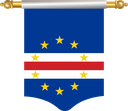
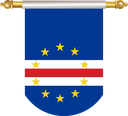
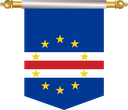
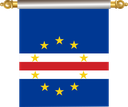
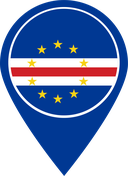
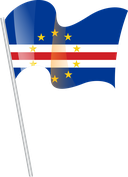
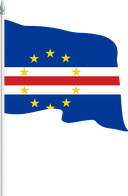
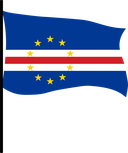
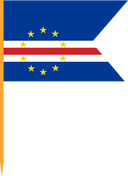
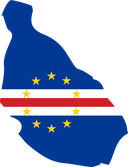
The flag of Cape Verde features a deep blue field with three horizontal stripes positioned slightly below the center. The stripes consist of two thin white stripes with a red stripe between them. Toward the hoist side of the flag, arranged in a circle, are ten yellow five-pointed stars.
The asymmetrical placement of the stripes and stars gives the flag a modern and dynamic appearance. The blue background dominates the design, emphasizing the maritime nature of the country and its island geography.
Meaning of Colors and Symbols
Each element of the Cape Verde flag has clear symbolic meaning. The blue color represents the Atlantic Ocean and the sky, highlighting Cape Verde’s island location and its connection to the wider world.
The white stripes symbolize peace and the desire for harmony and stability. They reflect the nation’s commitment to democratic values and social unity.
The red stripe represents effort, sacrifice, and the challenges faced by the people in building and developing the nation. It acknowledges hard work and perseverance.
The ten yellow stars represent the ten main islands of Cape Verde. Their circular arrangement symbolizes unity, equality, and cooperation among the islands. Yellow also represents hope and optimism for the future.
Historical Background of the Cape Verde Flag
Cape Verde gained independence from Portuguese colonial rule in 1975. In the early years after independence, the country used a flag closely linked to Pan-African symbolism and shared political movements.
The current flag of Cape Verde was officially adopted in 1992, following political reforms and the introduction of a multi-party democratic system. The new design marked a shift toward a distinct national identity, separate from earlier ideological symbolism. Readers interested in this political transition can explore more details on the History of Cape Verde page.
Cultural and National Significance
The flag of Cape Verde holds strong national significance and represents unity among islands with diverse local cultures. It symbolizes democracy, peace, and cooperation in a nation shaped by migration and global connections.
The flag is widely displayed during Independence Day celebrations, cultural festivals, and official ceremonies. For Cape Verdeans, it represents pride in national achievements and commitment to democratic governance.
Relationship to Other African and Atlantic Flags
Unlike many African national flags that use Pan-African colors, the Cape Verde flag stands out with its blue-dominant design. This reflects the country’s island geography rather than continental symbolism.
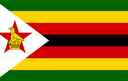
Comparing African flags highlights how Cape Verde emphasizes maritime identity and unity among islands. Its design also shares conceptual similarities with flags that use stars to represent political unity, though the layout remains unique.
Modern Use of the Flag of Cape Verde
Today, the flag of Cape Verde is flown on government buildings, schools, and public spaces throughout the islands. It is also displayed at embassies and international organizations representing Cape Verde abroad.
The flag plays an important role in education and civic life, teaching values of unity, democracy, and national responsibility. Its continued use reinforces Cape Verde’s image as a stable and peaceful nation.
Interesting Facts About the Flag of Cape Verde
- The flag was adopted in 1992.
- It features ten stars for ten main islands.
- Blue represents the Atlantic Ocean.
- The design reflects democratic values.
- It replaced an earlier Pan-African style flag.
Frequently Asked Questions
What do the stars on the Cape Verde flag represent?
They represent the ten main islands of the country.
Why is blue the dominant color on the flag?
Blue symbolizes the Atlantic Ocean and the sky surrounding the islands.
When was the flag of Cape Verde adopted?
The current flag was adopted in 1992.
Did Cape Verde use a different flag after independence?
Yes, an earlier flag was used before adopting the current design.
Where is the Cape Verde flag commonly displayed?
It is flown on public buildings and during national celebrations.