Design of the Flag of Maldives
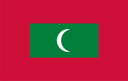
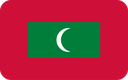
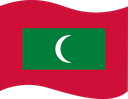
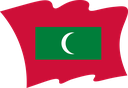
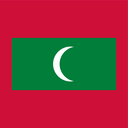
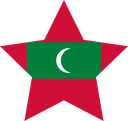
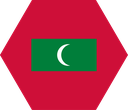
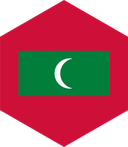
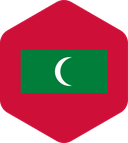
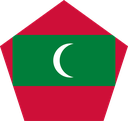
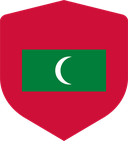
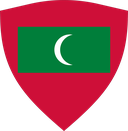
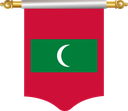
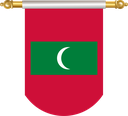
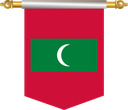
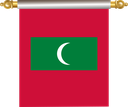
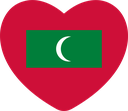
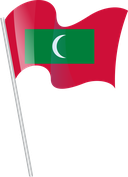
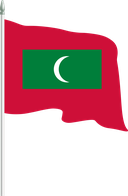
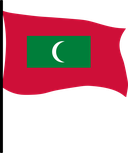
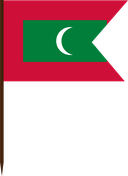
The Flag of Maldives features a red field that covers the entire background.
At the center of the flag is a green rectangle, inside which appears a white crescent moon facing the hoist side.
The layout is symmetrical and visually balanced, with the crescent placed prominently to convey its importance.
Meaning of Colors and Symbols
Each element of the Flag of Maldives carries clear symbolic meaning.
The red background represents bravery, sacrifice, and the blood shed by heroes who defended the nation. It symbolizes strength and resilience.
The green rectangle represents peace, prosperity, and the abundance of coconut palms that play an important role in Maldivian life. Green also symbolizes growth and harmony.
The white crescent moon represents Islam, the official religion of the Maldives. It symbolizes faith, guidance, and spiritual unity.
Together, these elements express courage, peace, and religious devotion.
Historical Background of the Maldives Flag
The Flag of Maldives has evolved over several centuries. Earlier versions of the flag were plain red, reflecting traditional maritime flags used in the region.
The crescent symbol was added in 1926, following reforms that emphasized Islamic identity. The green rectangle was later introduced to create visual contrast and enhance symbolism.
The modern design of the Flag of Maldives was officially adopted in 1965, when the Maldives gained full independence from British protection.
Readers interested in this transition can explore more context on the History of Maldives page.
Cultural and National Significance
The Flag of Maldives holds deep cultural and religious importance. It represents unity under Islam and respect for national heritage.
The flag is prominently displayed during Independence Day, national ceremonies, and religious celebrations. For Maldivians, it symbolizes sovereignty, faith, and pride in national identity.
The crescent moon is a unifying symbol that reflects shared beliefs across the islands.
Relationship to Other Islamic Flags
The Flag of Maldives shares common elements with other Islamic national flags, such as the crescent moon seen on the flags of Turkey and Pakistan.
However, Maldives’ flag is unique due to its central green rectangle and bold red background. Comparing Islamic flags highlights how shared symbols are adapted to reflect distinct national identities.
Modern Use of the Flag of Maldives
Today, the Flag of Maldives is flown on government buildings, schools, public institutions, and national landmarks across the islands. It is also displayed at embassies, international organizations, and sporting events representing the Maldives abroad.
The flag plays an important role in education and civic life, helping citizens understand national values, independence, and faith. Its continued use reinforces the Maldives’ identity as a sovereign Islamic nation.
Interesting Facts About the Flag of Maldives
- It was officially adopted in 1965.
- Earlier versions were plain red.
- The crescent represents Islam.
- Green symbolizes peace and prosperity.
- The design reflects religious unity.
Frequently Asked Questions
What does the crescent on the Maldives flag represent?
It represents Islam and spiritual guidance.
When was the Flag of Maldives adopted?
It was adopted in 1965.
Why is the Maldives flag red?
Red represents bravery and sacrifice.
What does the green rectangle symbolize?
It symbolizes peace, prosperity, and growth.
Where is the Maldives flag commonly displayed?
It is flown on public buildings and during national events.