Design of the Flag of the Pitcairn Islands
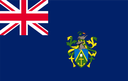
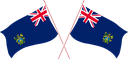
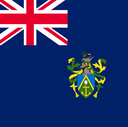
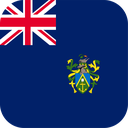
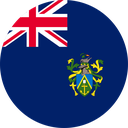
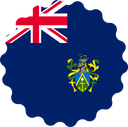
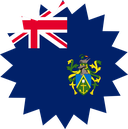
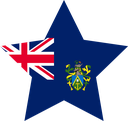
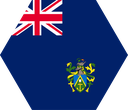
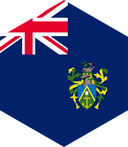
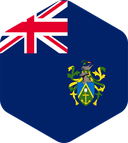
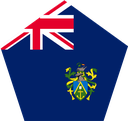
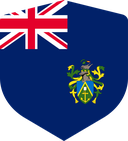
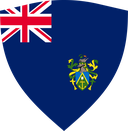
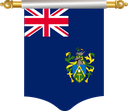
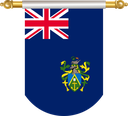
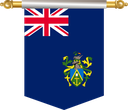
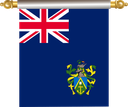
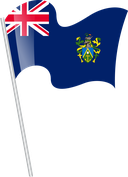
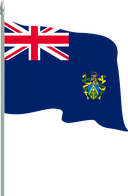
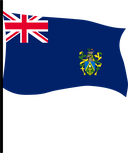
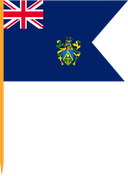
The flag of the Pitcairn Islands follows the standard design used by many British Overseas Territories. It features a dark blue field with the Union Jack placed in the upper hoist corner.
On the fly side of the flag appears the Pitcairn Islands coat of arms, displayed in full color. The emblem is centered vertically and clearly visible against the blue background.
This layout ensures instant recognition of British affiliation while allowing the territory’s unique symbols to stand out.
Meaning of the Colors and Symbols
Each element of the Pitcairn Islands flag carries symbolic meaning.
The blue background represents the Pacific Ocean surrounding the islands and symbolizes loyalty and stability.
The Union Jack reflects Pitcairn’s status as a British Overseas Territory and represents constitutional authority and historical ties to the United Kingdom.
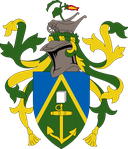
The coat of arms is rich in local symbolism:
- A Bible symbolizes Christianity and moral values that shape island life
- An anchor represents maritime heritage and the arrival of the HMS Bounty
- A wheelbarrow and farming tools symbolize self-sufficiency, agriculture, and daily labor
- Green elements represent the islands’ natural environment
Together, these symbols reflect community values, faith, hard work, and isolation shaped by the sea.
Historical Background and Adoption
The Pitcairn Islands were settled in 1790 by the mutineers of HMS Bounty and their Polynesian companions. Over time, a distinct community developed with its own customs, language influences, and governance.
Although under British authority since the early 19th century, Pitcairn did not adopt its own flag until much later. The current flag was officially adopted on April 2, 1984, as part of a broader effort to formalize symbols for British territories.
The adoption of the flag allowed Pitcairn to visually represent its identity while maintaining clear political association with the United Kingdom. More historical context can be found on the history of the Pitcairn Islands page.
Cultural and Territorial Significance
For the small population of Pitcairn, the flag is an important symbol of community identity. It represents both local heritage and connection to a wider political structure that provides support and governance.
The inclusion of practical tools in the coat of arms reflects the islanders’ reliance on agriculture and self-reliance. Faith also plays a significant role in community life, reflected by the Bible symbol.
Among Pacific territories, the Pitcairn Islands flag is often compared with the Flag of the Cayman Islands and the Flag of Bermuda, which also follow the British blue ensign format.
Official Use and Flag Etiquette
The flag of the Pitcairn Islands is flown at government buildings, during official ceremonies, and on vessels representing the territory.
It is commonly displayed alongside the Flag of the United Kingdom during official visits and international representation.
Respectful handling of the flag is encouraged. It should be kept clean, displayed correctly, and treated as a symbol of both local identity and constitutional authority.
The Flag in Modern Pitcairn Islands
In modern times, the flag continues to represent governance, heritage, and continuity. It appears in official documents, cultural materials, and limited tourism promotion.
Due to the island’s small population and restricted access, the flag is not widely seen globally, but it holds strong meaning for residents and descendants abroad.
The flag reinforces Pitcairn’s presence on the world map despite its isolation.
Design Strength and Recognition
The Pitcairn Islands flag combines a familiar British territorial format with a detailed local emblem. This balance allows it to communicate both authority and individuality.
The coat of arms adds depth and storytelling, making the flag educational as well as symbolic.
Its clear layout ensures recognition among British Overseas Territory flags while preserving local character.
Questions About the Flag of the Pitcairn Islands
When was the Pitcairn Islands flag adopted?
The flag was adopted on April 2, 1984.
Why does the flag include the Union Jack?
It reflects Pitcairn’s status as a British Overseas Territory.
What does the anchor on the coat of arms represent?
It symbolizes maritime history and the HMS Bounty.
Is the Pitcairn Islands flag used internationally?
Yes, it is used for official and diplomatic representation.
Is the flag the same on both sides?
Yes, the design appears on both sides of the flag.