Design of the Flag of Guernsey
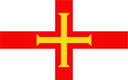
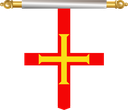
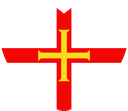
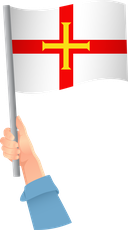
The Flag of Guernsey features a white background with a red cross extending to the edges of the flag. Centered on this red cross is a smaller gold cross, often described as the Cross of William the Conqueror.
The design is clean and symmetrical. The red cross forms the base structure of the flag, while the gold cross adds a distinctive element that separates Guernsey’s flag from similar cross-based designs.
Meaning of Colors and Symbols
Each element of the Flag of Guernsey carries historical and cultural meaning.
The white background symbolizes peace, clarity, and openness. It also allows the crosses to stand out clearly.
The red cross represents Christianity and is linked to the cross of St. George. It reflects Guernsey’s long Christian tradition and its historical ties to England.
The gold cross represents William the Conqueror, Duke of Normandy, who was granted the papal banner containing a gold cross in 1066. This symbol highlights Guernsey’s Norman roots and medieval history.
Together, the colors and crosses express faith, heritage, and continuity from the Norman era to modern self-governance.
Historical Background of the Guernsey Flag
Before the modern flag was adopted, Guernsey often used the St. George’s Cross, which caused confusion with England’s flag. To address this, a unique design was introduced.
The Flag of Guernsey was officially adopted in 1985, adding the gold cross to distinguish it from other red-cross flags. This change strengthened Guernsey’s visual identity while respecting historical traditions.
Readers interested in the island’s political and historical development can explore more context on the History of Guernsey page.
Cultural and Regional Significance
The Flag of Guernsey holds strong cultural significance for island residents. It represents independence in local governance, Norman heritage, and pride in a distinct identity.
The flag is prominently displayed during Liberation Day celebrations, local festivals, and official events. For Guernsey residents, it symbolizes continuity, tradition, and autonomy within the British Crown framework.
Relationship to the United Kingdom Flag
Guernsey is a Crown Dependency, not part of the United Kingdom. As a result, it has its own flag rather than using the Flag of the United Kingdom as its primary symbol.
While the Union Jack may be flown on certain official occasions, the Flag of Guernsey represents the island’s own government and identity. This distinction highlights Guernsey’s constitutional independence in domestic affairs.
Relationship to Other Channel Islands Flags
The Flag of Guernsey shares similarities with the Flag of Jersey, as both islands emphasize Norman heritage. However, Guernsey’s use of a gold cross makes its flag visually unique.
Comparing Channel Islands flags shows how each island expresses shared history while maintaining a distinct visual identity.
Modern Use of the Flag of Guernsey
Today, the Flag of Guernsey is flown on government buildings, schools, harbors, and public spaces throughout the island. It is also displayed at international events where Guernsey participates independently.
The flag plays an important role in education and civic awareness, helping residents understand their history, autonomy, and cultural roots. Its continued use reinforces Guernsey’s presence and recognition beyond the island.
Interesting Facts About the Flag of Guernsey
- The flag was adopted in 1985.
- The gold cross represents William the Conqueror.
- It avoids confusion with England’s flag.
- The design reflects Norman heritage.
- Guernsey is a Crown Dependency, not part of the UK.
Frequently Asked Questions
What does the gold cross on the Guernsey flag represent?
It represents William the Conqueror and Norman heritage.
When was the Flag of Guernsey adopted?
It was officially adopted in 1985.
Is Guernsey part of the United Kingdom?
No, it is a Crown Dependency.
Why does the Guernsey flag look similar to England’s flag?
It uses a red cross but adds a gold cross for distinction.
Where is the Guernsey flag commonly displayed?
It is flown on public buildings and during local events.